
Lieferung heute & morgen

Qualitätsgarantie

Willkommens-Angebote freischalten: KOSTENLOSE Lieferung | Bis zu 80 % RABATT | Kostenlose 30-Tage-JoyPlus-Testphase
App herunterladen
Felt-tip pens for children should be colourful, comfortable to hold and suitable for the intended age group. In practice, however, unclear age guidance, tips that dry out quickly or unsuitable ink can often lead to disappointing purchases. A large set is not automatically the best choice either, especially if the colours are hard to tell apart or the pens are not suited to the way you want to use them.
This buying guide explains which details really matter when choosing washable felt-tip pens, fibre-tip pens and marker sets for children. It focuses on clear product features such as tip shape, ink type, age guidance, what’s included and storage.
According to product descriptions, washable ink can usually be removed from skin and certain fabrics. However, results depend on the material, how long the stain has been there and the washing temperature. Treat stains on clothing as soon as possible. Claims such as ‘90% washable’ should not be taken to mean that stains will always come out completely.
A large set of colouring pens can be handy for colouring in, but may not be the best choice for fine outlines or calligraphy. Fineliner tips create narrow lines, while brush pens offer flexible strokes for lettering and shading. A chisel tip covers broad areas and can also make narrower lines, depending on how you hold it.
For colouring pens for ages 3 and up, it’s particularly important to check the warnings. Caps, replacement tips and accessories may pose a choking hazard. Check the age guidance not only on the front of the packaging, but also in the safety information. For younger children, supervised use on suitable surfaces is recommended.
Water-based ink is common in products for children. It may have less of a smell and can be blended with water on suitable paper. Claims such as ‘non-toxic’, ‘acid-free’ or ‘low-odour’ should be understood as manufacturer statements and do not replace safety and age guidance.
An art smock or washable mat is a good idea when using pens on fabric. For high-quality drawings, choose paper that suits the ink: thin copier paper may buckle when used with water-soluble colours, while heavier drawing, watercolour or mixed-media paper can absorb more moisture.
For calligraphy pens and dual-tip markers, it’s worth checking the stated sizes in millimetres. A 0.4 mm tip is designed for detail, while a flexible brush tip of around 1 to 6 mm can create a range of line widths.
A case or box makes it easier to organise colours and helps prevent individual pens from going missing. Replace the caps firmly after every use. Some products claim to stay usable for longer when left uncapped, but putting the caps back on after drawing is still the most reliable way to prevent the pens from drying out. With larger sets, numbered pens and a colour chart make choosing the right shade easier.
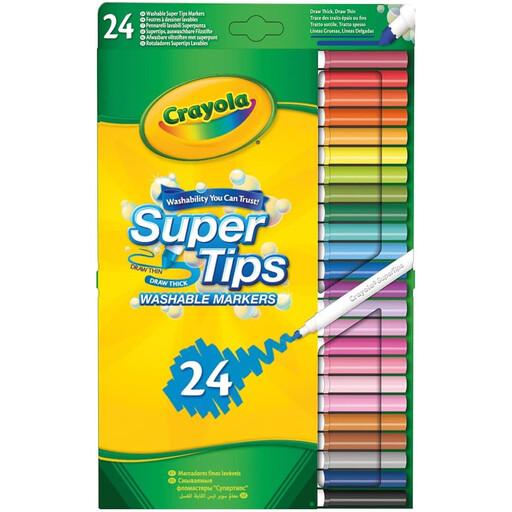
Why this product suits this user: The 24-piece set covers the basics for colouring, writing and drawing. According to the product description, it’s intended for children aged 3 or 4 and up.
The product description specifies washable ink and a tip that can create different line widths. This means there’s no need for separate sets for narrow and broad strokes.
24 colours, washable ink according to the product details and a compact set that’s handy for school or home.
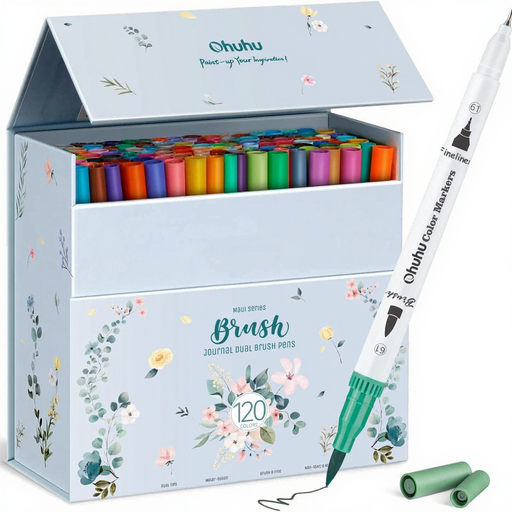
Why this product suits this user: Illustrators, manga fans and hobby artists get a wide choice of colours, with a 0.4 mm fineliner tip and a 1–6 mm brush tip on each pen.
The two tips reduce the need for several types of pen. A colour chart also helps you tell similar shades apart.
120 numbered colours, water-based ink according to the product description, replacement tips and a storage case.
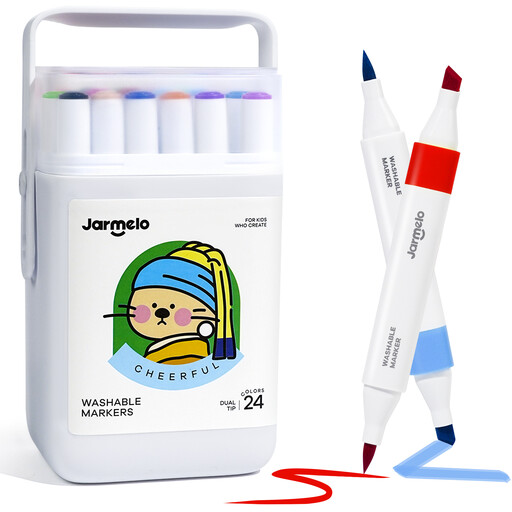
Why this product suits this user: According to the product description, the set is designed for children aged around 4 to 12. It combines brush and chisel tips with a carry case.
Water-based ink and the stated washability make it easier to deal with the usual marks from drawing. Vented caps are listed as a safety feature.
24 dual-tip markers, a storage case with a handle and ink that is 90% washable according to the manufacturer.
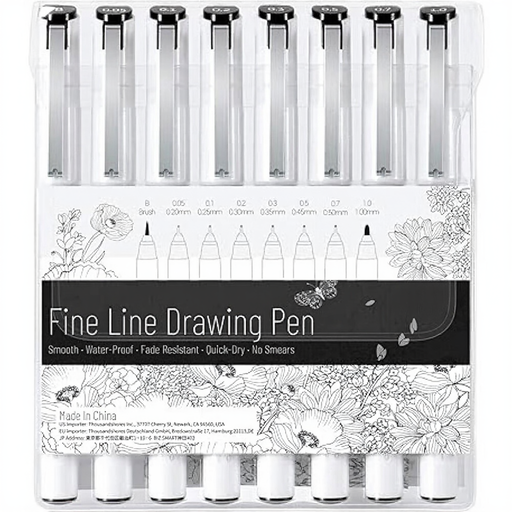
Why this product suits this user: For manga, technical sketches, journalling and precise drawings, the set offers seven fine line widths plus a brush tip.
The labelled tips make it easy to choose the right line width. According to the product description, the black ink dries quickly and is water-resistant.
Tips ranging from 0.05 to 1.0 mm, an additional brush tip and, according to the supplier, quick-drying, fade-resistant ink.
For children aged 8 and over, a 3D pen for ages 8 and up can be an alternative to traditional felt-tip pens. According to the product description, the Filapen Premium 3D Pencil Set uses PCL filament and includes templates. However, it’s an electric creative tool with its own way of working, not an ordinary colouring pen. Check the age recommendation, material compatibility and safety instructions before use.
STAEDTLER Triplus Color and Noris Club Fibre-Tip Pens are also worth considering for school supplies with a slim, standard tip. Both product ranges are described as using water-based or washable ink. Compare the specific pack size and contents before you buy.
We’ve put together a complete, regularly updated list of products that meet these strict selection criteria and fully comply with the safety regulations in force in the EU.
Choose products with clear age guidance for children aged 3 and over, secure-fitting caps and easy-to-understand safety information. For sets with replacement tips or other accessories, check for small parts that could be swallowed. Children should initially draw under supervision and must not put the pens in their mouths.
Make sure the caps are firmly in place after every use. A case or box protects the tips and keeps the colours organised. Some manufacturers recommend storing pens horizontally, particularly dual-tip markers. Heat and direct sunlight can also put extra strain on the ink and tips.
Their lifespan depends on how long they’re used, how much pressure is applied to the tip, the type of paper and whether the caps are replaced. Pressing too hard can deform the fibres, while leaving pens uncapped speeds up drying. If the pens are used regularly, consider a set with replacement tips or top up with individual pens in standard colours.