
Lieferung heute & morgen

Qualitätsgarantie

Willkommens-Angebote freischalten: KOSTENLOSE Lieferung | Bis zu 80 % RABATT | Kostenlose 30-Tage-JoyPlus-Testphase
App herunterladen
Whether you’re using them for school notebooks, revision cards, journalling or colourful sketches, STAEDTLER Triplus Color rPP felt-tip pens combine a fine line width with a barrel made from recycled polypropylene. But there’s more to consider than colour names or eye-catching packaging. Key details include the nib width, grip shape, ink type and washable-ink claims.
This buying guide explains which features really matter when choosing STAEDTLER felt-tip pens and which version is right for different needs.
Many felt-tip pens look similar in product photos. For precise writing and colouring, however, a line width of around 1.0 mm is important. A broad nib is better suited to colouring larger areas, while a fine fibre tip is more practical for lettering and outlines.
The STAEDTLER Triplus Color 323 and the rPP versions are described as having a pressure-resistant synthetic nib with a line width of around 1.0 mm. This makes them felt-tip pens for writing and drawing, rather than traditional highlighters.
According to the product information, water-based ink can be washed out of most textiles. This is handy at school and at home, but it doesn’t guarantee that stains will come out of delicate fabrics, wood, stone or other porous surfaces.
If there’s a mishap, treat the garment as soon as possible, following its care instructions. Before children use the pens, also check the small-parts warning and age restriction: these products are not suitable for children under three.
The DRY SAFE technology in the STAEDTLER felt-tip pens mentioned here is associated with being left uncapped for several days and testing in accordance with ISO 554. This reduces the risk of the pen drying out straight away if the cap is left off briefly.
Even so, the cap is important. It protects the nib from dust and helps extend the pen’s useful life. For storage, it’s best to keep the pens horizontal, especially if you won’t be using them for a while.
For notes, outlines and smaller areas to colour, a 1 mm felt-tip pen is a good all-round choice. If you want to highlight passages of text, choose a highlighter with a chisel tip instead. Depending on how you hold it, this type of nib can produce narrow or broad lines.
The STAEDTLER Triplus Color rPP models have a pressure-resistant synthetic nib. It’s still best to avoid pressing too hard, as this can damage the paper and deform the nib.
Triangular-grip felt-tip pens can encourage a natural finger position. The triangular barrel of the triplus color makes it a good option for longer writing, drawing or journalling sessions. How comfortable it feels depends on your hand size and personal preference.
For pupils, students and office workers, a comfortable-to-hold barrel is particularly useful if you often colour-code, make corrections or write by hand.
The models described use water-based, washable ink. Depending on the version, the barrel and cap are made from polypropylene or recycled polypropylene (rPP). If you’re looking for sustainable felt-tip pens, check whether the recycling claim applies to the barrel, the packaging or both.
According to the product description, the Mix & Match system lets you coordinate colours with the STAEDTLER 334 and 338 ranges. This makes it easy to combine felt-tip pens, fineliners and broader markers in the same colour family.
The options below group specific colours and product types by intended use. The details are based on the available product descriptions, so check the relevant product page before buying.
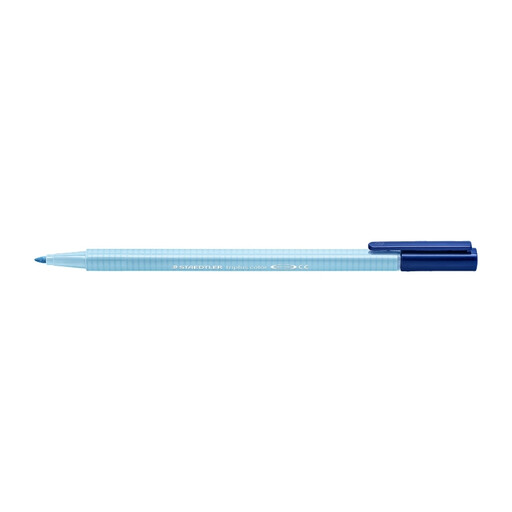
Why this product suits this profile: The single-colour option is ideal if you need a specific colour for notes, colouring pages or colour-coding.
The description specifies a 1.0 mm nib, water-based ink and DRY SAFE technology, so you can check the key buying criteria in advance.
Triangular grip, pressure-resistant synthetic nib and washable ink, according to the product information.
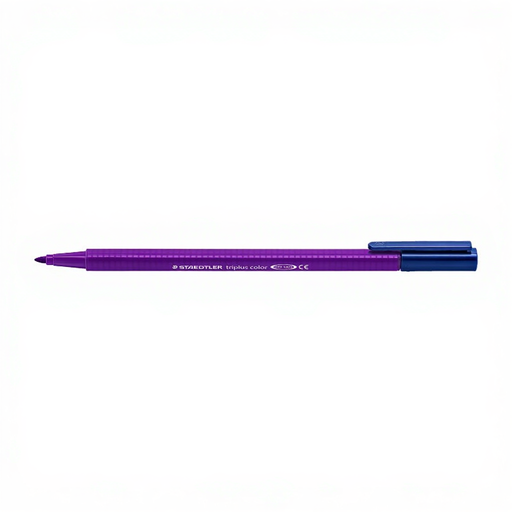
Why this product suits this profile: Violet is a good choice for creating consistent colour schemes in study materials, calendars and creative projects you return to often.
The rPP claim applies to the barrel. The ergonomic shape, 1.0 mm nib and water-based ink are also clearly specified.
Made with recycled polypropylene, according to the description, with a triangular barrel and washable ink for paper-based projects.
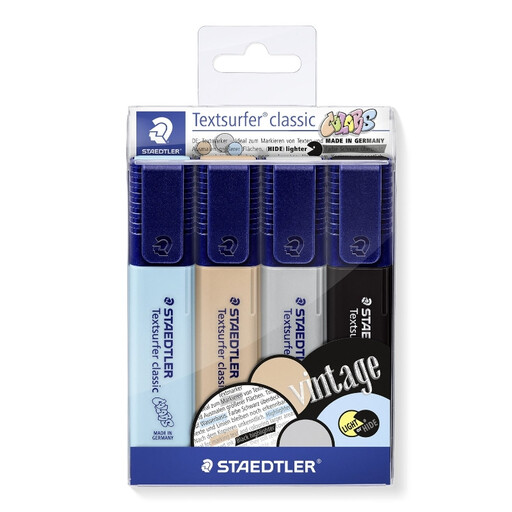
Why this product suits this profile: This set is designed for teachers, students and office workers who want to highlight text and colour in larger areas.
The chisel tip is specified as around 1–5 mm wide, making it clear that these are highlighters rather than 1 mm felt-tip pens.
Set of four, water-based ink, a generous ink supply and a chisel tip for highlighting at different widths.
We’ve put together a complete, regularly updated list of products that meet these strict selection criteria and fully comply with the safety regulations in force in the EU.
For an even flow of colour, store the pens horizontally or in their designated box. After writing or drawing, replace the cap until you hear it click into place. Use them on paper only, unless the manufacturer specifies that they’re suitable for other surfaces.
Watercolour pens aren’t necessarily the same as traditional felt-tip pens: they’re often blended with water and need paper that can cope better with moisture. According to the information available, the STAEDTLER Triplus Color rPP is designed for writing, drawing and colouring on paper.
The stated line width is around 1.0 mm. This makes the pen suitable for lettering, outlines, study notes and smaller areas to colour.
According to the product description, DRY SAFE technology is designed to prevent the pen drying out if left uncapped for several days; testing in accordance with ISO 554 is mentioned. For a longer useful life, it’s still best to replace the cap as soon as you’ve finished using it.
The ink is water-based and, according to the manufacturer, can be washed out of most textiles. However, it may still cause permanent discolouration on delicate or porous materials. Use the ink only as intended, on paper.