For discovering fine leaf details
If you want to capture leaf veins and small structures in close-up, pay particular attention to the close-up capabilities of the specific lens or camera mode.


If you want to switch between a whole fern frond and accessible details in the garden without changing lenses, a compact camera with a documented close-up mode could be a good option. For highly magnified veins and more choice over framing and distance, a mirrorless camera with a suitable macro lens offers greater flexibility. Just check that the body and lens are compatible and confirm what’s included. In windy conditions, image stabilisation can’t compensate for movement in the frond.
If you want to capture leaf veins and small structures in close-up, pay particular attention to the close-up capabilities of the specific lens or camera mode.
If you want to show the shape of an entire frond, remember to consider depth of field and soft, even light when shooting close up.
If you want to switch between wider views and accessible details without carrying extra lenses, a camera with a built-in lens can be a practical choice.
A good fit if: You want to switch spontaneously between a whole frond and accessible details in the garden.
The trade-off: A short focusing distance alone doesn’t guarantee a 1:1 magnification ratio, or that there’ll be enough room in front of the lens for lighting.
A good fit if: You want to magnify leaf veins more, or control distance and perspective by choosing a particular lens.
The trade-off: The body and lens need to be compatible. With moving fronds, stabilisation is no substitute for a sufficiently fast shutter speed.
| What you want | What to check before buying | Who is it important to? |
|---|---|---|
| Fine leaf details | Compare the magnification ratio, minimum focusing distance and space in front of the lens for the exact variant. | If I want to show leaf veins in close-up, the magnification of the specific lens or close-up mode matters to me. Around 33% of consumers prioritise this detail. |
| Keeping the whole frond in focus | Check the aperture controls and framing offered by the specific lens or zoom. | If I want to capture the shape of a whole frond, I need suitable framing and must assess sharpness across the subject. Around 25% of consumers prioritise this. |
| Movement in windy conditions | Check your control over shutter speed and ISO; don’t confuse stabilisation with freezing subject movement. | If the fern sways in the wind, I want to limit motion blur without mistaking it for camera shake. Around 25% of consumers pay particular attention to this. |
| Taking photos without changing lenses | Check the close-up capability and zoom of the same camera model for the fronds you can actually reach. | If I want to take spontaneous photos in the garden, a built-in lens is worth considering. Around 17% of consumers place particular importance on ease of use. |
Focusing distance and magnification ratio describe different features. A very short distance can also limit the space available for lighting.
Compare the magnification and usable working distance of the specific model, rather than relying on a distance in centimetres alone.
Macro specifications for a lens don’t automatically apply to a body supplied with a standard zoom. You may need to buy a suitable macro lens separately.
Check the lens mount and exactly what’s included. If you’re buying a body and lens together, factor in the total cost too.
Stabilisation can reduce camera shake, but it can’t keep a swaying frond still. A longer exposure can therefore still cause motion blur.
In windy conditions, consider your shutter speed. A greater depth of field may also require more light.
The Tough TG-7 is a compact camera with a fixed lens; the brand also offers separate macro lenses for its system.
The WG-8, offered by Ricoh Imaging, combines a built-in zoom with a rugged design.
The RF system lets you pair a body such as the EOS R50 with a compatible macro lens.
The Z50II has a tilting and swivelling screen; a compatible Z macro lens is an option for capturing small fern details.
The E-mount system offers the FE 90 mm F2,8 Macro G OSS as a macro lens option for a compatible body.
The product selection below focuses on a compact camera for spontaneous outdoor photography.
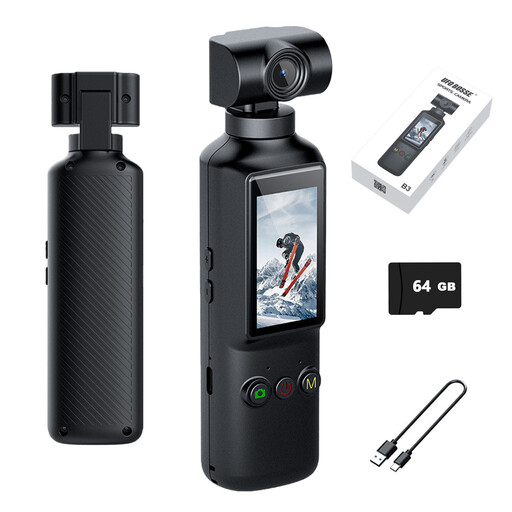 No image available
Its mini pocket size and stated suitability for outdoor activities make it a good fit for spontaneous garden photography. For fine fern veins, check the close-up capability with the framing you plan to use.
Not necessarily. The distance describes how close the camera can focus, but doesn’t tell you on its own how large the leaf vein will appear in the image. For the detail you want, compare the framing or the stated magnification ratio.
A tripod can reduce camera movement, but it won’t stop the frond from swaying. The Canon Academy guide explains that faster shutter speeds can help with moving subjects; for a still subject, a stable setup can be useful for close-up shots.
If you’re buying a mirrorless camera, check whether the macro lens you want is included. In Germany, statutory rights against the seller should be distinguished from a voluntary guarantee. According to the Verbraucherzentrale, online purchases generally come with a 14-day right to cancel; check whether any exceptions apply to your particular purchase.
You must not enter someone else’s enclosed property unlawfully; § 123 StGB applies. Under § 22 KunstUrhG, publishing or publicly displaying identifiable images of people generally requires the consent of the person shown, although statutory exceptions must be considered separately. These rules don’t create a general requirement to obtain permission for photographs of plants alone.