For spontaneous fern close-ups in changeable weather, a sturdy compact camera with a dedicated close-up mode is a good option. If you want to capture fine details at a larger scale, choose an interchangeable-lens camera with a dedicated macro lens. A standard or travel zoom is better suited to whole fronds and a wider range of subjects: consider the zoom range and minimum focusing distance separately, and bear in mind that an extra lens means more kit to carry.
Which camera options suit different needs?
Spontaneous fern spotters
If you want to capture leaf details on the go without changing lenses, a dedicated close-up mode and handling suited to outdoor use are important factors. OM Digital Solutions specifies close-ups from as close as 1 cm for the Tough TG-7, as well as water and dust protection. Ricoh Imaging specifies a 1 cm Microscope Mode for the PENTAX WG-8.
Detail photographers
If you want fine details to fill a large part of the frame, consider the camera and a compatible macro lens together. Nikon specifies a 1:1 reproduction ratio for the NIKKOR Z MC 50 mm f/2.8; Canon’s figures vary depending on the lens.
Travel photographers
If you want to photograph whole plants and other camping subjects as well as ferns, consider framing, minimum focusing distance and how much kit you’ll need to carry. Sony specifies a 24–200 mm 35 mm equivalent range for the RX100 VII, with a minimum focusing distance of around 100 cm at the telephoto end.
What should you look for when choosing?
First decide what matters most to you: magnifying details, straightforward use in changeable weather, versatile travel photography or carrying as little extra kit as possible.
Rugged compact camera with close-up mode
A good fit if: you want to capture fern details spontaneously without changing lenses. OM Digital Solutions specifies close-ups from as close as 1 cm for the Tough TG-7; Ricoh Imaging specifies an illuminated Microscope Mode from 1 cm for the WG-8.
The trade-off: Shooting from very close leaves little room for light. Ricoh does not guarantee the WG-8’s waterproofing after an impact.
Interchangeable-lens camera with macro lens
A good fit if: you want small details to appear large in the frame and are happy to choose a camera and compatible lens together. Nikon specifies a 1:1 reproduction ratio for the NIKKOR Z MC 50 mm f/2.8; Canon specifies up to 1.4:1 for the RF 100mm F2.8L Macro IS USM.
The trade-off: You’ll need to choose the macro lens separately from the camera body, so make sure you consider the lens and the full contents of the package together.
Interchangeable-lens camera with standard zoom
A good fit if: whole fronds and other travel subjects matter more, and you may want to add a macro lens later. The Canon EOS R50 kit described includes an RF-S 18-45mm lens.
The trade-off: Canon specifies a maximum magnification of 0.16x with autofocus or 0.26x with manual focusing for this lens, so it is not equivalent to a 1:1 macro lens.
Travel compact camera with zoom
A good fit if: you want to switch between whole plants, landscapes and more distant subjects from one spot. Sony specifies a 24–200 mm 35 mm equivalent range for the RX100 VII.
The trade-off: At the telephoto end, Sony specifies a minimum focusing distance of around 100 cm, so the zoom range is no substitute for a dedicated close-up mode. Comparable weather protection is not confirmed for this option.
| What matters to you |
What to check |
Who is it most relevant to? |
| Fine leaf details |
Check the specific close-up mode or reproduction ratio, along with the lens mount and shooting distance. Nikon specifies 1:1 for the NIKKOR Z MC 50 mm f/2.8. |
If I want to show fine fern details at a large scale, I check the lens alongside the camera. Around 36% of consumers say detail magnification is their top priority. |
| Use in damp weather |
Read the model-specific details on water and dust protection, as well as guidance on seals and possible damage after a fall. Ricoh notes that the WG-8’s waterproofing is not guaranteed after an impact. |
If I want to keep my camera close to hand in changeable camping weather, the protection details for the specific model matter. Around 29% of consumers say weather protection is their top priority. |
| Whole fronds and travel subjects |
Check the focal length range and minimum focusing distance separately at the zoom setting you’ll actually use. Sony specifies a minimum focusing distance of around 100 cm at the telephoto end for the RX100 VII. |
If I want to photograph whole plants and other travel subjects as well as ferns, I compare the framing and minimum focusing distance. Around 21% of consumers prioritise versatile travel photography. |
| Amount of equipment |
Compare what’s included and the total cost of the setup you need, not just the camera body. A macro reproduction ratio applies to the specific lens, not automatically to a kit zoom. |
If I want to carry as few pieces of kit as possible while camping, I check exactly what I need for the fern photos I want to take. Around 14% of consumers say keeping their setup simple is their top priority. |
Which assumptions should you avoid?
-
Assuming the camera body makes it “macro”
The EOS R50 kit described includes an RF-S 18-45mm lens. Its reproduction ratio differs from that of a dedicated macro lens.
Before buying, check exactly which lens is included and its reproduction ratio.
For greater magnification, you may need an additional compatible macro lens.
-
Assuming a long zoom range means it can focus up close
Sony specifies a minimum focusing distance of around 100 cm from the front of the lens at the telephoto end for the RX100 VII.
Check the minimum focusing distance at the zoom setting you plan to use against the framing you want for the fern frond.
-
Assuming weather protection guarantees lasting protection against damage
Ricoh notes that the WG-8’s waterproofing is not guaranteed after an impact.
Look after seals and closures according to the instructions for the specific model, and don’t assume the original water protection still applies after a fall without having it checked.
The camera may need to be inspected or repaired after damage.
Which brands are worth considering?
OM SYSTEM
The Tough TG-7 is a rugged compact camera for spontaneous close-ups outdoors.
- OM Digital Solutions specifies close-ups from as close as 1 cm for the TG-7, as well as water and dust protection.
- These manufacturer specifications apply to this particular model and are not the result of independent testing.
PENTAX
Ricoh Imaging describes the WG-8 as a rugged compact camera with a digital Microscope Mode.
- Ricoh Imaging specifies shooting from 1 cm away in Microscope Mode, with the lens lights switched on.
- Ricoh Imaging says the camera’s waterproofing is not guaranteed after an impact.
Nikon
For dedicated macro photography with a Z camera, consider choosing the NIKKOR Z MC 50 mm f/2.8 separately.
- Nikon specifies a 1:1 reproduction ratio for this lens.
- This figure does not automatically apply to a Z50II with a standard lens. Check the lens and package contents separately.
Canon
The EOS R50 can be paired with a standard zoom for larger subjects or with a suitable RF macro lens bought separately.
- Canon specifies up to 1.4:1 for the RF 100mm F2.8L Macro IS USM.
- According to Canon, the RF-S 18-45mm achieves different, considerably lower magnification ratios. These figures refer to different lenses.
Sony
The RX100 VII is a compact zoom camera for a variety of travel subjects.
- Sony specifies a focal length range of 24–200 mm in 35 mm equivalent terms.
- At the telephoto end, the specified minimum focusing distance is around 100 cm; the zoom range is no substitute for a confirmed 1 cm close-up mode.
Joybuy products
The DJI Osmo Pocket 3 bundles listed are described as suitable for taking photos and videos on the go. If you want to capture fine fern details, check the shooting distance and framing you’ll need before you buy.
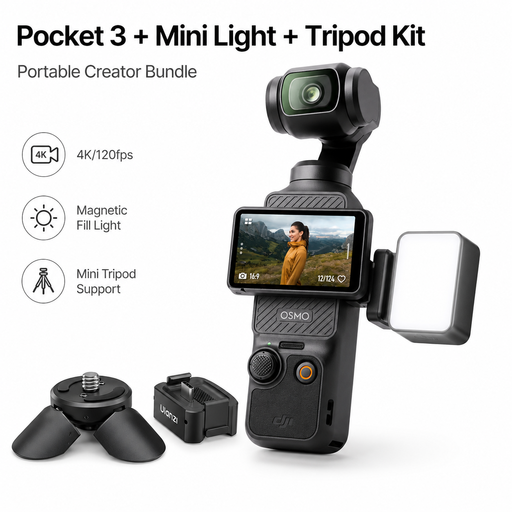 No image available
DJI Osmo Pocket 3 Standard Combo with ULANZI LM001 mini light, adapter and mini tripod
For taking photos and videos on the go with a compact setup. Check whether it’s suitable for fern close-ups by considering the framing you need.
Features include a 1-inch CMOS sensor, 4K/120fps and a 3-axis gimbal. The bundle includes a ULANZI LM001 mini light, a Pocket 3 adapter and a mini tripod.
Joybuy
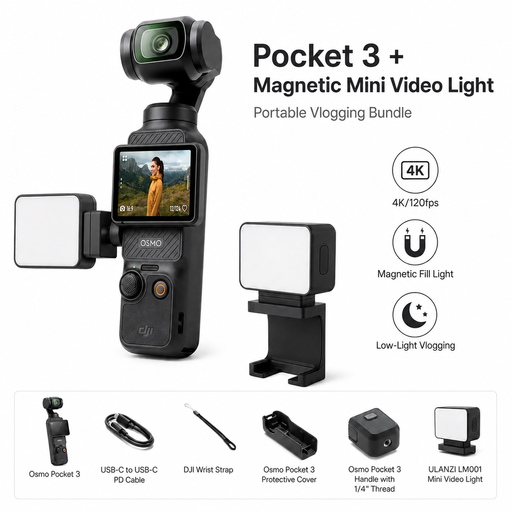 No image available
DJI Osmo Pocket 3 Standard Combo with ULANZI LM001 mini light
For travel photography and video. For fine fern details, check the shooting distance and framing you’ll need separately.
Features include a 1-inch CMOS sensor, 4K/120fps and a 3-axis gimbal. This bundle includes a ULANZI LM001 mini light.
Joybuy
Frequently asked questions
Is a very short minimum focusing distance enough to capture fine fern details?
Not on its own: check the reproduction ratio or the specific close-up mode too. Canon specifies different figures for the RF-S 18-45mm depending on focal length and focusing method; Nikon specifies a 1:1 reproduction ratio for the separate NIKKOR Z MC 50 mm f/2.8.
What should I do with a rugged camera after dropping it?
Don’t assume its original water protection still applies without having it checked. Ricoh specifically notes that the WG-8’s waterproofing is not guaranteed after an impact; follow the instructions for the specific model.
Who is responsible if a fault appears after I buy a camera?
Your statutory rights are a claim against the seller and are separate from any voluntary guarantee. The Verbraucherzentrale recommends checking who the seller is at the time of purchase and what additional terms apply to any guarantee offered.
Can I pick a fern frond to photograph it?
You don’t need to pick a fern frond to photograph it. Under § 39 BNatSchG, removing wild plants from where they grow without good reason is generally prohibited. The limited exception allowing small quantities for personal use applies only in places where access is not prohibited, and does not cover specially protected plants. The Federal Ministry for the Environment explains this restriction; you should also check any additional rules for the specific protected area or campsite.


