
Lieferung heute & morgen

Qualitätsgarantie

Willkommens-Angebote freischalten: KOSTENLOSE Lieferung | Bis zu 80 % RABATT | Kostenlose 30-Tage-JoyPlus-Testphase
App herunterladen
A fever thermometer belongs in many home medicine cabinets. The selection ranges from classic digital stick thermometers to contactless infrared thermometers with ear, forehead and object modes. Yet many purchasing decisions are based on bold claims such as “measurement in one second” or “clinically tested” without examining the practical details.
For families in Germany, the most important factors are a suitable measurement method, easy-to-read displays and safe handling. This buying guide explains what to look for, which common pitfalls to avoid and which models may suit different usage scenarios.
A one-second measurement is convenient, but on its own says nothing about whether the device is genuinely suitable. With a digital fever thermometer, factors such as the measurement site, distance, ambient temperature, movement and correct positioning can all affect the result.
With a contactless model, the forehead should be free from sweat, hats and hair. The distance specified in the instructions must also be observed. An ear thermometer, on the other hand, requires correct alignment in the ear canal. Speed is therefore just one factor alongside the measurement instructions and the intended measurement range.
A 3-in-1 thermometer or 6-in-1 thermometer can measure body, object, liquid and room temperatures. This is useful if you regularly check milk, bathwater or room temperature. Anyone who only measures body temperature occasionally may not need the additional modes.
Check whether switching between modes is unambiguous and whether the display clearly distinguishes between body and object modes. Unclear operation can lead to misinterpretation.
An audible or colour-coded fever alert is intended as a guide. Thresholds vary between models and may be assessed differently for children depending on their age or the measurement site. A thermometer with a fever alert should therefore not be regarded as a diagnostic device.
For unusual readings, persistent elevated temperature or any uncertainty, consult the instructions and seek medical advice. Particular care is required with babies and young children.
A clearly legible LCD or LED display is helpful at night and for older users. Colour-coded displays in green, orange or red can make readings easier to assess at a glance, but should always be considered together with the numerical value.
A silent thermometer or silent mode is particularly useful for taking measurements from babies at night. Check whether the alert can be disabled completely or whether only the sound output can be reduced.
The probe or measurement area must be cleaned according to the instructions. Some models have a wipe-clean surface, while the tip of a flexible stick thermometer may be rinsable under certain conditions. The entire device should never automatically be submerged in water.
Other relevant features include:
The CE marking indicates the manufacturer’s declared conformity with applicable European requirements. It is not a general seal of quality and does not replace checking the instructions, included accessories and responsible manufacturer or supplier.

Why it suits this profile: A straightforward model for households looking for a classic thermometer for children and adults without an object mode.
The flexible tip and measurement range of 32 to 42 °C clearly define the intended body temperature measurements. Use remains limited to the instructions and the relevant measurement site.
LCD display, memory for the last reading, fever alert tone, protective case and a measurement tip that can be rinsed according to the product description.
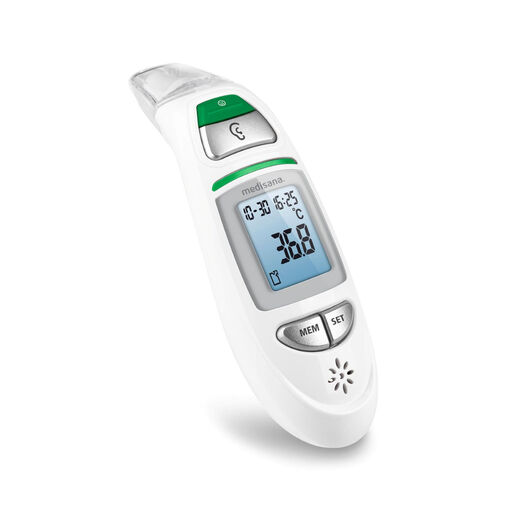
Why it suits this profile: Suitable for families who want to measure body temperature as well as liquids, surfaces and room temperature with one device.
The six measurement modes are clearly divided between body, object, liquid and ambient temperature. This makes it easy to select the appropriate mode before each measurement.
Forehead and ear measurement, liquid and room temperature modes, memory function and colour-coded fever display according to the product description.
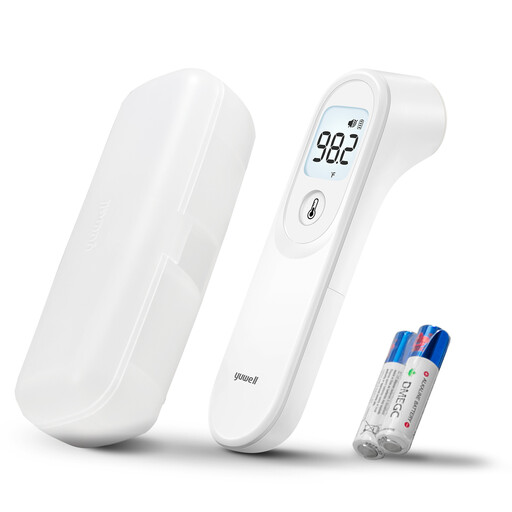
Why it suits this profile: For parents who prefer contactless forehead measurements with silent operation and a fast readout.
According to the product description, a distance sensor helps with positioning. Nevertheless, the approximately 5 cm distance specified in the instructions should be observed.
Measurement in approximately one second according to the supplier, three sensors, vibration and sound signals, plus an orange display for readings above 37.5 °C.
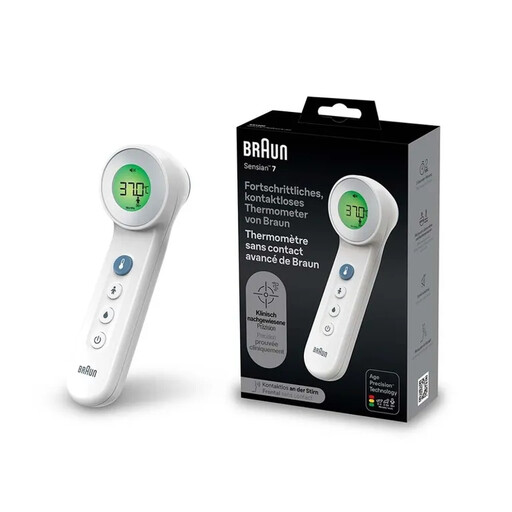
Why it suits this profile: An option for families who want to switch between contact and contactless forehead measurements and also check liquids.
According to the product description, PositionCheck guidance helps support correct placement. Even so, the colour-coded display is only a guide and does not replace medical assessment.
Contact and contactless measurement, silent mode, colour-coded display and liquid temperature measurement according to the product information.
Our complete selection includes a range of fever thermometers with different measurement methods, displays and additional features for everyday family life.
Service life depends on the batteries, drops, moisture, cleaning and storage conditions. There is no single replacement interval that applies to every model. Replace the device if the display, buttons, sensor or readings appear abnormal. For medical devices, also follow the manufacturer’s instructions regarding use and maintenance.
For battery-powered devices, the main ongoing expense is replacement batteries. AAA batteries are widely available, while models with LR41 button cells require a different battery type. A silent mode or automatic shut-off can improve convenience, but generally has less impact on running costs than how often the device is used and how frequently the batteries are replaced.
A contactless thermometer for babies can be convenient because it measures temperature without touching the skin. The key factors are the distance specified in the instructions, a clear forehead and a calm measurement environment. If readings are unusual or contradictory, repeat the measurement in line with medical advice and seek professional guidance.