Players without a dedicated surface
If you’re sitting at the side and aren’t sure whether a table or your lap can support a larger device, first compare a handheld pad with the space you actually have available.


If there’s no reliable surface at your side seat at a tournament, a handheld fightpad is an obvious choice. A leverless controller or arcade stick could work if there’s a stable surface with room for the casing, your hands and the cable. Also check the exact device variant, tournament platform and the rules of the organiser: a lock function on a controller doesn’t mean it’s automatically approved for tournaments.
If you’re sitting at the side and aren’t sure whether a table or your lap can support a larger device, first compare a handheld pad with the space you actually have available.
If you use or want to practise leverless inputs, you’ll need a stable position for your device and hands. The platform variant and tournament rules still matter.
If you want to stick with the lever controls you’ve practised, pay particular attention to the available surface, room to move the lever and cable routing at your side seat.
A good fit if: You’d rather use a directional pad in your hands when there’s no reliable surface available.
Things to consider: Plan for the cable and bear in mind that directional input feels different on a pad compared with a lever or separate buttons.
A good fit if: You use or want to learn separate directional buttons, and can rest both hands steadily on the device.
Things to consider: Even a slim device needs a stable surface; the SOCD mode and button layout must also comply with the tournament rules.
A good fit if: You play with a lever and have enough stable space on a table or your lap.
Things to consider: Check the casing, room to move the lever and cable routing at your seat.
| Consideration | What to check before buying | Who it matters most to |
|---|---|---|
| Stability and surface space | Compare the available surface, room for both hands and cable routing. | When I’m sitting at the side, I want to know whether there’s enough room for the controller and my hands before choosing a larger casing. Around 36% of consumers put stability and surface space first. |
| Platform and tournament rules | Check the exact model variant against the tournament platform and permitted configuration. | When I play on a particular console or PC, I want to be sure that the exact device variant and inputs are suitable for the competition. Around 29% of consumers prioritise platform and rules compatibility. |
| Directional input | Choose a directional pad, separate directional buttons or a lever to suit the way you play. | When I’ve practised a particular input method or want to learn one, I want the layout to suit it. For around 21% of consumers, their preferred input method is the main consideration. |
| Transport and cables | Consider the size for transport, connection type and cable routing when moving between seats. | When I need to set up and pack away my controller repeatedly, I want it to be easy to store and connect. Around 14% of consumers focus mainly on transport and connectivity. |
Controllers with similar names can be designed for different platforms. HORI distinguishes between PlayStation, Xbox and wireless OCTA variants; the 8BitDo Xbox models mentioned here also don’t list PlayStation support.
Before buying, check the full model variant against the tournament hardware and game.
Despite its low profile, a leverless controller still needs room for its base and both hands.
Compare the space it needs and your hand position with the seat you’ll actually use. If there’s no stable surface, consider a handheld pad.
A switch on the device doesn’t replace the organiser’s rules or checks on the inputs you’ve chosen.
Check the SOCD mode and button layout against the rules of the specific competition.
The Fighting Commander OCTA is a handheld pad option for PlayStation and Windows when there’s no large surface available at your seat.
Razer describes Kitsune as a low-profile leverless controller with four directional buttons for PS5 and PC.
Qanba lists the Drone 2 as an arcade stick with a lever for PS5, PS4 and PC.
8BitDo offers separate Xbox/Windows options with a lever or a leverless layout.
This Joybuy selection includes a handheld gamepad. Check that the stated platform is compatible with your tournament system.
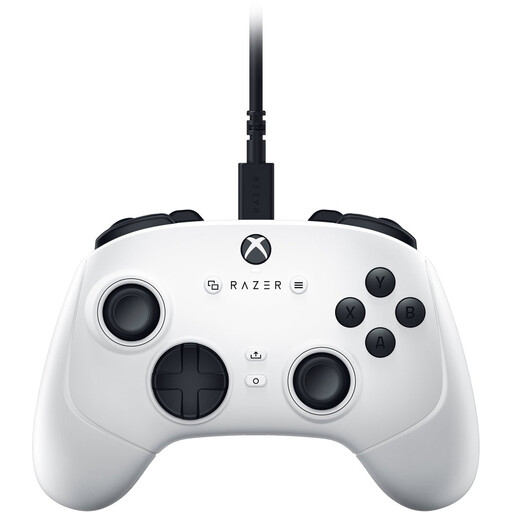 No image available
This model is a gamepad designed to be used in your hands.
The product name lists USB and compatibility with PC, Xbox Series S and Xbox Series X.
No, a Tournament Lock alone doesn’t prove that a controller is approved. For example, Evo prohibits certain hardware-assisted inputs; these rules apply to Evo and don’t automatically apply to other tournaments. Check the relevant organiser’s rules on button layouts and SOCD configuration too.
At the seat you’ll actually use, check that there’s enough room for the device and both hands, and that the cable is easy to reach. Choose the right platform variant too, and check the inputs in the game you’ll be playing.
The German Environment Agency advises against disposing of electrical waste with household rubbish. Find out about suitable local collection or return options.