Tournament players with a set input style
If you’re practising combos for a match, your controller should reflect the input style and settings you actually intend to use in competition.


Practise with the input style you intend to use in tournaments: a fightstick trains lever movements, while a leverless controller uses separate directional buttons. Also check the exact model variant, its compatibility with your gaming system and the rules of the specific event you’re entering. No design or manufacturer claim guarantees better combos.
If you’re practising combos for a match, your controller should reflect the input style and settings you actually intend to use in competition.
For long practice sessions, the specific model’s surface area, stability, cable management and access for maintenance all matter too. Manufacturer claims about these features don’t guarantee personal comfort.
You need a version that works with your gaming system, and want to know before buying whether you’ll need a particular adapter or firmware.
A good fit if: You want to practise lever movements and use the same hand movements in a match.
Consider: The lever takes up space and trains a different movement from separate directional buttons.
A good fit if: You prefer to enter directions using individual buttons and want to use the same layout in tournaments.
Consider: The sequence of movements and the learning curve differ from using a lever. Check the layout and SOCD mode of the specific device too.
| What matters | What to check | Who should pay particular attention? |
|---|---|---|
| Input style | Compare lever and all-button layouts, the reach of the action buttons and how inputs appear in the game. | If you want to practise the same movements you’ll use in a match, choosing the right input style comes first; around 28% of consumers rank it as their top priority. |
| Game and platform compatibility | Check the full model number, console generation, game version and any specified adapters or firmware. | If you want to make sure the exact variant works with your gaming system, platform compatibility is crucial; around 22% of consumers prioritise it. |
| Set-up for long sessions | Check the available surface area, including room for your hands and cables; compare the casing, underside and cable length of the specific variant. | If you practise in the same spot for long periods, the surface, stability and cable management need to suit your set-up; around 22% of consumers pay particular attention to how the controller is set up. |
| Permitted tournament settings | Before the event, check its rules on macros, turbo, SOCD mode and the profile you’ll actually use. | If you plan to take the device to a specific tournament, you’ll need an input mode that’s permitted there and can be reproduced consistently; around 17% of consumers prioritise tournament rules. |
| Maintenance and accessories | Check access for maintenance, compatible replacement parts, what’s included and any accessories specifically required for your platform. | If you want to maintain components or plan for any necessary accessories, ease of access and additional requirements are key; around 11% of consumers rank these points as their top priority. |
Platform support varies by model. Details for the HORI SPF-013U variant don’t automatically apply to other Fighting Stick α models.
Before ordering, check the full model number against your gaming system and game version.
Evo’s published rules prohibit programmable hardware inputs, rapid-fire, macros and other hardware-assisted mechanisms. A programmable feature doesn’t mean it’s allowed at an event.
Check the rules for each event before you compete, and check your profile for macros, turbo and the selected SOCD mode.
Depending on the model, using a controller with PS5 may require specific firmware or an adapter, or be limited to fighting games.
Check the instructions for your exact model and intended game version. For the PS5 use described for the MAYFLASH F500 FLAT Elite, the manufacturer specifies a separately purchased converter and says it’s limited to fighting games.
The Fighting Stick α SPF-013U is a lever option for the PlayStation and Windows platforms specified by the manufacturer.
The Daija Arcade Stick PlayStation is a lever model whose wrist rest and features you can compare with your practice space.
The Obsidian 2 is a lever model with manufacturer-stated compatibility for PS5, PS4 and PC.
The F300 Elite and F500 FLAT Elite have different designs and accessory requirements.
The PC Hit Box is an all-button option for players comparing separate directional buttons and selectable SOCD modes.
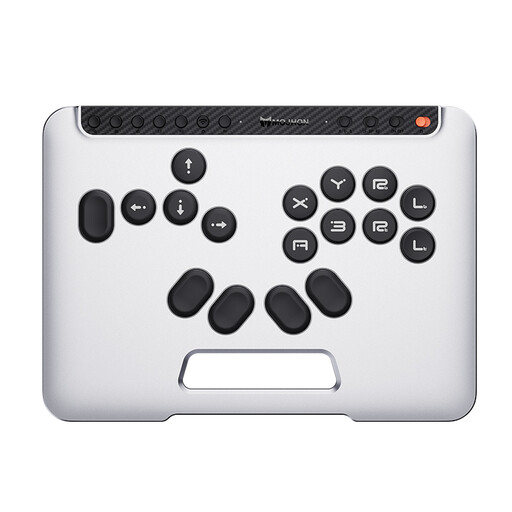
This selection is for leverless training with an all-button layout. The listed variant specifies compatibility with Switch 2, Switch, PC, iOS and Android.
 No image available
The all-button layout is suited to practice sessions where you want to train using leverless inputs.
The product title lists compatibility with Switch 2, Switch, PC, iOS and Android, as well as Bluetooth, 2.4G and wired connections.
Hot-swappable Fast-Trigger Mechanical Switches are also listed. Whether particular settings are permitted depends on the rules of the tournament you’re entering.
Choose the model variant designed for your game and platform, along with the right connection mode. For the PS5 set-up described by the manufacturer for the MAYFLASH F300 Elite, check specifically for firmware V1.15 and the MagicBoots-S5 adapter. These instructions apply to the configuration specified, not to PS5 controllers in general.
Stick to the same input style and button layout during practice that you intend to use later. Check that the surface, stability and cable management suit your own space; manufacturer claims about casing features don’t guarantee personal comfort.
If you buy from a business seller in the EU, you’re entitled to a legal guarantee of at least two years from receipt if the product is faulty. For qualifying online distance-selling contracts, you generally have a 14-day right to cancel from delivery. This is separate from any voluntary manufacturer’s guarantee.
There’s no single answer that applies to every tournament. Evo’s published rules prohibit programmable hardware inputs and rapid-fire, among other things. Check the rules for your specific event to find out whether a particular SOCD mode is allowed.