Choose a keyboard to suit your workflow: a familiar German layout and easy-to-reach navigation keys make repeated typing and switching between your catalogue and files easier. A full-size keyboard makes sense if you use the number pad frequently; TKL saves space for your mouse, while split designs and switching between devices depend on your individual needs. Your catalogue software needs to support linking entries to source files – the keyboard itself cannot do this.
Who should consider this type of keyboard?
Frequent metadata typists
If you enter lots of titles, years and notes, a familiar key layout matters. The German Federal Institute for Occupational Safety and Health recommends considering how often you use the number pad and how much room your mouse needs when choosing between a full-size and compact keyboard.
Those who switch between files and their catalogue
If you often switch between your film catalogue and source files, a familiar keyboard and the features of your catalogue software are key. Microsoft Support describes keyboard shortcuts for File Explorer in Windows; your catalogue software needs to support linking a file to a film entry.
Long-session catalogue users
If you’re planning longer sessions, consider how the keyboard’s design and key layout fit your desk and leave room for your mouse. A split keyboard may take time to get used to; you shouldn’t assume that its design will have any particular health benefits.
What should you look for when buying?
When comparing full-size and compact keyboards, the German Federal Institute for Occupational Safety and Health advises considering how often you use the number pad and whether your mouse needs more room on your desk.
| Buying priority |
What to look for |
Who is this important to? |
| Layout and metadata entry |
Check the physical key layout and your operating system’s input layout. Consider whether you use the number pad often. |
If I enter lots of film titles, years and notes, I want a familiar German layout; I mainly need a number pad for frequent number entry. Around 30% of consumers are likely to prioritise metadata entry. |
| Switching between files and your catalogue |
Check whether your catalogue software supports file links, and whether you’re comfortable with the navigation keys and keyboard shortcuts. |
If I switch between my catalogue and source files, I need suitable navigation keys; my catalogue software must support the links themselves. Around 30% of consumers are likely to prioritise switching between files and their catalogue. |
| Fit and room for your mouse |
Compare the keyboard’s design and key layout with your desk. A split keyboard may take time to get used to. |
For longer sessions, I want to arrange my keyboard and mouse to suit my workspace. Around 20% of consumers are likely to prioritise fit and positioning. |
| Switching between devices and customisable keys |
Check compatibility with your devices and operating systems, as well as which configuration software you’ll need. |
If I use several devices or want to assign recurring actions to keys, I first check whether my systems and the required software support this. Around 20% of consumers are likely to prioritise switching between devices or customisable workflows. |
Common buying mistakes
-
Buying a keyboard because you think it will link files
A keyboard accepts input, but it doesn’t manage the link between a film entry and its source file.
First, check whether your catalogue software has a file reference feature.
Switching catalogue software may mean extra time spent setting things up.
-
Choosing TKL just because it’s more compact
A TKL keyboard leaves more room for your mouse, but it doesn’t have a built-in number pad.
Choose based on how you actually use numbers and your mouse, as the German Federal Institute for Occupational Safety and Health recommends when making this comparison.
-
Assuming ‘ergonomic’ means it has proven health benefits
Calling a keyboard split doesn’t prove that it will have a particular effect for you, or treat or prevent any discomfort. The manufacturer of the PERIBOARD-512 B also notes that it may take time to get used to.
Consider whether the key layout and positioning suit your workspace, rather than assuming the design will have a particular effect on your health.
-
Assuming models with the same name have the same features
Models in the same range may have different layouts, switches and keycaps.
Check the exact version and applicable returns policy before ordering.
Key brands at a glance
CHERRY
The wired STREAM models show the difference between full-size and TKL layouts while keeping the same main key section.
- CHERRY describes both versions as using SX scissor switches.
- The TKL version doesn’t have a number pad. Claims about quiet typing are the manufacturer’s descriptions, not values independently measured here.
Logitech
MX Keys S is worth considering if you’ll make use of a low-profile keyboard with device switching or customisable actions.
- Logitech lists backlighting, Smart Actions and switching between up to three devices.
- According to Logitech, Smart Actions need to be set up using Logi Options+. Also check the physical layout of the specific version.
Perixx
The PERIBOARD-512 B is a wired, split full-size alternative.
- Perixx offers a German QWERTZ version with a number pad and wrist rest.
- The manufacturer notes that it may take time to get used to the unfamiliar split key layout. This isn’t evidence of any proven health benefit.
Keychron
The K10 Pro is a mechanical full-size option for anyone looking for a suitable ISO-DE version and customisable keys.
- Keychron lists VIA macro customisation and several ISO versions.
- The layout, switches and keycaps depend on the specific version, so check each detail separately.
Keyboards at Joybuy
The selection includes German-layout keyboards for wired full-size setups, as well as wireless and customisable options.
 No image available
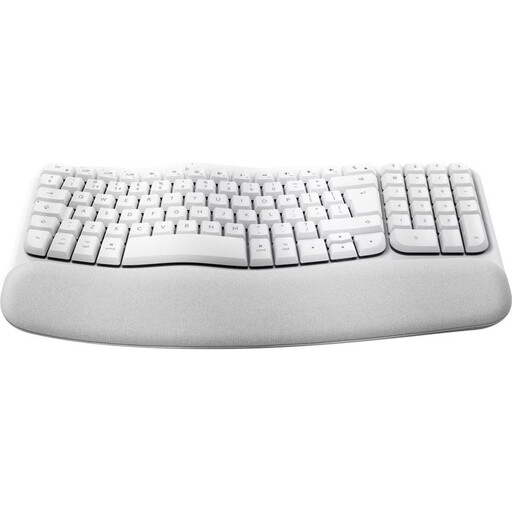
Logitech 920-012404 Ergonomic Wave
Suited to a workspace where you want to switch wirelessly between several devices.
Bluetooth; German QWERTZ layout; multi-device connectivity; memory foam wrist rest.
View at Joybuy
 No image available
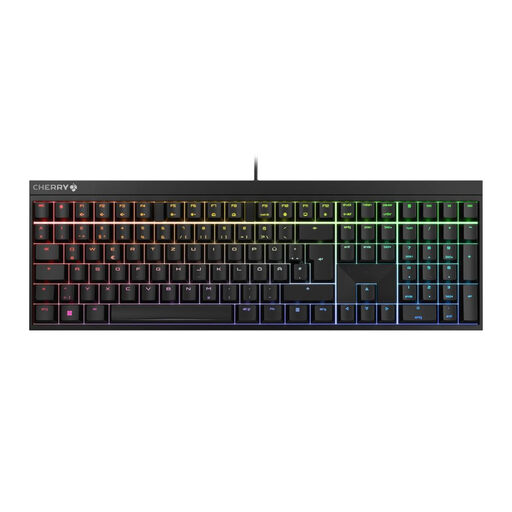
CHERRY MX 2.0S, German QWERTZ layout
For a fixed workspace if you’re looking for a wired full-size keyboard with a German layout.
Wired; mechanical; CHERRY MX2A Red switches; full-size; RGB backlighting.
View at Joybuy
 No image available
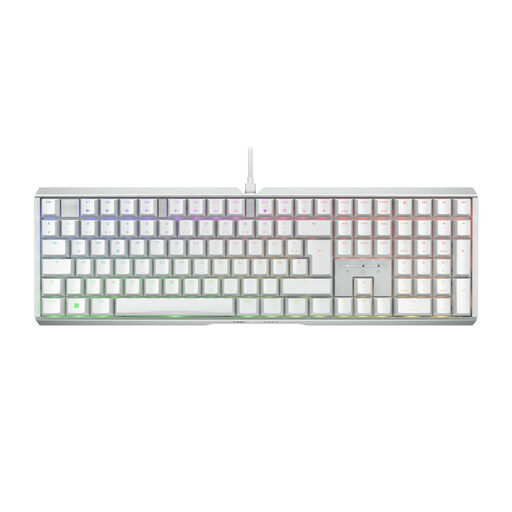
CHERRY XTRFY MX 3.1, German layout
A wired mechanical full-size option if you prefer a German layout.
MX2A Brown switches; RGB backlighting; aluminium frame; white finish.
View at Joybuy
 No image available
Ticktype EVO75, ISO-DE, Tri-Mode
A customisable keyboard for anyone looking for a German ISO layout and VIA compatibility.
Mechanical; wireless with tri-mode connectivity; ISO-DE layout; VIA-compatible; hot-swappable; 8000 mAh.
View at Joybuy
 No image available
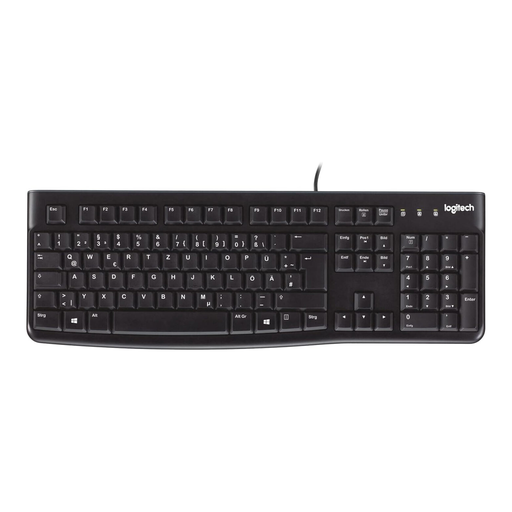
Logitech K120, German QWERTZ layout
For a fixed PC or laptop setup with a wired full-size keyboard.
USB plug and play; full-size; German QWERTZ key legends; spill-resistant.
View at Joybuy
Frequently asked questions
Can a keyboard automatically link film details to source files?
No. A keyboard accepts input; check whether your catalogue software has a field or feature for file references. Data Crow, for example, describes customisable fields, but no general keyboard feature for linking files.
What should I check when using a QWERTZ keyboard with Windows?
Check both the legends printed on the keys and the input layout selected in Windows. Microsoft Support explains how to manage input layouts in the language settings.
How do I open File Explorer in Windows?
According to Microsoft Support, press Windows key + E to open File Explorer. Whether you can link a file you find there to a film entry depends on your catalogue software.
What rights do I have if an online purchase is faulty?
When you buy from a business seller in the EU, you generally have a legal guarantee of at least two years from the date you receive the goods; this is separate from any voluntary manufacturer’s guarantee. Distance purchases generally come with a 14-day right to cancel from delivery, subject to legal conditions and exceptions. Your Europe explains these EU rules.
Do workplace rules apply to every personal film collection?
No, not across the board. ASR A6 from the German Federal Institute for Occupational Safety and Health applies to screen work in workplaces and at teleworking workstations; use at home outside such teleworking arrangements is exempt.


