A 27-inch QHD monitor may be all you need to manage film lists and file paths, provided you can arrange your catalogue, folders and text so they’re easy to read. If you regularly check covers or stills for detail, 4K may be worth considering. The right scaling and support from your connected computer are still key. It’s the software, not the monitor, that links your catalogue to your film files.
Who is this guide for?
Working with several catalogue windows
If you use film data, your catalogue and source folders side by side, clear text and a layout that suits your windows matter. The Kodi documentation explains how to add source folders and manage your library in the software.
Collectors checking covers and images
If you regularly check covers or stills as well as metadata, details and text on the display may matter more. The official Kodi Wiki also explains how file and folder names affect film identification.
Laptop users who move between workspaces
If you catalogue on a laptop and want to connect your display, peripherals or charger through the monitor, check that its ports and features meet your computer’s requirements.
What should you look for when buying?
| Buying priority |
What to check |
Who is it important to? |
| Workspace and readability |
Try your catalogue and file folders with your preferred text size and window layout. |
If I want to read my catalogue, folders and source files side by side, I need a workspace that suits me. Around 33% of consumers put easily readable catalogue windows first. |
| Cover and image details |
Check the resolution and scaling against the covers, stills and text you actually use. |
If I regularly check covers or stills, I want to see the detail without making the text too small. Around 27% of consumers prioritise checking images. |
| Laptop and peripherals |
Check USB-C video output, the charging power you need and the ports for your devices or LAN. |
If I want to use my laptop with as few connections to the monitor as possible, its features need to suit my device. Around 20% of consumers prioritise laptop connectivity. |
| Positioning and operation |
Check how much space it needs and how it can be adjusted. When comparing energy use, check the label for the exact model. |
If I spend long periods cataloguing, I want to position the screen comfortably and compare its operating characteristics. Around 20% of consumers make this their priority. |
Avoiding common buying pitfalls
-
Expecting a monitor to fix broken file links
Source folders, file names and their organisation are managed in the catalogue software. A different screen won’t fix these issues.
First, test the process from source file to catalogue entry with a few films. Then choose a monitor based on the view you need.
-
Assuming USB-C means full laptop compatibility
USB-C features and maximum charging power vary by model. The port alone doesn’t tell you whether your laptop can send a video signal through it or charge adequately.
Check your laptop’s video output and compare its charging requirements with the specifications for the exact monitor.
If the ports or charging power aren’t sufficient, you may need an extra connection or a separate power supply.
-
Assuming 4K guarantees more usable screen space
More native pixels don’t automatically make text and windows easier to read. Scaling and the software you use matter too.
Try your catalogue software with a text size you’d actually use instead of comparing pixel counts alone.
-
Confusing a warranty with your statutory rights
Germany’s consumer advice service distinguishes statutory rights against the seller from a voluntary manufacturer’s warranty.
If there’s a fault, check your rights against the seller separately from the specific terms of any warranty on offer.
Key brands at a glance
AOC
The Q27P3CV is a 27-inch QHD option for catalogue windows and a USB-C laptop setup.
- AOC lists a resolution of 2.560 × 1.440 pixels, a hub, RJ45 and USB-C with up to 65 W for this model.
- Before buying, check that the charging power suits your laptop and that QHD is detailed enough for your needs.
Dell
According to Dell, the P2725QE combines a 27-inch 4K display with hub features.
- Dell lists a resolution of 3.840 × 2.160 pixels, an IPS panel, USB-C with 90 W and RJ45 for the P2725QE.
- These specifications apply to the P2725QE. You’ll still need to check compatibility with your laptop and choose the scaling that suits you.
ASUS
The ProArt PA279CRV is an option for checking covers and image quality.
- ASUS lists a 27-inch 4K display, colour modes and USB-C Power Delivery at 96 W for this model.
- Colour and accuracy figures are manufacturer specifications, not independent measurements by our editorial team.
EIZO
The FlexScan EV2740X is a 27-inch 4K office monitor with USB-C docking.
- EIZO’s German specification sheet lists a resolution of 3.840 × 2.160 pixels, USB-C with up to 94 W and RJ45.
- The listed colour space is sRGB; the 4K resolution alone doesn’t indicate support for other colour spaces.
LG
The 27UP850K-W is a 27-inch 4K IPS option for viewing images.
- LG lists USB-C, an adjustable stand and typically 95 % DCI-P3 for this model.
- The manufacturer’s specifications don’t confirm that other LG variants have the same features, or provide independently measured colour performance.
Joybuy products for catalogue work
The products below are 27-inch QHD monitors; some models also list USB-C docking. If you often check cover details, compare the resolution and scaling with what your workflow requires.
 No image available
KTC H27T27 QHD monitor, 27 inches
The listed 27-inch QHD resolution is relevant if you want to view your catalogue and files on one screen.
2.560 × 1.440 pixels, Fast-IPS, 99 % sRGB and a tilt-adjustable stand.
Joybuy
 No image available
Philips 276B9 QHD IPS monitor
The QHD resolution and USB hub may be useful when working with a catalogue, folders and connected peripherals.
27 inches, 2.560 × 1.440 pixels, IPS, USB-C with up to 65 W and a USB hub.
The listed USB-C charging power needs to meet your laptop’s charging requirements.
Joybuy
 No image available
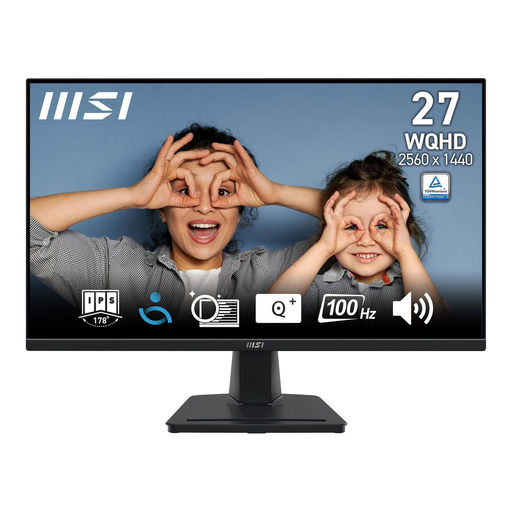
MSI PRO MP275QDE WQHD office monitor
The listed size and WQHD resolution are useful criteria if you want to display catalogue fields and file folders together.
27 inches, 2.560 × 1.440 pixels, IPS, 100 Hz and a tilt-adjustable stand.
HDMI and DisplayPort are listed as connections.
Joybuy
 No image available
MSI PRO MP275QPDGDE WQHD docking monitor
Docking features may be useful for a laptop workspace, provided the video output and charging requirements are compatible with your computer.
27 inches, 2.560 × 1.440 pixels, IPS, 100 Hz, USB-C with up to 98 W, RJ45, USB hub and KVM.
For the connection to work, your laptop’s video output and charging requirements need to match the USB-C features.
Joybuy
 No image available
Dell Pro Plus P2725DE QHD monitor
The QHD resolution gives you a possible workspace for catalogue and file views. If you’re using a laptop, check that the docking features are compatible with it.
27 inches, 2.560 × 1.440 pixels, IPS, USB-C with up to 90 W and a USB hub.
The listed USB-C power needs to meet your laptop’s charging requirements.
Joybuy
Frequently asked questions
Will a monitor link my catalogue entries to my film files?
No, that’s handled by the software you use. The Kodi documentation explains how to add a source folder and then scan it into your library.
What should I check first when setting it up?
Connect your computer using a video port supported by both devices, then choose a resolution and scaling that are easy to read. If you want to use USB-C for charging, compare the monitor’s charging power with your laptop’s requirements.
Why aren’t my existing films showing correctly in the catalogue?
First, check the source folders and file and folder names. The Kodi documentation notes that naming matters when metadata providers identify files; a different monitor won’t fix these matching errors.
How can I compare a monitor’s energy consumption?
Compare the EU energy label for the exact model. Your personal energy use also depends on how you use it, so the label alone can’t tell you your individual electricity costs.
Are there general requirements for the size or resolution of monitors used at home?
The ASR A6 workplace regulation doesn’t set such a requirement for private film collectors: it excludes use in private homes outside teleworking arrangements. Monitors sold in the EU are subject to product-specific ecodesign and energy labelling rules.


