Film-score fans with room for stereo
If you mostly listen to soundtracks without the screen on and want to position two speakers separately, a stereo pair is a good starting point. KEF describes the LSX II as a system with two separate speakers.


If you mainly listen to film scores as music and have room for two speakers, a compact stereo pair is a good place to start. If you want one unit for both TV sound and music, a compact soundbar could be the answer. First check the space available and your audio sources, then look at connections, bass controls and how each system works. A surround-sound logo alone won’t tell you which option is right for your living room.
If you mostly listen to soundtracks without the screen on and want to position two speakers separately, a stereo pair is a good starting point. KEF describes the LSX II as a system with two separate speakers.
If space on your sideboard or shelf is limited, check the dimensions and connections at the intended position. Edifier lists the dimensions of the R1280DBs, while Yamaha gives the SR-C20A a width of 600 mm.
If you want to stream music as well as play TV sound through the same system, compare the supported ways to play music and the TV connections. KEF lists HDMI-ARC for the LSX II LT; Yamaha describes HDMI-ARC on the SR-C20A, while Sonos lists Wi-Fi music streaming for the Beam (Gen. 2).
First decide whether you have room for two separate speakers, a single unit or a soundbar by the TV. Then check that the connections and controls suit your devices.
A good fit if: You mainly listen to film scores as music and can position two speakers separately.
Worth considering: You’ll need space for two speakers and should check how they connect to each other.
A good fit if: You want to listen to music from a device or supported streaming services and only have room for one unit.
Worth considering: A single unit can’t be positioned separately to the left and right like a stereo pair.
A good fit if: You want to enjoy film scores while watching TV and have space for a single unit in front of or below the screen.
Worth considering: Check the space around your TV and the connection between the TV and soundbar. For Dolby Atmos, the content and connection also need to be compatible.
| Priority | What to check when buying | Who it matters most to |
|---|---|---|
| Stereo image | Check whether a complete pair of speakers is included, how they connect and whether you can position them separately. | If I mostly listen to soundtracks without the screen on, I want to position two speakers separately and make the stereo image my main consideration. Around 31% of consumers put the stereo image first. |
| Space | Measure the width, height and depth of the intended space, and check that the speakers won’t block the screen or any connections. | If my living room has limited free space, I base my choice on the dimensions of the shelf or sideboard. Around 25% of consumers make space requirements their main concern. |
| TV connection | Compare the TV’s outputs with the inputs on the specific model. For HDMI-ARC, both the TV and audio system must support this connection. | If I want to listen to music and TV sound through the same system, I first check that the two devices are compatible. Around 19% of consumers prioritise the TV connection. |
| Bass control | Check the available controls and sound modes, and whether a subwoofer is built in, optional or included as part of the system. | If I want to tailor the bass to my listening needs, I look at the available adjustment options rather than relying on a single promise about sound quality. Around 13% of consumers put bass control first. |
| Music streaming | Compare Bluetooth, Wi-Fi and any specifically listed streaming services with your devices. If the system uses an app, check what setup involves too. | If I want to start playing music easily from a device or service I already use, the right connection option matters to me. Around 12% of consumers prioritise easy streaming. |
Even a system with a wireless connection may need a power supply, a cable between the speakers or app setup. KEF lists a cable connecting the speakers for the LSX II LT; the LSX II setup instructions describe using a home network and app.
For the exact version you’re considering, check what’s included, the power connections and how setup works.
Depending on the model, you may need to allow for connection cables and extra setup time.
The Edifier R1280DBs can be connected to an external subwoofer; a dedicated output is also listed for the KEF LSX II LT. An output like this doesn’t mean a subwoofer is included with the system.
Check whether you’re happy to start with the standard setup and whether extra bass hardware is really what you need.
If you decide you want an additional subwoofer, you may need to buy it separately and find room for it.
Bluetooth for music isn’t a substitute for a TV connection. Dolby explains that HDMI-ARC or eARC requires both the TV and soundbar to support the relevant connection. Sonos describes the Beam (Gen. 2)’s Atmos height channels as virtual.
Before comparing sound features, check the source, connections and audio format you want to use with the specific model.
If the connections aren’t compatible, you may need a different connection solution or to replace a device.
Active stereo pairs such as the R1280DBs are worth considering if you want to listen to music over Bluetooth or from wired sources. These details apply to the model mentioned.
Compact connected stereo systems such as the LSX II and LSX II LT are options for music and for connecting a TV. Features vary between versions.
The compact SR-C20A soundbar is a single-unit option for use by the TV and, according to Yamaha, can also play music over Bluetooth.
According to Sonos, the Beam (Gen. 2) combines TV features with music streaming over Wi-Fi.
The Authentics 200 is a single connected speaker for music, if you’re not looking for a stereo pair that can be positioned separately.
This selection includes compact soundbars and an active stereo pair for listening to music and TV.
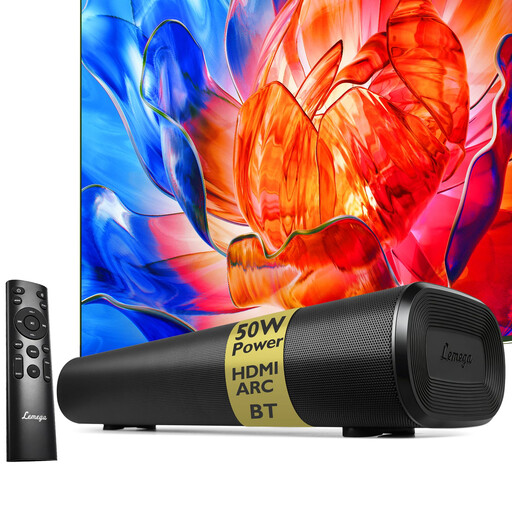 No image available
A good choice if you want to stream music over Bluetooth and connect a TV via HDMI ARC.
Connections: HDMI ARC, optical, AUX and USB; several sound modes.
 No image available
A good choice if you want to listen to film scores through two separately positioned speakers, while also using Bluetooth or a TV connection.
Active stereo pair with 40 W; Bluetooth and HDMI ARC.
Connections: optical, USB, AUX and RCA; bass and treble controls, plus remote control.
The passive speaker connects to the active one via speaker cable and needs its own space.
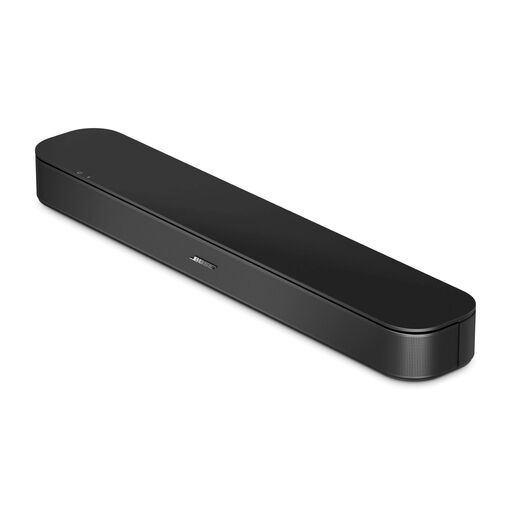 No image available
A good choice if you want to play TV sound and Bluetooth music through a compact soundbar.
Connections: HDMI ARC and optical; Bluetooth 4.2 and a dialogue mode.
Dimensions: 59,4 × 5,6 × 10,2 cm. An additional bass module is optional and sold separately.
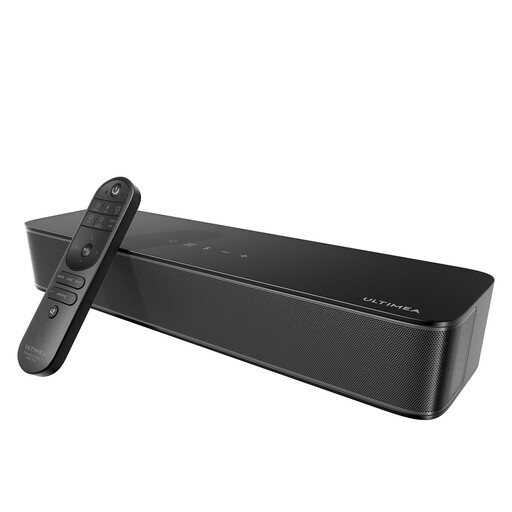 No image available
A good choice if you’re looking for a soundbar with a built-in subwoofer and app controls in one unit.
2.1 system with built-in subwoofer; 120 W.
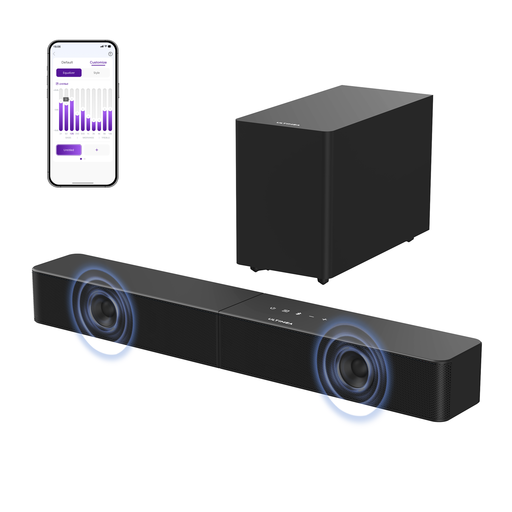 No image available
A good choice if you want to use a soundbar with HDMI ARC and a separate subwoofer for music and TV.
240 W peak power; wireless subwoofer, HDMI ARC and Bluetooth 6.0.
App controls; the separate subwoofer needs its own space.
No, Dolby Atmos isn’t a requirement for listening to film scores. Choose speakers and a connection that suit your music source. If you want to play Atmos content through a TV, check the content, TV output and compatible audio system together.
Check whether your TV and soundbar support HDMI-ARC or eARC, then connect the correspondingly labelled ports with a suitable HDMI cable. Dolby describes this connection for devices that support ARC or eARC.
First measure the space available, then use the controls or modes on the specific model. Edifier lists controls for the R1280DBs, while Sonos describes a Night Sound mode for the Beam (Gen. 2). The settings that work for you will depend on your room and listening habits.
The seller is responsible for your statutory rights. EU consumer information states that goods are covered by a minimum two-year legal guarantee from the date you receive them; an additional manufacturer’s warranty doesn’t replace this right.
No. The German Environment Agency advises that old electrical equipment must be collected separately. For example, take it to a recycling centre or a suitable retailer take-back point, and dispose of removable batteries separately.