Which option suits you?

Soundtrack listeners with a regular listening spot

If you often listen to film soundtracks without watching the film and can position two speakers around your preferred seat, start by comparing stereo pairs and their inputs. Which connections you need depends on the specific model and your music source.

TV and music listeners with limited space

If you want the same device to play both TV sound and soundtracks but don’t have room for two large speakers, look at soundbars and how they connect to your TV. Also check which music sources the specific model supports.

Flat-dwellers mindful of their neighbours

If you often listen at low volumes, check whether you can adjust the bass and volume on the device. Sony and Sonos list a night mode for certain models; it’s no substitute for being considerate or checking the rules where you live.

What to consider when buying

Active stereo pair

A good fit if: film soundtracks are your main focus and you have space on either side of your listening spot. Teufel’s ULTIMA 40 AKTIV 3 is one example, with HDMI ARC, an optical input and Bluetooth.

Worth considering: you’ll need space for two speakers; the ULTIMA 40 AKTIV 3 also needs a cable connecting the speakers.

Soundbar without an additional subwoofer

A good fit if: your TV is often the source, or you’d prefer to keep the speakers together near the screen.

Worth considering: bass and the sense of space depend on the model, its position and any additional components you can add.

Soundbar with a subwoofer or rear speakers

A good fit if: you watch films with immersive effects as well as listening to music, and have space for additional components. JBL describes the Bar 1300MK2 as having detachable surround speakers and a subwoofer.

Worth considering: more components need more space, and the channel count alone won’t tell you how convincing the effect will be from your listening spot.

AV receiver with separately chosen speakers

A good fit if: you want to build a system for music and multi-channel film sound in stages. Denon lists 7.2 and 5.2.2 configurations among the options for the AVR-X1800H.

Worth considering: the receiver isn’t a speaker system on its own; you’ll also need to choose speakers, plan the cabling and layout, and factor in the total cost.

Buying priority What to check before buying Who it matters most to
Film soundtracks at your listening spot Check whether you can position two speakers and whether the model works with your music source. If I mainly listen to film soundtracks without watching the film, I want to enjoy them from my regular seat with the speakers positioned to suit. Around 31 % of consumers prioritise listening to music from their chosen listening spot.
Positioning in an open-plan living space Measure the space available and plan where the system will sit in relation to your main listening spot. If my layout offers little uninterrupted space, I want to know where the devices and additional speakers can go before I buy. Around 31 % of consumers prioritise a practical setup.
Listening at low volumes Check the bass controls and the conditions for using night mode on the specific device. If I often listen at low volume, I want to be able to adjust loud peaks and bass to suit my living situation. This is a priority for around 19 % of consumers.
TV connections and audio formats Compare the connections and supported formats on your TV and audio device. If my TV is often the source for film sound, I want to make sure its connections work with the device I choose. Around 19 % of consumers prioritise TV compatibility.

Avoiding buying pitfalls

  • Using a soundbar ranking as a guide to listening to music on its own

    A soundbar ranking won’t necessarily tell you how well a model plays film soundtracks from your listening spot in an open-plan living space.

    First, choose the type of system based on how you’ll mainly use it and the space you have. Then compare models within that category.

  • Assuming the channel count or surround format guarantees the same effect in your room

    The right setup and the requirements of each system affect what you hear from your listening spot. The stated channel count alone doesn’t guarantee a particular surround effect in your layout.

    Check which content, connections and additional speakers you’ll need for the features you want, and plan where they’ll go before you buy.

  • Assuming an expandable system is a complete set

    An AV receiver needs speakers chosen separately. A soundbar may also need additional components, such as a subwoofer or rear speakers.

    Check what’s included against the setup you actually want to use.

    Additional speakers, subwoofers and cables may need extra space and careful planning.

Brands to help you compare

Teufel

Worth considering when comparing an active stereo pair with a soundbar; the features listed apply to the specific model mentioned.

  • Teufel describes the ULTIMA 40 AKTIV 3 as an active pair that doesn’t need an external amplifier, with features including HDMI ARC and Bluetooth.
  • The pair needs space for two speakers and a connecting cable. The CINEBAR ULTIMA is a different product, with an integrated subwoofer and virtual surround.

Sony

Worth considering if you want to compare a soundbar that sits near your TV and doesn’t necessarily need a separate subwoofer.

  • Sony lists an integrated subwoofer, HDMI eARC/ARC, an optical input, night mode and voice mode for the HT-A3000.
  • Supported formats vary by input. Sony describes 360 Spatial Sound Mapping for this model as requiring optional rear speakers.

Sonos

Worth considering if you want a soundbar that you can expand with additional components later.

  • Sonos lists HDMI eARC, music features and night mode for the Arc Ultra; you can add a subwoofer and rear speakers.
  • According to Sonos, you need to set up the Arc Ultra in the app before playing TV sound. Claims about sound quality come from the manufacturer and aren’t a comparison test for an open-plan living space.

JBL

Worth considering when comparing systems designed for a more comprehensive film sound experience.

  • JBL describes the Bar 1300MK2 as having detachable surround speakers and a subwoofer.
  • Additional components need space. A model name without “MK2” doesn’t automatically refer to the same product.

Denon

Worth considering if you want to choose the speakers for a home cinema system separately.

  • Denon lists 7.2 and 5.2.2 configurations, HEOS streaming and room correction among the features of the AVR-X1800H.
  • The receiver isn’t a complete speaker set. The manufacturer’s claims about room-filling sound don’t prove that it’s suitable for every open-plan layout.

Joybuy products on this topic

This selection includes soundbars for TV and music, as well as an active stereo bookshelf speaker pair. Compare a setup grouped around your TV with separate speakers positioned for listening.
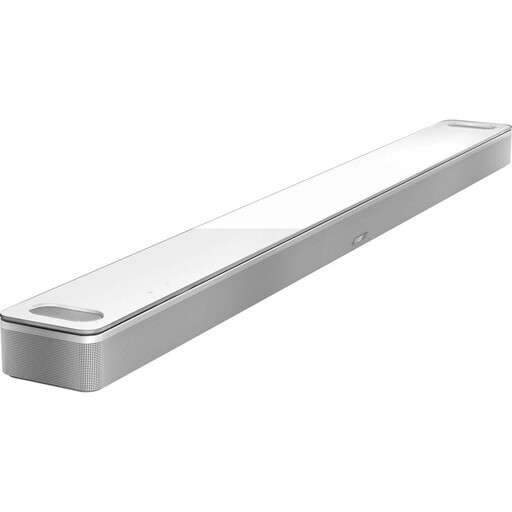
Bose Dolby Atmos soundbar, 5.1.2-channel, Arctic White

Bose Dolby Atmos soundbar, 5.1.2-channel, Arctic White

Worth considering if you want a soundbar for both TV sound and music, with a choice of wired and wireless sources.

Listed connections include HDMI eARC, an optical input, Bluetooth and Wi-Fi. Setup is described as using the Bose Music app, a Wi-Fi connection and room calibration with the included ADAPTiQ headset.

View at Joybuy
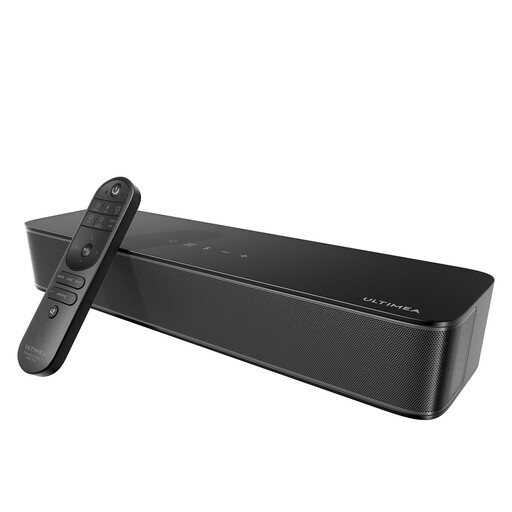
ULTIMEA Poseidon M20 soundbar, 120 W, 2.1-channel

ULTIMEA Poseidon M20 soundbar, 120 W, 2.1-channel

An option if you want to stream music over Bluetooth and are looking for a soundbar with an integrated subwoofer.

Bluetooth 5.4, an optical input, AUX and USB are listed. Night is listed as an EQ mode; check whether it suits the way you want to use the soundbar.

View at Joybuy
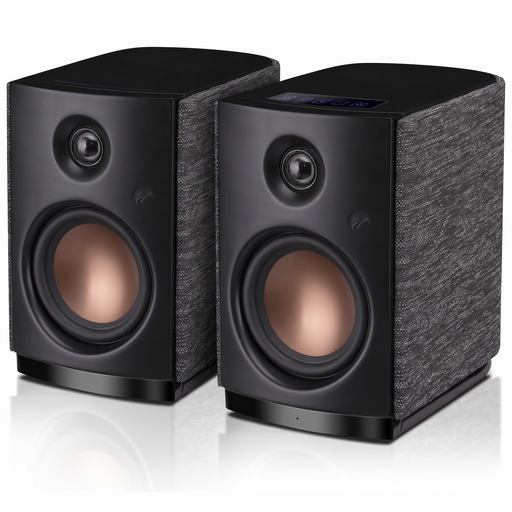
HiVi-Swans OS-10 active stereo bookshelf speaker pair

HiVi-Swans OS-10 active stereo bookshelf speaker pair

Worth considering if you’re looking for an active stereo pair that can be positioned separately for listening to film soundtracks.

Bluetooth 5.0 and AUX are listed. The product name specifies a 4-inch woofer and 62 W RMS.

View at Joybuy
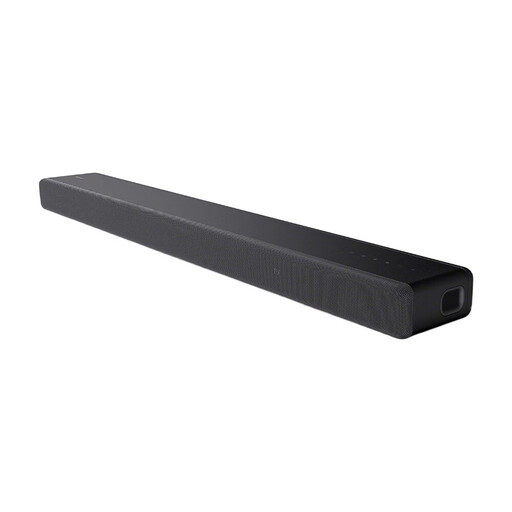
Sony HT-A3000 3.1-channel Dolby Atmos soundbar with integrated subwoofer

Sony HT-A3000 3.1-channel Dolby Atmos soundbar with integrated subwoofer

An option if you want to play TV sound through a soundbar without needing space for a separate subwoofer.

Sony lists HDMI eARC/ARC, an optical input, night mode and voice mode. Format support varies by input. 360 Spatial Sound Mapping requires optional rear speakers with this model.

View at Joybuy
TCL Q65H soundbar, 5.1-channel, 580 W

TCL Q65H soundbar, 5.1-channel, 580 W

Worth considering if you want to compare a soundbar for films and music that comes with a separate subwoofer.

HDMI eARC, an optical input, AUX, USB and Bluetooth 5.3 are listed. The set includes a separate wireless subwoofer, which will need its own space.

View at Joybuy

Frequently asked questions

Should I choose a stereo pair or a soundbar for film soundtracks?

If you mainly listen to film soundtracks without watching the film and can position two speakers, start by comparing stereo pairs. If the same device will often play TV sound or you have limited space, a soundbar may be a better fit. To add extra film channels, you’ll need to plan for compatible components and space to put them.

How should I position speakers in an open-plan living space?

First, decide where your main listening spot will be and measure the space available. Dolby recommends placing a soundbar close to the TV; when planning a multi-channel system, take the room size and speaker positions into account. This doesn’t guarantee a particular surround effect in every open-plan layout.

Can I simply connect a soundbar to my TV?

Before you decide, compare the connections and audio formats supported by both devices. The Sony HT-A3000 is documented as having HDMI eARC/ARC and an optical input, although format support varies by input. According to Sonos, you need to set up the Sonos Arc Ultra in the app before playing TV sound.

Is there a standard quiet time for film soundtracks throughout Germany?

The Federal Environment Ministry’s guidance on neighbourhood noise doesn’t establish one standard time across Germany; it refers to regulations set by the federal states and local authorities, as well as house rules. Section 117 of the Administrative Offences Act (OWiG) covers noise that is unlawful under the conditions set out in the law or avoidable in the circumstances. So check the rules that apply where you live, too.