For tiny joints, an interchangeable-lens camera with a suitable macro lens is a good option. Magnification and the actual working distance matter more than the 4K label alone. A USB webcam is better suited to a fixed, computer-connected desk set-up, while a compact gimbal camera may be the better choice if you often change your perspective. DJI specifies a minimum distance of 20 cm for the Osmo Pocket 3. Before choosing, check that your hands, tools, lighting and desired framing will all fit in your planned set-up.
Which option suits you
Filming delicate work
If you want small jewellery components and their connections to fill the frame, magnification and space for your hands and tools are important factors. High video resolution alone doesn’t tell you how large your subject will appear.
Streaming at your workbench
For a fixed desk view with a direct computer connection, check that the camera, connection and required software suit your recording set-up.
Showing your jewellery and workflow
If you want to switch between close-ups, your hands and a wider scene, plan your framing, lighting and camera position together.
What to consider when buying
Interchangeable-lens camera with a macro lens
A good fit if: You want individual jump rings, settings or tool contact points to appear large in the frame.
Consider: You’ll need to factor in the cost of a separate macro lens. High magnification can also limit the space in front of the lens.
USB webcam connected to a computer
A good fit if: You mainly film or stream directly from your computer and can set up a fixed desk view.
Consider: A presentation or desk mode doesn’t automatically mean the camera offers enough magnification for very small jewellery details.
Compact gimbal camera
A good fit if: You want to change perspectives as well as film at your workbench.
Consider: DJI gives the Osmo Pocket 3 a focus range from 20 cm; a Product Showcase mode doesn’t replace a specified macro magnification ratio.
| What you need |
What to check before buying |
Who it matters most to |
| Seeing tiny assembly details |
Check the magnification ratio, working distance from the front of the lens and framing with your hands in position at the planned camera location. |
If I want to show small jump rings or settings clearly, the magnification in my planned frame is what matters. Around 36% of consumers put detail visibility first. |
| Keeping your hands free and maintaining a stable desk view |
Try out where to place the tripod or mount on your desk, and make sure the camera and lighting won’t get in the way of your hands. |
If I want to show the whole process, I need space for my hands and tools rather than a shot that’s too tight. Around 29% of consumers prioritise a practical desk view. |
| Controlling the lighting on small subjects |
Try different lighting positions with your own jewellery and framing. |
If I want to show surfaces under my studio lighting, I plan the lighting and shooting distance together. Around 21% of consumers put lighting control first. |
| Computer recording and clear audio |
Check the USB version, operating system, recording software and microphone requirements in advance. |
If I stream directly from my computer or talk through a tutorial, the connection and audio set-up need to suit my workflow. Around 14% of consumers prioritise this live-streaming and audio set-up. |
Common misconceptions
-
Assuming 4K means you’ll get a good macro view
Resolution and maximum magnification describe different things. The 4K label alone doesn’t tell you how large a small piece of jewellery will appear in the frame.
Check how the smallest important step in your process looks in your planned framing. For interchangeable-lens cameras, check the specifications of a suitable lens too.
An interchangeable-lens camera may need an additional compatible macro lens.
-
Confusing minimum focus distance with the space in front of the lens
Sony distinguishes between the SEL30M35’s minimum focus distance of 9.5 cm from the sensor plane and a 2.4 cm gap between the subject and the front of the lens at the closest focusing distance. This may leave little room for your hands, tools or lighting.
Compare the working distance from the front of the lens and test the actual mounting position before choosing your set-up.
-
Choosing a compact camera for macro details based on Product Showcase mode alone
DJI specifies a minimum distance of 20 cm for the Osmo Pocket 3. The focus mode doesn’t prove that you can fill the frame with very small assembly details from close up.
Check how your smallest components will fit in the frame at this distance.
-
Judging computer compatibility by the USB-C connector alone
Logitech specifies USB-C with USB 3.0 for the MX Brio. Logitech Support states that only basic UVC support is available on ChromeOS and Linux.
Check the connection standard, operating system and required software features separately against your recording software.
Key brands at a glance
Sony
The ZV-E10 II is an interchangeable-lens camera. A separate E-mount APS-C macro lens may be worth considering for close-ups.
- Sony Germany specifies a 1:1 magnification ratio for the SEL30M35.
- At the closest focusing distance, Sony Germany states there is a 2.4 cm gap between the subject and the front of the lens. This specification applies to the SEL30M35, not every Sony set-up.
Canon
The EOS R50 V is a video-focused RF interchangeable-lens camera. For close-ups, you can consider it with a suitable macro lens as a separate set-up.
- Canon Germany lists a microphone input and headphone output on the EOS R50 V. Canon specifies a 1:2 magnification ratio for the RF 35mm F1.8 Macro STM.
- CHIP notes that the EOS R50 V has no viewfinder or in-body image stabilisation. These test findings relate to the camera body.
Logitech
The MX Brio is a webcam for a fixed, computer-connected desk set-up or live demonstration.
- Logitech specifies 4K at 30 frames per second and USB-C with USB 3.0.
- A presentation mode that tilts downwards doesn’t, by itself, show that the camera offers enough magnification for small jewellery details.
DJI
The Osmo Pocket 3 is a compact gimbal camera for filming from different perspectives.
- DJI lists a Product Showcase focus mode.
- The specified focus range starts at 20 cm. This is a specific limitation of this model for especially close assembly details, not a statement about all DJI cameras.
Joybuy products for desk filming
The Joybuy products below are USB webcams for computer-connected desk filming and streaming. Check that the framing and mounting distance work for your jewellery details.
 No image available
AOC 4K PRO Webcam with Sony IMX363 sensor
For computer-connected desk filming; the desk tripod described is designed for positioning at your workstation.
The product description lists 4K, PDAF autofocus, USB-A and USB-C, plus a desk tripod.
View at Joybuy
 No image available
Logitech C922 Pro Stream Webcam
For computer-connected streaming or recording when you want to position the camera flexibly at your workbench.
The product description lists USB and UVC support, plus a desk tripod and adjustable stand.
View at Joybuy
 No image available
Insta360 Link 2C Standard Bundle Graphite Black
For computer-connected video recording when a top-down desk view mode suits your workflow.
The description lists 4K, autofocus and DeskView mode. It also states that the model is currently incompatible with ARM-based Windows systems.
View at Joybuy
 No image available
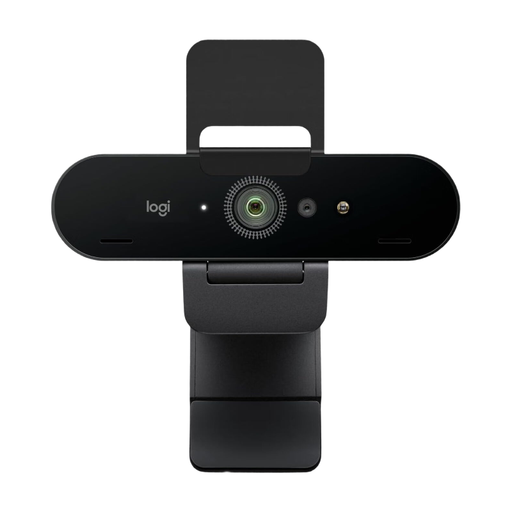
Logitech Brio 4K Webcam Black
For PC video recording or streaming where autofocus and framing options matter.
The product description lists 4K, autofocus, 5x digital zoom and three field-of-view presets.
View at Joybuy
Frequently asked questions
Is 4K enough for tiny jump rings and settings?
Not as the only thing to consider. The size of your subject in the planned frame and the working distance matter too. Sony Germany lists magnification separately from resolution and specifies a 1:1 ratio for the SEL30M35.
How can I stop the camera getting in the way while I’m assembling jewellery?
Plan your camera position, hands and tools together. Canon’s macro photography guide recommends keeping the camera in a fixed position where possible. A short working distance can also limit the space in front of the lens.
Can I show identifiable people in a published jewellery video without any further steps?
Not necessarily. Section 22 of Germany’s Act on Copyright in Works of Art generally requires the consent of the person shown before their image can be distributed or publicly displayed. You should also check that you have an appropriate legal basis for processing personal data. This applies to recordings that include other identifiable people and not automatically to jewellery-only footage.


