Hosts making several cups of filter coffee
You want to grind enough coffee for your guests before brewing. So, check the amount of grounds the grinder can hold per cycle, not just the capacity of its bean hopper.


For several guests, an electric coffee grinder with a burr mechanism, a specified filter grind setting and a sufficiently large grounds container is usually the easiest option. An integrated scale can make it easier to measure out repeated doses; check its weighing range and stated accuracy. A hand grinder is better suited to small batches or grinding without a power socket, but larger quantities require more manual effort.
You want to grind enough coffee for your guests before brewing. So, check the amount of grounds the grinder can hold per cycle, not just the capacity of its bean hopper.
You want to measure out the beans precisely for filter coffee recipes you make regularly. An integrated scale can make weighing easier, as long as its range and accuracy suit your portion sizes.
You usually grind a small amount of coffee and want to adjust the grind size, or occasionally grind without a power socket. A hand grinder could suit you, but it does mean turning the handle yourself.
| What matters to you | What to look for | Who is it important to? |
|---|---|---|
| Amount ground per cycle | Check the grounds container and bean hopper separately, and compare the amount of coffee you need with the grounds container’s capacity. | If you’re grinding for several guests, you’ll want to empty the container as little as possible. Around 36% of consumers prioritise having enough capacity for grounds per cycle. |
| Weight-based dosing | Check whether the grinder doses by weight, number of cups or time, and note its stated weighing range and accuracy. | If you follow the same recipe regularly, you’ll want to measure out the beans precisely. Around 29% of consumers put consistent dosing first. |
| Filter grind setting | Look for a filter coffee setting specified for the exact model; grind settings aren’t directly comparable between different grinders. | If adjusting the grind matters more to you than convenient dosing, look for a setting that suits your brewing method. Around 21% of consumers make this their priority. |
| Small batches without electricity | For hand grinders, compare the container size with the total amount you need and allow for additional grinding cycles if necessary. | Manual grinding is an option for small amounts or if you want to grind without a power socket. Around 14% of consumers prioritise grinding small batches without electricity. |
A large bean hopper doesn’t tell you how much ground coffee the container can hold per cycle. Tchibo states that its coffee grinder with scales holds around 400 g of beans and 100 g of grounds.
Work out how much you need for your coffee pot and check the grounds container’s capacity separately. You may need to allow for more than one grinding cycle.
Tchibo’s coffee grinder with scales has a stated weighing range of 3–100 g and an accuracy of ±3 g. These figures apply to this model and aren’t based on independent testing.
Compare the weighing range and stated accuracy with the quantities in your recipes rather than assuming the same figures apply to other models.
The two grounds containers supplied with the Comandante C40 Mk4 each hold 40 g. For a larger amount, you may need several grinding cycles and more time spent turning the handle.
Choose a hand grinder if small batches or grinding without a power socket matter more to you than making larger quantities as easily as possible.
The electric coffee grinder with scales could be a good choice if you want to dose filter coffee by weight.
According to Melitta, the Calibra combines a weight-based programme with a specified filter coffee range.
The electric CM800 is worth considering if you want to adjust the grind for filter coffee and measure out the beans separately.
According to Wilfa, the electric Svart Aroma CGWS-130B is designed for various brewing methods, including filter coffee.
The manual C40 Mk4 suits small batches if you want to grind without electricity.
The products below include hand grinders for filter coffee and a filter coffee machine with an integrated grinder. If you’re looking for a standalone grinder, note the difference with the KRUPS model.
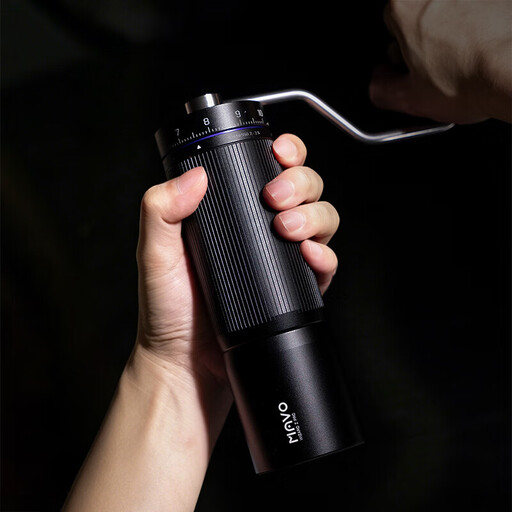 No image available
A manual grinder for pour-over filter coffee if you want to adjust the grind size yourself.
Manual operation; stainless steel construction; Obsidian Black colour.
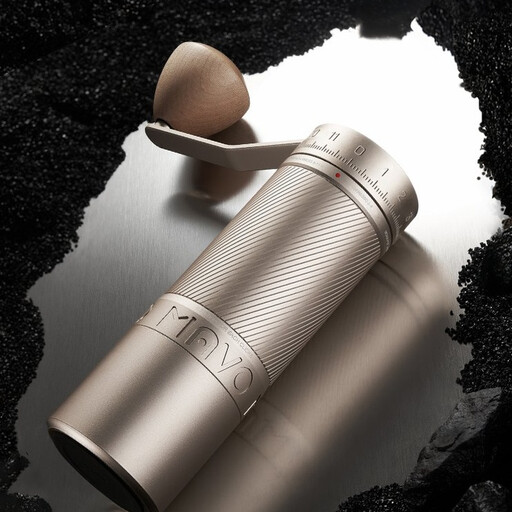 No image available
A manual grinder for pour-over filter coffee if you want to adjust the grind size for different brewing methods.
Manual operation; stainless steel construction; Starlight Silver colour.
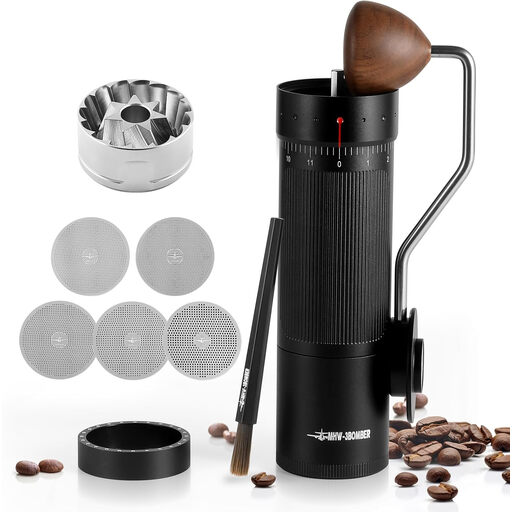 No image available
For drip filter coffee if you want to adjust the grind size by hand.
Manual grinder with CNC-machined conical stainless steel burrs; supplied with five sieves. The grounds cup holds 20 g, so you may need to grind several times for a larger pot.
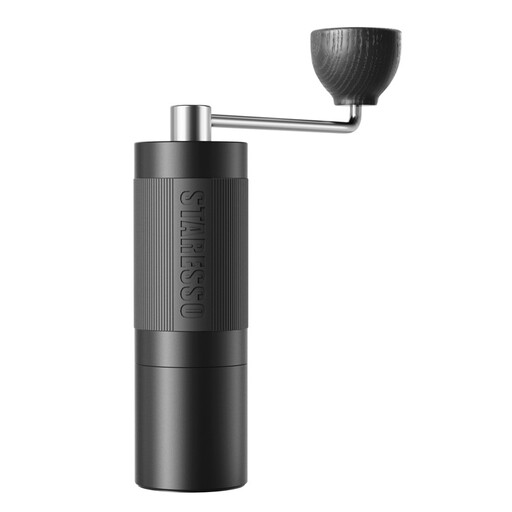 No image available
A manual grinder for small pour-over batches if you want to grind without electricity.
Capacity: 20 g; CNC-machined conical stainless steel burrs; internal adjustment; dual bearing positioning. You may need several grinding cycles for a larger group of guests.
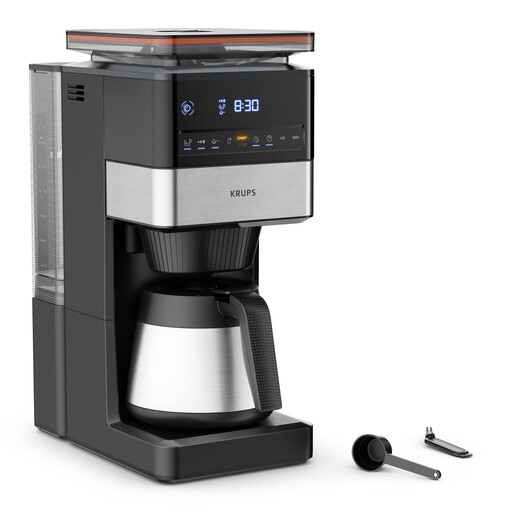 No image available
For making several cups of filter coffee if you want to combine grinding and brewing in one appliance.
Integrated, removable conical burr grinder with three settings; 1.25 l thermal carafe for 10–15 cups. This is not a standalone coffee grinder.
Compare the amount of coffee you need for your pot with the grounds container’s capacity, not just the bean hopper’s. Tchibo states that its electric grinder with scales holds around 400 g of beans and 100 g of grounds.
Start with the filter setting specified for your exact model, then adjust it to suit your brewing method. Melitta recommends settings 6–26 for filter coffee on the Calibra; these figures don’t automatically apply to other grinders.
Check the instructions for your specific model to see which parts can be removed, and follow the cleaning guidance. Melitta specifies a removable burr ring and removable bean and grounds containers for the Calibra; GRAEF specifies a removable upper burr for the CM800.
In Germany, the seller is generally responsible for the statutory guarantee if a product is faulty. On 13 August 2026, the Verbraucherzentrale stated that this lasts for two years from delivery; this is separate from any voluntary manufacturer’s warranty.
Electrical appliances may need to carry a CE marking where the applicable EU rules require it. The European Commission lists household appliances within the scope of the Low Voltage Directive, provided they meet its voltage limits. According to “Your Europe”, the manufacturer uses the CE marking to declare conformity; it is not an independent EU quality seal. Check the power supply information and required markings for the specific model. This guidance doesn’t apply generally to hand grinders that don’t use electricity.