
Lieferung heute & morgen

Qualitätsgarantie

Willkommens-Angebote freischalten: KOSTENLOSE Lieferung | Bis zu 80 % RABATT | Kostenlose 30-Tage-JoyPlus-Testphase
App herunterladen
A filter coffee machine may seem straightforward at first. Add water, measure out the ground coffee and switch it on – it sounds like that’s all there is to it. But when you’re buying one, a few details can lead to unnecessary extra costs or make it awkward to use. Capacity, jug type and filter type are often compared only at a glance.
If you’re planning to use a coffee machine in the long term, don’t focus solely on wattage or design. What matters is choosing the right capacity, finding a machine that’s easy to clean and checking for safety features such as anti-drip and automatic shut-off.
A ‘cup’ doesn’t always mean a large mug of coffee when it comes to coffee machines. Depending on the manufacturer, the figure may refer to smaller portions. That’s why the tank capacity in litres gives you a more reliable basis for comparison.
A 10-cup coffee machine often holds around 1.25 litres. However, the actual amount per cup depends on the scale used for the individual model.
A coffee machine with a keep-warm function usually keeps the glass jug warm on a hotplate. This is convenient, but leaving the coffee on the plate for a long time can affect its flavour, and the machine will continue to use electricity.
A coffee machine with a thermal jug, on the other hand, retains heat in an insulated jug. Many models don’t need a hotplate. However, the jug needs to be handled carefully and, depending on the model, may need to be washed by hand. So before you buy, check:
A coffee machine with a permanent filter saves on paper filters and can be convenient if you clean it regularly. However, you’ll need to empty and rinse the filter after every use. Fine ground coffee can also get stuck in the mesh.
Paper filters are easy to dispose of and can catch finer particles. If you want to cut down on washing up, weigh the cost of filters against how often you use your machine. Browse more models and suitable options in our permanent coffee filter selection.
Measure the space where you plan to put the machine, including the clearance needed to open the filter holder. A compact coffee machine can be a good choice for a small kitchen, while a larger model in the office means you won’t have to refill it as often. Also look for:
A filter coffee machine with a glass jug lets you see how much coffee is left. However, the jug needs to be kept on the hotplate after brewing and handled with care because its surfaces get hot.
With a thermal jug, the coffee is brewed directly into an insulated container. This is useful if people will be drinking at different times or if you plan to leave the jug on a meeting table. Don’t use a thermal jug for milk, soup or other liquids.
An anti-drip function stops the flow of coffee when you briefly remove the jug. However, it won’t prevent every spill: the jug needs to be positioned correctly under the filter, and the mechanism must be kept clear of coffee residue.
Follow the instructions in the user manual when cleaning your machine. Removable filter holders and jugs should only go in the dishwasher if the manufacturer specifically says they’re dishwasher-safe. Never immerse the main unit, cable or plug in water. Automatic shut-off reduces the risk of leaving the machine switched on for longer than necessary after brewing. The shut-off time varies from model to model.
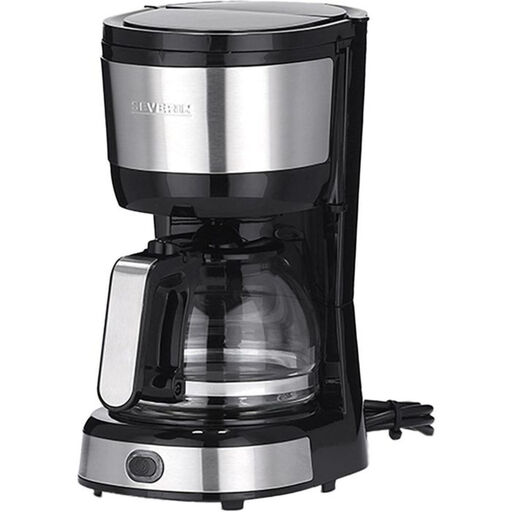
Why this product suits these needs: With a 500 ml capacity and a width of around 14 cm, this model is designed for smaller quantities and limited worktop space.
Its capacity is clearly stated as 500 ml. The permanent filter, anti-drip function and automatic shut-off help you avoid extra paper filters and unnecessary drips.
750 watts, a water level indicator, cable storage and a keep-warm function, all in a machine weighing around 1.1 kg.
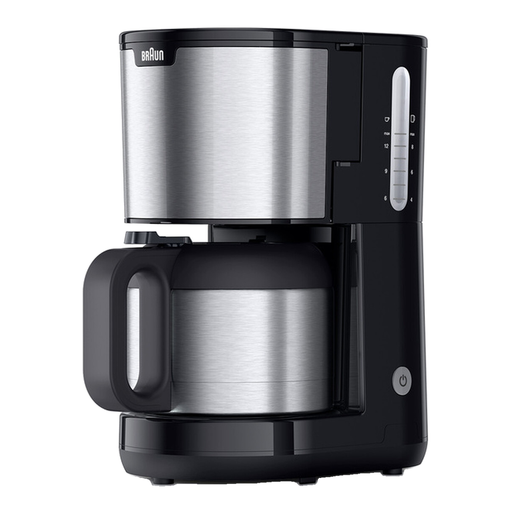
Why this product suits these needs: The 1.2-litre thermal jug is well suited to homes and workplaces where coffee is poured over an extended period.
The insulated jug means you don’t have to rely on a glass jug being kept heated. An anti-drip function and automatic shut-off after 40 minutes are also listed.
Swing-out filter, dual water level indicator and, according to the product details, a dishwasher-safe jug, lid and filter basket.
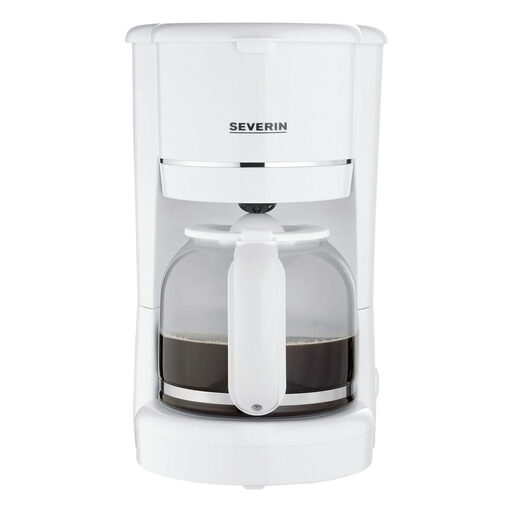
Why this product suits these needs: With a 1.25-litre capacity and up to 10 cups, it’s a good fit for families, hosts and anyone looking for a coffee machine for the office or home.
The capacity in litres complements the cup count. A permanent filter, anti-drip function, hotplate and automatic shut-off are all listed as features.
900 watts, a water level indicator and a filter insert that, according to the product description, is dishwasher-safe.
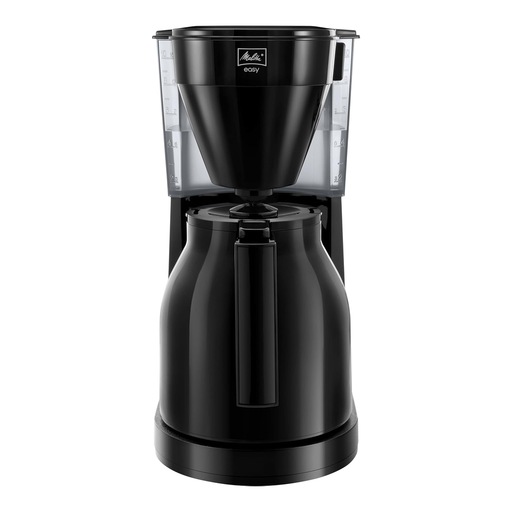
Why this product suits these needs: The 1-litre thermal jug is designed for several servings and doesn’t need a hotplate to keep the coffee warm.
The jug type is clearly stated, and the integrated anti-drip function makes pouring easier. According to the safety information, the jug should be washed by hand.
Swing-out filter, dual cup scale, 1,050 watts and a removable filter that, according to the product details, is dishwasher-safe.
We’ve put together a complete, regularly updated list of products that meet these strict selection criteria and fully comply with the safety regulations in force across the EU.
As a starting point, use around 60 grams of ground coffee per litre of water. The flavour, grind size and your personal preference will affect how much you need. Using scales makes it easier to get a consistent measure, especially with a 10-cup coffee machine.
Its lifespan depends on how often you use it, the hardness of your water and how well you look after it. Regular descaling in line with the manufacturer’s instructions, emptying the filter and storing the machine somewhere dry can help keep it working well. Replace worn parts such as the jug, lid or filter insert if they become damaged.
Running costs include electricity, ground coffee, water and, if needed, paper filters. A hotplate continues to use energy while it’s switched on; a thermal jug can keep coffee warm without an active hotplate. So don’t compare the purchase price alone – consider capacity, how long you’ll use the machine and how many filters you’ll need.