
Lieferung heute & morgen

Qualitätsgarantie

Willkommens-Angebote freischalten: KOSTENLOSE Lieferung | Bis zu 80 % RABATT | Kostenlose 30-Tage-JoyPlus-Testphase
App herunterladen
A filter coffee machine may seem straightforward at first glance: fill it with water, insert a coffee filter, measure out the ground coffee and switch it on. In practice, however, incorrectly judged capacities, unsuitable jugs and missing safety features often lead to unnecessary costs. This applies to private households as well as offices, cafés, catering companies and event organisers.
A manufacturer's specification such as “10 cups” does not necessarily mean ten large mugs of coffee. A smaller standard cup is often used as the basis. When choosing a machine, the key factor is therefore the water tank capacity in litres. Depending on the cup size, a filter coffee machine with a capacity of 1.2 litres may be designed to make between two and 15 servings.
If you regularly fill larger mugs or serve lots of guests, you should not assess capacity based solely on the number of cups. For a private breakfast table, a 10-cup filter coffee machine may be sufficient. In an office or at celebrations, models offering 15 or 16 cups, or two jugs, are more practical.
A coffee machine with a glass jug usually stands on a hotplate. This makes it easy to see how much coffee remains, but the machine continues to use electricity while keeping the coffee warm. The jug can also be damaged if knocked.
A coffee machine with a thermal jug retains heat without an active hotplate. This makes it suitable for longer meetings, buffets or households where the coffee will not all be served immediately. However, the fill level is less visible in many thermal jugs. Important features include a securely closing lid, drip-free pouring and a sturdy handle.
Terms such as aroma function or aroma technology do not, on their own, say anything about how the coffee is actually prepared. Buyers should check what lies behind these terms technically. An aroma twister can distribute the coffee throughout the jug as it is brewed. An automatic switch-off reduces the risk of the machine remaining switched on unnecessarily after brewing. A drip stop allows you to remove the jug during brewing without the filter continuing to drip onto the hotplate.
These features are useful, but they cannot replace a suitable capacity, regular descaling and a stable design.
A compact model is often sufficient for one person or a small household. If several people drink coffee, a tank holding around 1.2 to 1.25 litres offers greater flexibility. Offices, guesthouses and catering businesses can benefit from a duo coffee machine when two jugs are needed at the same time.
Also consider the machine's actual footprint. Large appliances need sufficient clearance from cupboards and walls, as hot steam may escape during brewing.
For a glass jug, check whether replacement parts are available, how sturdy the handle is and whether the jug is dishwasher-safe. With a thermal jug, the lid mechanism and pouring opening are particularly important. Removable filter holders make cleaning easier. Limescale deposits can affect the water flow and brewing time; the descaling interval depends on water hardness and how intensively the machine is used.
An automatic switch-off is a practical safety feature for households and workplaces with different users. The appliance should be placed on a level, heat-resistant surface and must not be operated without water. Unplug the appliance before cleaning it. Children should not have access to hot water, steam, the jug or the hotplate.
You will also need suitable paper filters for brewing, often size 1x4. Check the manufacturer's specifications before buying filters and accessories in larger quantities.
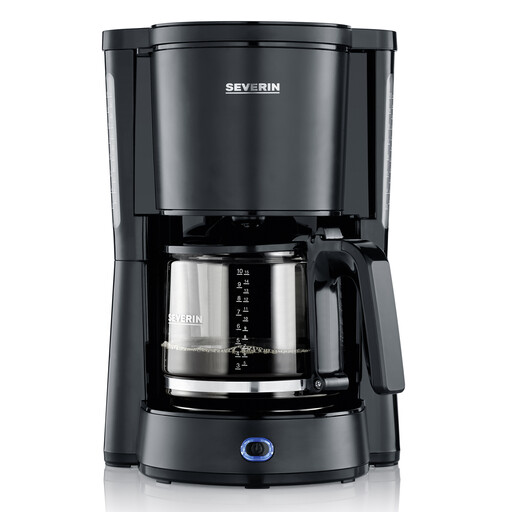
Why this product suits this profile: This model is designed for up to 10 cups and offers straightforward operation for everyday household use.
The water-level indicator helps you fill the tank accurately. Drip stop and automatic switch-off are listed as specific features.
1.25-litre water tank, removable filter insert and glass jug with hotplate.
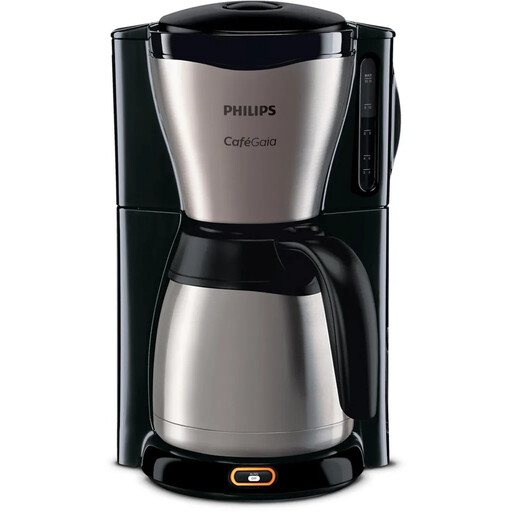
Why this product suits this profile: This 1.2-litre machine combines a double-walled stainless steel thermal jug with features designed for regular use.
The thermal jug reduces reliance on a hotplate. Drip stop, water-level indicator and automatic switch-off are specified.
Up to 15 cups, stainless steel thermal jug, aroma water flow and dishwasher-safe parts according to the product specifications.
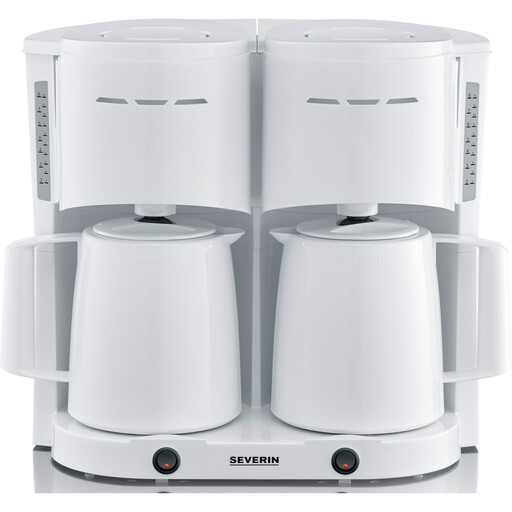
Why this product suits this profile: Two separate thermal jugs, each with a capacity of one litre, are designed for offices, guesthouses, catering businesses and larger events.
The duo design avoids waiting between two brewing cycles. Two water-level indicators make it easier to monitor the fill levels.
Brews up to 16 cups simultaneously, with two thermal jugs and automatic switch-off according to the product description.
For office events, catering and celebrations, the serving size is just as important as the machine. A 200 ml paper cup is suitable for a smaller portion of filter coffee, tea or water. The Jeden Tag Paper Cup White 0.2L is intended for hot and cold drinks. According to the product specifications, the cups are made from food-safe paper and are intended for single use: View Jeden Tag Paper Cup White 0.2L.
If you need to stock up, you can choose a 100-piece disposable cup pack. Maxcook cups have a capacity of around 220 ml, a paper structure with a PE coating, and are intended for coffee, tea and cold drinks. According to the product information, they must not be used in a microwave: Maxcook disposable cups for hot and cold drinks.
When choosing disposable coffee cups, you should also pay attention to the actual capacity, stability and disposal instructions. Do not overfill them, and use them only for their intended single use.
We have put together a complete, regularly updated list of products that fully meet these strict selection criteria and the safety regulations applicable in the EU.
That depends on the cup size used and the intended application. For a small household, a model offering around 10 standard cups is often sufficient. For offices, celebrations or catering, 15 cups or a duo coffee machine with two jugs is more practical.
A thermal jug is ideal when coffee needs to remain available for longer without a hotplate. A glass jug makes it easier to see how much coffee remains and suits households where the coffee is served straight away. Both options require careful cleaning and a safe, stable place to stand.
Choosing the right capacity prevents you from regularly brewing more coffee than you need. With a glass jug, the hotplate should not be left on for longer than necessary. An automatic switch-off helps limit unintentional continuous operation. Regular descaling also helps maintain a consistent flow of water.