
Lieferung heute & morgen

Qualitätsgarantie

Willkommens-Angebote freischalten: KOSTENLOSE Lieferung | Bis zu 80 % RABATT | Kostenlose 30-Tage-JoyPlus-Testphase
App herunterladen
A filter coffee machine is a practical solution for many households, offices and hosts who regularly need several cups of coffee. However, machines vary considerably in terms of carafe type, filter, heat-retention method, capacity and cleaning requirements. A low purchase price therefore says little about how well a machine will perform in everyday use.
Before buying, it is worth taking a close look at the actual product specifications. This helps you avoid common marketing pitfalls and choose a filter coffee maker that suits your consumption and kitchen routine.
A specification such as “10 cups” sounds standardised, but it is not. Depending on the manufacturer, one cup may hold considerably less than a normal mug of coffee. According to the available product specifications, a filter coffee machine with a 1.25-litre capacity can make around 8 to 15 small cups, depending on the model.
So do not just check the number of cups. Always consider:
A 1-litre machine may be sufficient for a two-person household. Families, offices and hosts will often benefit from 1.25 to 1.5 litres. However, a larger tank does not automatically produce better coffee if you usually brew only small quantities.
A coffee machine with a keep-warm function usually keeps the coffee warm on a heated plate. This is convenient, but leaving coffee standing for longer can affect its temperature and flavour. The duration of the keep-warm function should therefore be stated in the technical specifications.
A coffee machine with a thermal carafe, on the other hand, retains heat in an insulated carafe and normally does not need a permanently switched-on hotplate after brewing. This is particularly useful for offices or households where coffee is served over a longer period.
Important: keep-warm times are product-specific. For example, the Philips HD7548/20 is specified as offering insulation performance of over two hours, while other models only mention automatic switch-off or a time-limited keep-warm phase. Brand-specific claims should not be applied broadly to other machines.
A coffee machine with a permanent filter uses fewer disposable filters, but the filter mesh must be rinsed after every use and cleaned thoroughly on a regular basis. Fine coffee grounds and oils can become trapped in the filter. Paper filters are easier to dispose of, but suitable filter papers need to be bought regularly.
Look for removable filter holders, dishwasher-safe components and easily accessible water channels. The machine base, cable and mains plug must never be immersed in water.
A filter coffee machine with a glass carafe is practical if you want to see the fill level at a glance. However, it usually requires a warming plate. Glass can also be damaged by knocks or significant changes in temperature.
A stainless-steel thermal carafe is more resistant to breakage and retains heat without a permanently active hotplate. However, it is not always possible to see how much coffee remains inside. On some models, the carafe is not dishwasher-safe and must be cleaned by hand. Always check the care instructions for the specific product.
A coffee machine with a drip-stop function interrupts the flow of coffee when the carafe is removed during brewing. This is useful if you want to pour a cup before the brewing cycle has finished. However, the function only works reliably when the carafe is positioned correctly and the valve is kept clean.
Thermal carafes may also use brewing lids or through-brew lids. These can make pouring easier, but the seal and lid area need to be cleaned regularly.
A coffee machine with a grinder processes whole beans immediately before brewing. This saves you from needing a separate grinder, but makes the machine larger, heavier and more demanding to maintain. The KRUPS Grind Aroma XL KT842810, for example, is specified as having a removable conical grinder with three grind settings, a digital control panel and a 1.25-litre container. For users who only use pre-ground coffee, these features are not essential.
Useful safety features include:
The electrical specification should be suitable for the German power supply. The listed machines predominantly specify 220–240 volts and 50 Hz. Also follow the manufacturer’s operating instructions and safety information.
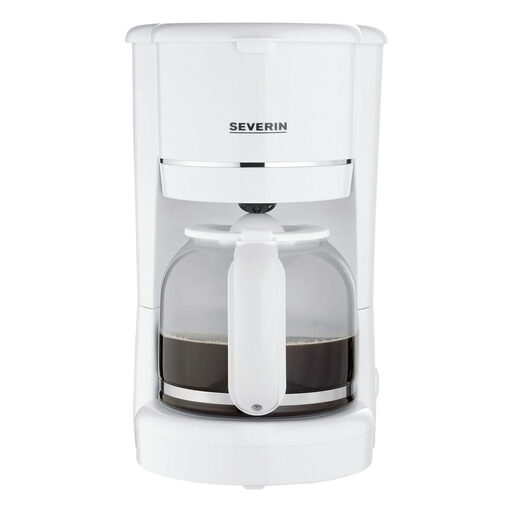
Why this product suits the profile: This model offers a 1.25-litre capacity, a glass carafe and a reusable permanent filter for everyday use.
The capacity is specified in both litres and cups. The drip-stop, warming plate and automatic switch-off are listed as specific features.
1.25-litre water tank, permanent filter, drip stop and dishwasher-safe filter insert.
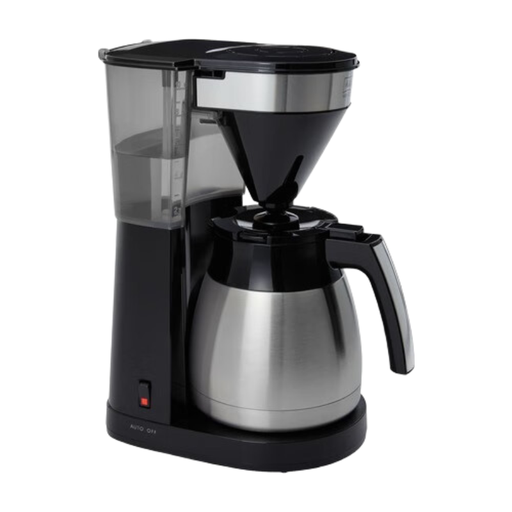
Why this product suits the profile: The stainless-steel thermal carafe with Easy-Click function, 1.25-litre capacity and removable filter holder is designed for regular use.
The insulated carafe replaces a permanently heated warming plate. According to the product specifications, the filter holder is removable and dishwasher-safe.
10 cups or 1.25 litres, automatic switch-off, drip stop and dishwasher-safe filter holder.
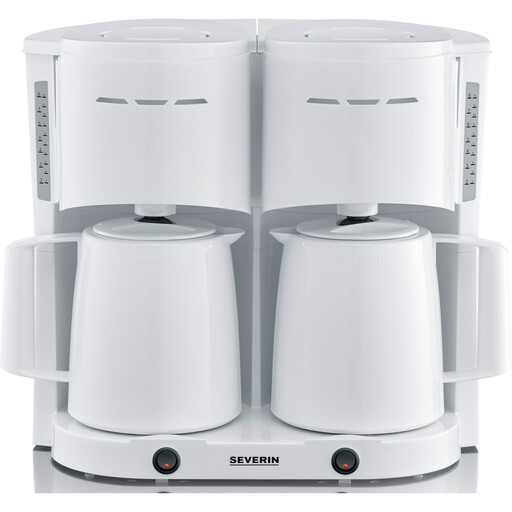
Why this product suits the profile: Two separate thermal carafes, each with a capacity of around 1 litre, are ideal for offices, larger groups and serving coffee at different times.
The coffee portions are brewed directly into thermal carafes. This removes the reliance on a single warming plate.
Two carafes, around 2 litres in total, through-brew lids, drip-free pouring and automatic switch-off.
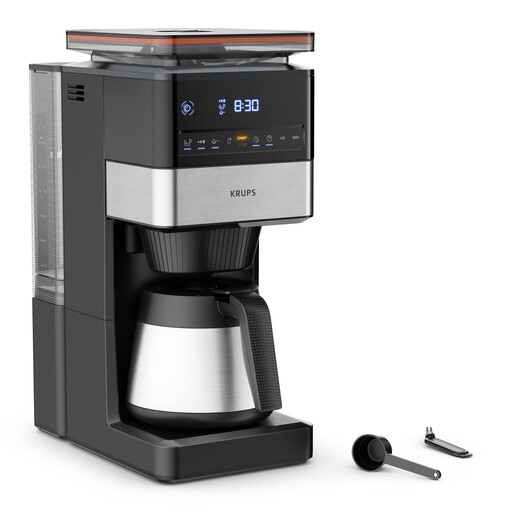
Why this product suits the profile: The integrated, removable conical grinder processes whole beans and offers three grind settings for 1.25 litres of filter coffee.
The grinder is specified as removable, keeping the cleaning area accessible. A cleaning brush and measuring spoon are also included.
Conical grinder with three settings, digital control panel, removable water tank and stainless-steel thermal carafe.
We have put together a complete, regularly updated list of products that fully meet these strict selection criteria and the safety regulations applicable in the EU.
Descale the machine regularly, depending on the hardness of your water and the manufacturer’s instructions. Product information for several models recommends an interval of around three to six months. If your water is particularly hard, you may need to descale it more frequently.
Three factors are key to ongoing costs:
The machine’s service life depends on water quality, frequency of use, descaling and careful handling. Automatic switch-off improves operating safety, but does not replace switching off and unplugging the machine when you will be away for an extended period.
Depending on the manufacturer’s definition, around 8 to 15 cups are possible. For a realistic estimate, compare the stated cup capacity with the total volume and the size of mug you usually use.
A thermal carafe is ideal when coffee needs to be kept standing for longer and usually does not require a warming plate. A glass carafe lets you see the contents directly and works well in households where coffee is served immediately.
This depends on the hardness of your water and how often you use the machine. Several product specifications give three to six months as a guide. However, the relevant manufacturer’s instructions and a suitable coffee machine descaler should always take priority.