
Lieferung heute & morgen

Qualitätsgarantie

Willkommens-Angebote freischalten: KOSTENLOSE Lieferung | Bis zu 80 % RABATT | Kostenlose 30-Tage-JoyPlus-Testphase
App herunterladen
A filter coffee machine should be simple to use every day: fill the water tank, measure out the ground coffee and brew several cups. However, some product claims can lead to disappointing purchases. A high cup count does not automatically mean that the machine is suitable for heavy use. Additional features can also be impractical if the water tank, filter holder or glass carafe is difficult to clean.
This buying guide explains which technical specifications matter when choosing a filter coffee machine and which models suit different usage situations.
Manufacturers often calculate using small coffee cups. Depending on the model, a specification of 10 cups may mean around 1.25 litres, whereas a large cup in a household often holds considerably more. If you regularly brew coffee for several people, you should therefore look at the capacity in litres first.
For families, hosts or offices, machines with 1.25 to 1.5 litres are often suitable. A coffee machine for 10 to 14 cups will usually meet this requirement better than a compact model with a small carafe.
A coffee machine with a warming plate keeps the coffee on a warm surface after brewing. This is convenient, but it gradually affects the flavour and continues to use electricity. An automatic switch-off is therefore an important safety and convenience feature.
Some machines specify the keep-warm period precisely. For example, the Bosch MyMoment TKA2M111 offers a keep-warm function of up to 40 minutes followed by automatic switch-off. Other models only state that they have an automatic switch-off. Buyers should check the operating instructions and product specifications rather than assuming that all machines have the same running time.
A coffee machine with a permanent filter saves paper filters and can reduce running costs when used daily. However, the filter must be thoroughly rinsed after every brewing cycle. Fine coffee grounds can become trapped in the mesh.
A removable swing-out filter for 1x4 paper filters, on the other hand, is easy to fill and empty. What matters is whether the filter components are dishwasher-safe and how easily they can be removed from the machine.
A coffee machine with a glass carafe is ideal for users who want to see the fill level and remaining quantity at a glance. The carafe usually sits on a warming plate and should have a sturdy handle and a tightly closing lid.
Guideline capacities:
With a French press or coffee maker, the coffee is not kept warm automatically. In return, the device does not require electricity and can be placed wherever convenient.
A coffee machine with a drip stop interrupts the flow of coffee when the carafe is removed during brewing. This feature does not prevent every spill, but it reduces drips onto the warming plate. The carafe must sit correctly beneath the filter for the mechanism to work reliably.
A water-level indicator on both sides is practical for left- and right-handed users. A removable water tank makes filling it under the tap easier. With a programmable coffee machine, you should also check whether the timer actually covers 24 hours and how easy the controls are to understand.
Coffee oils and limescale can affect both the flavour and the flow of water. Useful features include:
The housing and electrical base must not be immersed in water. The glass carafe and warming plate become hot and should only be handled using the designated handle. Unplug the machine before cleaning and allow it to cool down completely.
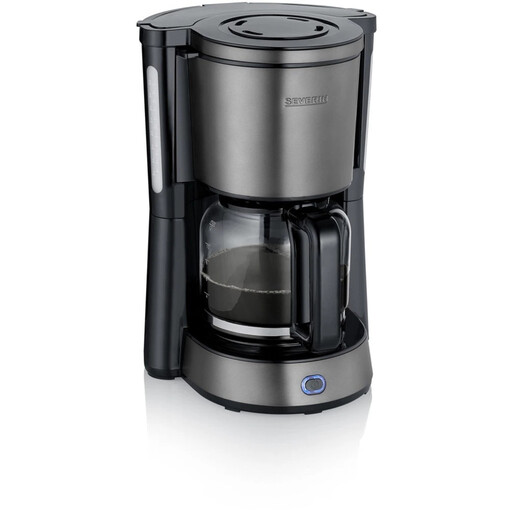
Why this product suits this profile: The machine has straightforward controls and brews up to 10 cups with its 1.25-litre capacity. This makes it suitable for everyday use without unnecessarily complicated settings.
The capacity is specified in both litres and cups. The swing-out filter and removable filter holder make cleaning easier.
1,000 watts, glass carafe, drip stop and automatic switch-off.
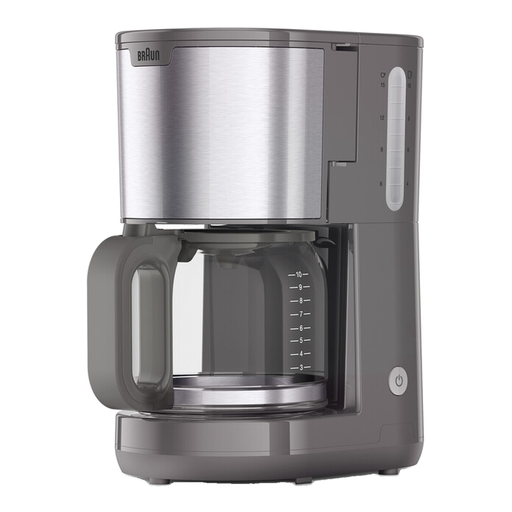
Why this product suits this profile: This model combines a 10-cup capacity with an OptiBrew system, rotating filter basket and clearly specified dishwasher-safe components.
The water-level indicator with two scales makes measuring easier. A descaling programme and indicator help with maintenance.
1,000 watts, drip stop, automatic switch-off and glass carafe.
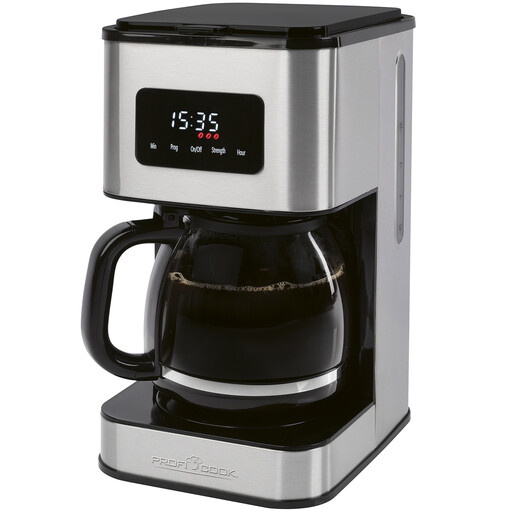
Why this product suits this profile: This filter coffee machine is designed for larger quantities and offers a 24-hour timer as well as three selectable aroma settings.
The capacity of around 1.5 litres is specified for 12 to 14 cups. The filter holder, water-level indicator and automatic switch-off are all clearly stated.
Stainless steel housing, 900 watts, drip stop and programmable timer.
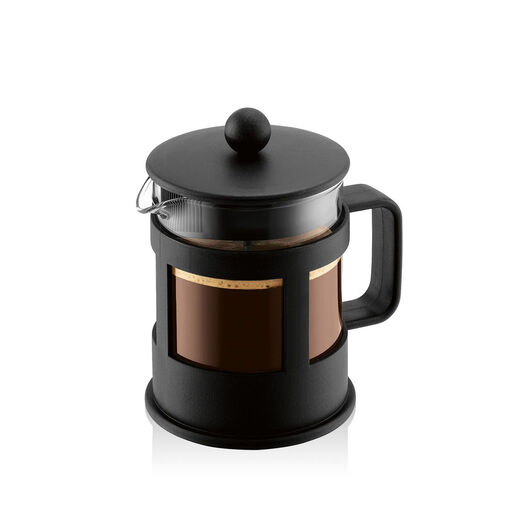
Why this product suits this profile: This compact coffee maker does not require electricity and is designed for up to four cups. It therefore fits well in small kitchens or offices where space is limited.
The cup count and capacity are clearly stated. The glass vessel sits in a frame with a handle, while the filter separates the coffee grounds when pouring.
Heat-resistant borosilicate glass, stainless steel plunger and manual preparation without a warming plate.
We have put together a complete, regularly updated list of products that fully meet these strict selection criteria and the safety regulations applicable in the EU.
An electric filter coffee machine is ideal when you regularly need several cups at the same time. It handles heating and brewing automatically and may come with features such as a drip stop, warming plate or timer.
A French press, also known as a manual coffee maker, requires hot water and a short brewing time. It is usually more compact and can be used without electricity. However, after pouring in the water, you must measure the coffee grounds and water manually and slowly press down the filter. For larger groups, a 1-litre version such as the Bialetti Preziosa may be more suitable than a 350-millilitre model.
As a general guide, allow around 55 to 65 grams of ground coffee per litre of water. The amount required depends on personal taste, the grind size and the type of coffee used. The cup markings on the machine should not be confused with the size of a large breakfast mug.
Its service life depends on usage, water hardness, cleaning and descaling. Regular descaling according to the manufacturer’s instructions, emptying the filter after every brewing cycle and storing the machine in a dry place can help maintain its performance. If the glass carafe is damaged, the machine makes unusual noises or the cable is faulty, it should no longer be used.
Consumption depends on the power rating and keep-warm period. Many machines operate at around 800 to 1,200 watts while brewing, but the actual running time is limited. An automatic switch-off ends operation after brewing or after a set keep-warm period. Switching the machine off immediately after brewing or transferring the coffee to a suitable thermal carafe can reduce the keep-warm time.