
Lieferung heute & morgen

Qualitätsgarantie

Willkommens-Angebote freischalten: KOSTENLOSE Lieferung | Bis zu 80 % RABATT | Kostenlose 30-Tage-JoyPlus-Testphase
App herunterladen
A filter coffee machine may seem straightforward at first glance: fill the water tank, insert a paper filter, measure out the ground coffee and switch it on. However, when buying one, the details determine whether it really suits your everyday routine. Capacity, carafe type, cleaning and additional functions all affect ease of use, flavour and ongoing effort.
If you only pay attention to wattage or a striking stainless steel body, you can easily overlook important points. Three common buying misconceptions are particularly worth considering:
For singles and couples, a small coffee machine with a capacity of around 500 millilitres may be sufficient. Larger models are more suitable for several people, offices or shared breakfasts.
As a guide:
The scale on the water tank should be easy to read. Dual-sided markings are practical if the machine is positioned beneath a wall unit or used by several people. It is also important to consider whether the carafe has to be filled completely or whether smaller quantities can be prepared evenly.
A filter coffee machine with a glass carafe usually stands on a hotplate. This keeps the coffee warm initially, although the plate requires electricity to do so. During longer breaks, the flavour may change while the carafe continues to be heated.
A coffee machine with a thermal carafe stores the heat in a double-walled carafe. This is practical for offices, households where people drink coffee at different times or anyone who wants to switch the machine off after brewing. Before buying, check the following:
A removable filter holder makes daily cleaning easier. A permanent filter reduces the need for paper filters, but must be rinsed after every use. A drip stop allows you to briefly remove the carafe while brewing. Even so, the brewing process should not be interrupted for an extended period.
A coffee machine with aroma selection offers two or three profiles for different coffee strengths, depending on the model. A coffee machine with a timer can be programmed to start at a specific time. If you prefer freshly ground beans, you can choose a coffee machine with a grinder. In this case, the grinder, bean container and dispensing chute are additional components that need to be cleaned regularly.
Also look for an automatic switch-off function. This ends the heating process after brewing or after a preset keep-warm period, which can help limit energy consumption in everyday use. Check the specific switch-off time in the product description or instruction manual.
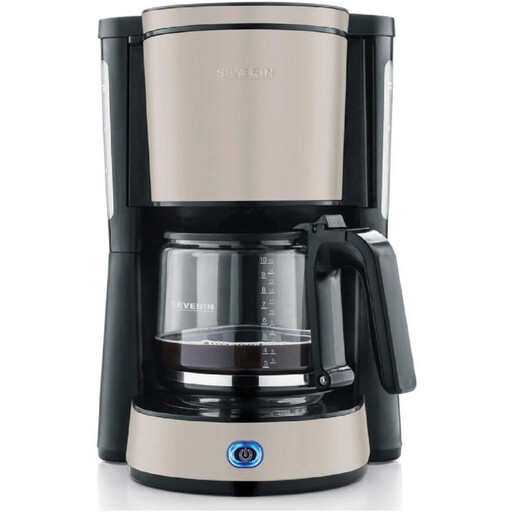
Why this product suits the profile: This model offers a capacity of 1.2 litres, uses 1x4-size paper filters and provides all the essential features needed for everyday filter coffee.
The dual-sided water-level indicator makes measuring easy. The drip stop and automatic switch-off help prevent common operating mistakes.
1,000 watts, removable swing-out filter and glass carafe with scale.
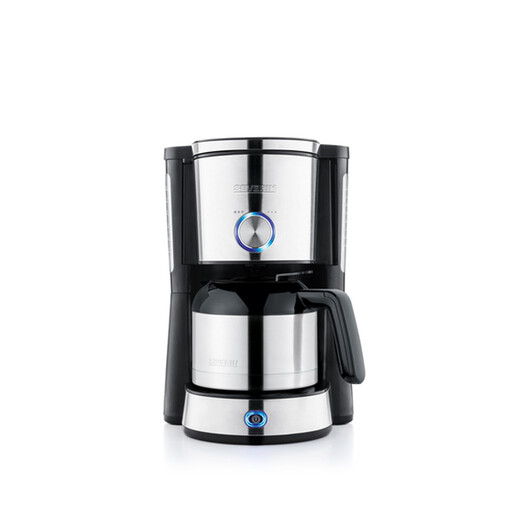
Why this product suits the profile: The thermal carafe is ideal for households and offices where the coffee is not all poured immediately.
No hotplate is needed after brewing. The AromaSwitch function offers two brewing profiles.
Up to 8 cups, 1,000 watts, drip stop and automatic switch-off.
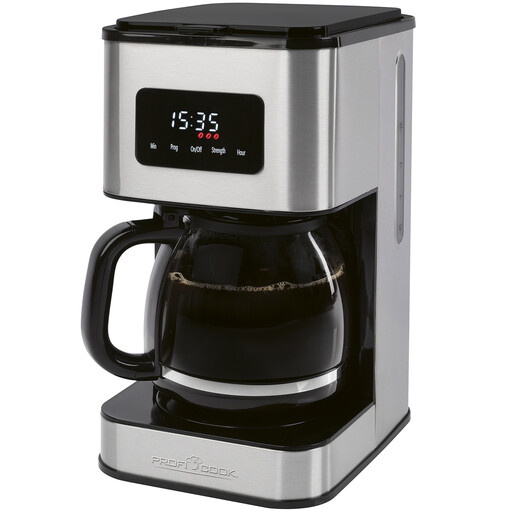
Why this product suits the profile: With a capacity of around 1.5 litres, this machine is suitable for larger households, meetings or offices with several coffee drinkers.
The water-level indicator makes the large capacity easy to monitor. The timer, drip stop and automatic switch-off complement the controls.
Three aroma levels, programmable 24-hour timer and 900 watts.
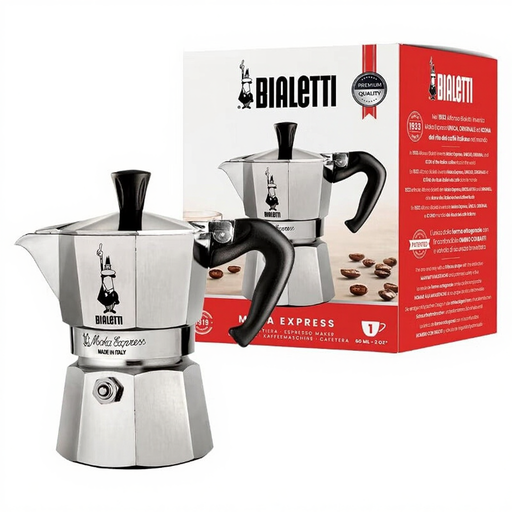
Why this product suits the profile: This moka pot is designed for users who want to prepare coffee on the hob. This model holds 270 millilitres and is designed for six Italian-style cups.
Hob compatibility is clearly specified: gas, ceramic and electric, but not induction directly. The pot is not dishwasher-safe.
Aluminium body, removable construction and manual preparation without a power connection to the pot.
We have compiled a complete, regularly updated list of products that fully meet these strict selection criteria and the safety regulations applicable in the EU.
For consistent results, fill the water tank with fresh, cold water. Use the filter size specified by the manufacturer and do not press the ground coffee down unnecessarily firmly. After every brewing cycle, clean the filter holder, carafe and, where applicable, the permanent filter.
Limescale deposits can affect the water flow and heating performance. How often descaling is required depends on the hardness of the water and how frequently the machine is used. The instructions in the manual are the definitive guide. The machine body, cable and mains plug must not be immersed in water.
With a Bialetti Moka Express, fill the water up to the safety valve, add the ground coffee loosely to the filter and place the pot on a suitable hob. A one-cup Moka Express holds around 60 millilitres; the term “cup” therefore does not refer to a large coffee cup. Aluminium models must not be put in the dishwasher and should be cleaned with water in accordance with the manufacturer’s instructions.
Its lifespan depends on the quality of its construction, water hardness, frequency of use and care. Regular descaling, proper cleaning and careful handling of glass or thermal carafes can help extend its service life. Wear parts such as seals or carafes should be replaced when necessary.
Running costs mainly consist of electricity, ground coffee, water, paper filters and descaling products. A hotplate continues to use energy while it is operating. With a thermal carafe, the machine can be switched off after brewing. The actual costs depend on power consumption, operating time and usage.
For one or two people, a compact model with a capacity of around 500 millilitres is often sufficient. If you prepare larger quantities in the morning or drink coffee at intervals over several hours, you could instead choose a coffee machine with a thermal carafe holding around 1.2 litres. The key is to match the usual amount you drink to the capacity and avoid unnecessary leftovers.