
Lieferung heute & morgen

Qualitätsgarantie

Willkommens-Angebote freischalten: KOSTENLOSE Lieferung | Bis zu 80 % RABATT | Kostenlose 30-Tage-JoyPlus-Testphase
App herunterladen
A filter coffee machine should work reliably every day, brew consistently and be easy to clean without too much effort. However, product descriptions and eye-catching extra features do not always lead to the right purchasing decision. For families, offices, catering businesses and budget-conscious buyers, capacity, jug type, filter compatibility and ease of use are the key considerations.
Manufacturers often calculate one cup as approximately 100 to 125 millilitres. A machine with 8 cups therefore does not necessarily hold eight large mugs. A capacity of 1 litre may be sufficient for a household, while an office or catering business is more likely to need a coffee machine for 8 to 15 cups.
The actual capacity of the water tank and the desired serving size are therefore crucial. For example, a 1.25-litre model is more suitable for several people than a compact machine with a capacity of 600 millilitres.
A coffee machine with a thermal jug does not require a warming plate to remain switched on continuously. This can reduce ongoing electricity consumption. However, the lid should close securely and pouring should be possible without complicated steps. With some jugs, coffee can only be poured when the lid is fully closed or pressed in a particular way.
If you serve coffee immediately after brewing, you can also choose a coffee machine with a glass jug. It allows you to check the fill level quickly, but usually requires a warming plate. For keeping coffee warm for longer, a thermal jug is generally more practical.
A timer, grinder or digital control panel can be useful, but they usually increase the cleaning and maintenance effort. A programmable filter coffee machine is particularly useful if you want the brewing process to start at a specific time regularly. An integrated grinder is worthwhile if you use whole beans and plan to clean it after every use.
Essential features such as drip stop, automatic switch-off, an easy-to-read water-level indicator and a removable filter holder are often more relevant in everyday use than decorative extra programmes.
For smaller households, 4 to 8 cups are often sufficient. Families and work groups are more likely to choose machines with a capacity of 8 to 15 cups. You should also check which filter is required:
The specification should be stated directly in the product description or instruction manual. A Melitta coffee filter in size 102 will not automatically fit every filter holder. The shape and height of the filter basket are decisive.
With a glass jug, the warming plate should be stable and the glass should be clearly identified as heat-resistant. With a thermal jug, a tightly closing lid, an ergonomic handle and drip-minimising pouring are important. The drip stop allows you to briefly remove the jug while brewing. Nevertheless, it should be replaced promptly afterwards to prevent the filter holder from overflowing.
A removable swing-out filter makes everyday cleaning easier. Removable parts should be suitable for cleaning with warm water or in the dishwasher, in accordance with the manufacturer’s instructions. The electrical base unit must not be placed in water.
You should also look for:
When it comes to sustainable coffee filters, materials, packaging and disposal should be considered separately. Unbleached paper can be recognised by its brown colour. According to the product information for the Melitta Original Coffee Filters 102/80 Natural Brown, the filters are made from unbleached pulp, carry FSC Mix certification and are intended for composting. Nevertheless, please follow your local requirements for food-waste and garden-waste bins.
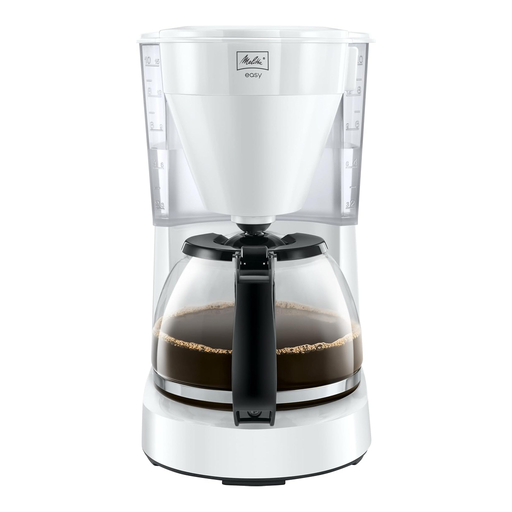
Why this product suits the profile: The 1.25-litre capacity, glass jug and simple operation make it suitable for everyday coffee at home.
The removable filter unit and drip stop reduce unnecessary cleaning and spills.
1.25-litre capacity, automatic switch-off and a water-level indicator on both sides.
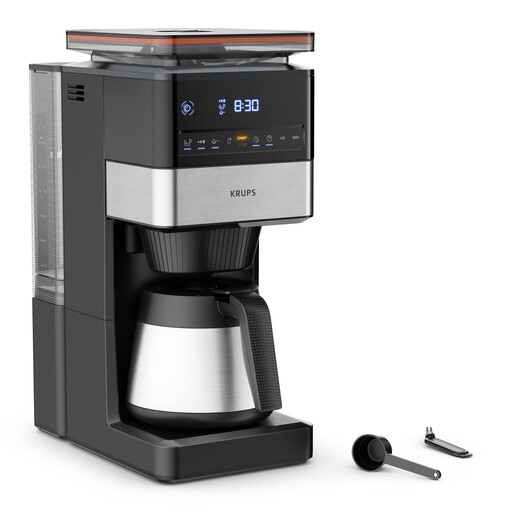
Why this product suits the profile: The integrated, removable conical grinder and thermal jug combine freshly ground beans with a larger brewing capacity.
The removable grinder makes maintenance easier than with permanently installed grinders.
1.25 litres for 10 to 15 cups, three grind settings, timer and automatic switch-off.
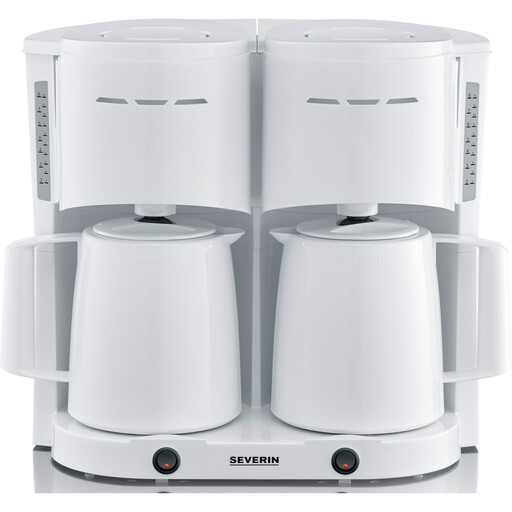
Why this product suits the profile: Two jugs, each holding 8 cups, are designed for offices, guesthouses and catering environments with higher throughput.
The Duo design means larger groups do not have to wait for individual brewing cycles one after another.
Two 1-litre thermal jugs, two water-level indicators, 1x4 paper filters and automatic switch-off.
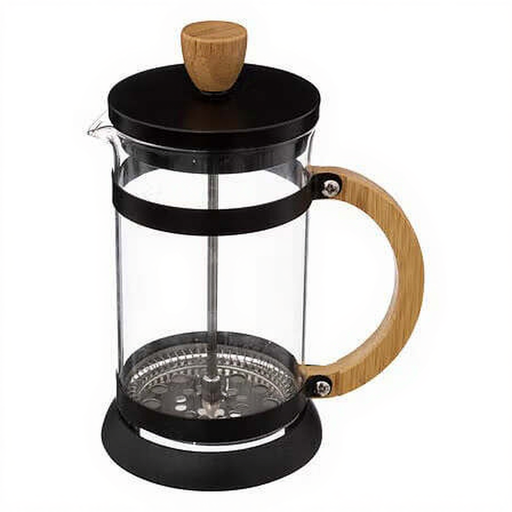
Why this product suits the profile: The 600-millilitre jug is suitable for smaller quantities at home or at work and uses a reusable stainless-steel filter.
The stainless-steel filter reduces regular paper-filter use, while the capacity prevents unnecessarily large quantities.
600-millilitre capacity, borosilicate glass, bamboo details and reusable stainless-steel filter.
Paper filters are hygienic, quick to dispose of and available in many sizes. Fold the side and bottom seams before inserting the filter so that it sits securely in the basket. According to the product information, the Melitta Original Coffee Filters 102/80 Natural Brown are made from unbleached natural pulp and supplied in a pack of 80. They are intended for machines that use the matching size 102.
Reusable metal filters do not require paper, but they allow more coffee oils and fine particles to pass into the jug. They should be rinsed thoroughly after every use. The right choice therefore depends on your preferred flavour, willingness to clean the filter and desire to reduce waste.
We have put together a complete, regularly updated list of products that fully meet these strict selection criteria and the safety regulations applicable in the EU.
For one or two people, 4 to 8 cups are often enough. Families and offices benefit from 8 to 15 cups. You should also consider the capacity in litres rather than relying solely on the advertised number of “cups”.
Its lifespan depends on how often it is used, the hardness of the water, descaling and general care. Regular descaling, emptying the filter after every brewing cycle and handling the jug and lid carefully can help maintain reliable everyday performance. The relevant manufacturer’s instructions are the decisive source of information.
A glass jug usually requires a warming plate, whereas a thermal jug retains heat without continuous heating. If coffee needs to stay warm for a longer period, a thermal jug can offer energy-consumption benefits. If the coffee is served immediately, the difference in everyday use is smaller.