
Lieferung heute & morgen

Qualitätsgarantie

Willkommens-Angebote freischalten: KOSTENLOSE Lieferung | Bis zu 80 % RABATT | Kostenlose 30-Tage-JoyPlus-Testphase
App herunterladen
A filter coffee machine is part of the daily essentials in many German households, family kitchens and small offices. It is simple to use: add water, insert the coffee filter and ground coffee, then press the start button. Even so, models vary considerably in terms of carafe type, capacity, cleaning and automatic functions.
If you only pay attention to wattage or an attractive casing, you may overlook important details. Three common buying misconceptions often lead to disappointment:
For one person or a two-person household, a compact coffee machine for up to 4 cups may be sufficient. Families, shared flats and small offices usually benefit from a capacity of between 1.2 and 1.5 litres.
A coffee machine with a glass carafe normally sits on a hotplate. This makes it possible to pour several cups one after another. The carafe should sit correctly on the plate and be handled with care, as glass can be damaged by knocks or sudden changes in temperature.
A filter coffee machine with a thermal carafe retains heat without a permanently active hotplate. This can be useful if the coffee is to be served over a longer period or if you do not want the machine to continue heating. Check whether the thermal carafe is dishwasher-safe and how the lid opens for cleaning.
These features are useful for everyday operation:
A removable filter holder makes daily cleaning easier. Permanent filters reduce the need for paper filters, while paper filters make disposing of coffee grounds simpler. The key consideration is whether the filter holder, carafe and water tank are dishwasher-safe according to the instructions.
Limescale deposits can affect the water flow and heating performance. Regular descaling based on water hardness and the manufacturer’s instructions is therefore part of normal care. The casing, cable and mains plug must not be immersed in water. Before cleaning, the filter coffee machine must be switched off, unplugged from the mains and allowed to cool down completely.
For use in Germany, you should also check the stated mains voltage of 220 to 240 volts and use a suitable earthed socket. The hotplate, glass carafe, thermal carafe and escaping steam can become hot. The machine should be placed on a stable, dry surface and kept out of children’s reach.
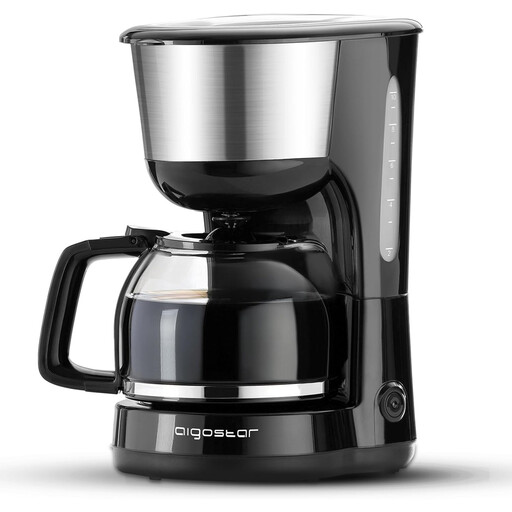
Why this product suits the profile: This appliance offers a 1.25-litre capacity, a glass carafe, a reusable filter mesh and an automatic keep-warm function for normal household use.
The specifications clearly state that it has a drip stop, keeps coffee warm for 30 minutes and switches off after 40 minutes, rather than simply making vague claims about automatic operation.
1.25-litre capacity, reusable filter mesh, drip stop and overheating or dry-boil protection.
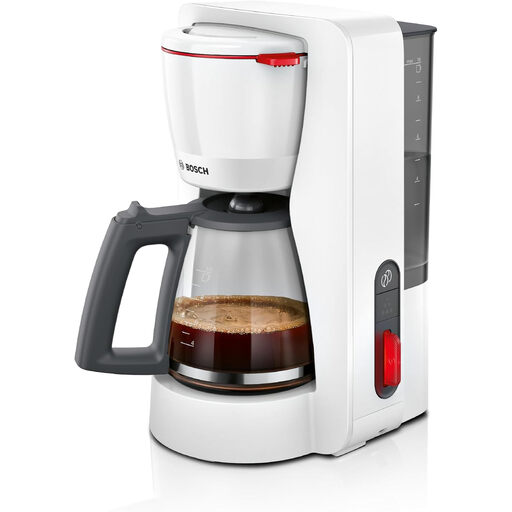
Why this product suits the profile: This model combines a 1.25-litre capacity with a removable water tank, aroma function, drip stop and selectable keep-warm duration.
The keep-warm time can be set to 20, 40 or 60 minutes. This means the hotplate does not have to remain active for longer than necessary.
Aroma+ function, removable water tank, EasyDescale programme and adjustable automatic switch-off.
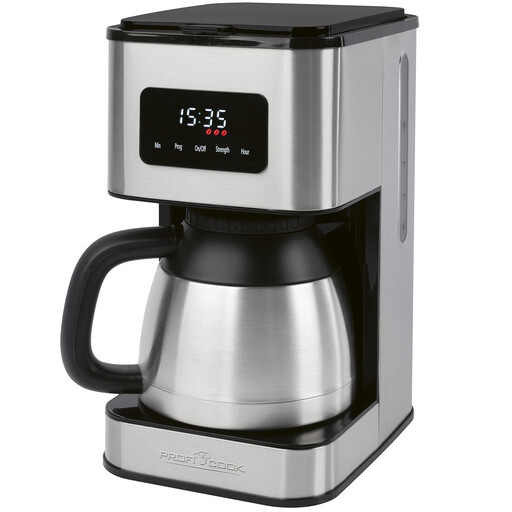
Why this product suits the profile: The double-walled stainless-steel thermal carafe holds approximately 1.2 litres or 8 to 10 cups. A 24-hour timer and three aroma levels are ideal for regular users.
The thermal carafe does not need a hotplate to keep coffee warm. The removable filter holder and drip stop make everyday use easier.
Double-walled stainless-steel thermal carafe, 24-hour timer, three aroma levels, sensor-touch controls and water-level indicator.
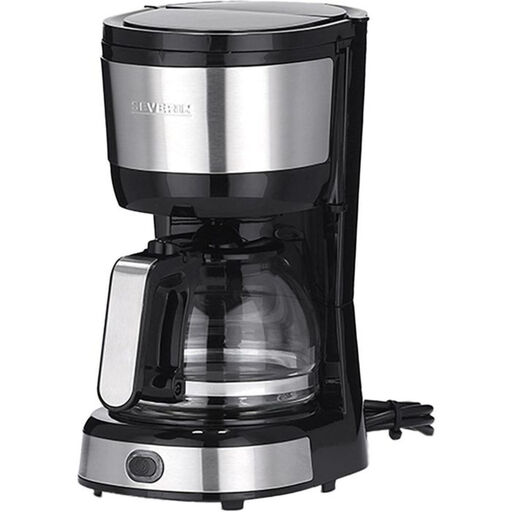
Why this product suits the profile: This appliance is designed for up to 4 cups or 500 millilitres, so it takes up less worktop space than larger models.
The smaller capacity prevents you from regularly brewing more coffee than you actually need.
500-millilitre capacity, permanent swivel filter, keep-warm function, drip stop and automatic switch-off.
We have put together a complete, regularly updated list of products that fully meet these strict selection criteria and the safety regulations applicable in the EU.
Around 1.2 to 1.5 litres is usual. As manufacturers base their measurements on different cup sizes, the litre specification is more useful for comparison. This capacity is generally suitable for families and small offices; for individuals, a more compact machine may be more economical for everyday use.
Its service life depends on usage, water hardness, cleaning and descaling. Regular descaling, emptying the filter holder after every brewing cycle and handling a glass carafe carefully can reduce common causes of wear. However, the care instructions from the respective manufacturer remain the key reference.
Running costs mainly consist of electricity, ground coffee, water and, where applicable, paper filters. A hotplate continues to use energy after the brewing process if it does not switch off automatically. A thermal carafe can avoid this heating operation. When buying, you should therefore consider not only the purchase price, but also the filter type, capacity and switch-off function.