
Lieferung heute & morgen

Qualitätsgarantie

Willkommens-Angebote freischalten: KOSTENLOSE Lieferung | Bis zu 80 % RABATT | Kostenlose 30-Tage-JoyPlus-Testphase
App herunterladen
A filter coffee machine is straightforward to use when its capacity, carafe and controls suit your daily routine. However, some product claims regularly lead to disappointing purchases. For example, a large cup capacity may refer to smaller portions, while a warming plate keeps coffee hot but not fresh indefinitely. A permanent filter is not automatically easier to care for than paper filters, either.
This guide explains which details really matter when buying a filter coffee machine and which models suit different usage scenarios.
Manufacturers often calculate capacity using small cups. A filter coffee machine for 10 to 15 cups may therefore hold around 1.2 to 1.5 litres of water, depending on the model. This is usually sufficient for a family breakfast or a small office. If you prefer large mugs, check the litre capacity rather than comparing only the number of cups.
A filter coffee machine with a warming function usually uses a hotplate. This keeps the glass carafe warm for a limited period after brewing, then switches off automatically. With a coffee machine with a thermal carafe, there is generally no hotplate. The carafe retains heat through its insulation, but it needs to be cleaned more carefully and closed properly when pouring.
A timer, aroma selection and an integrated grinder can make a machine more convenient to use. However, a programmable filter coffee machine requires additional settings and regular care. With a filter coffee machine with grinder, you also need to clean the bean hopper, grinder and, where applicable, a cleaning tool. If you only use pre-ground coffee, you may not need this function.
Models with 1.25 litres or around 1.5 litres are practical for several people. A 1.25-litre filter coffee machine makes approximately 10 to 15 small cups, depending on the manufacturer’s specifications. For single-person households or small kitchens, a more compact machine with a capacity of 500 to 750 millilitres may be a better choice.
Also check the dimensions. A tall machine may be awkward to use beneath wall cabinets. A removable water tank makes filling the machine directly from the tap easier, while a clearly marked water-level indicator helps you measure the right amount.
A coffee machine with glass carafe lets you see the fill level and will usually sit on a warming plate. The plate should have a clear automatic switch-off function. Depending on the model, the warming period may end after 30, 40 or 60 minutes, for example.
A thermal carafe is suitable if you want coffee to remain ready for longer without leaving a hotplate switched on. Look for a tightly sealing lid, a sturdy handle and check whether the carafe is dishwasher-safe. On some models, only the filter insert is approved for dishwasher use.
A drip-stop interrupts the flow of coffee when the carafe is removed during brewing. This is useful in everyday use, but it will not prevent every spill if the carafe is inserted at an angle or left out for too long.
Paper filters, often size 6, reliably retain coffee grounds and can be disposed of after brewing. A coffee machine with a permanent filter creates less paper waste, but the filter must be rinsed after every use. Removable filter holders, wide carafe openings and removable water tanks make cleaning easier. The machine should also be descaled regularly in accordance with the instructions, particularly in areas with hard tap water.
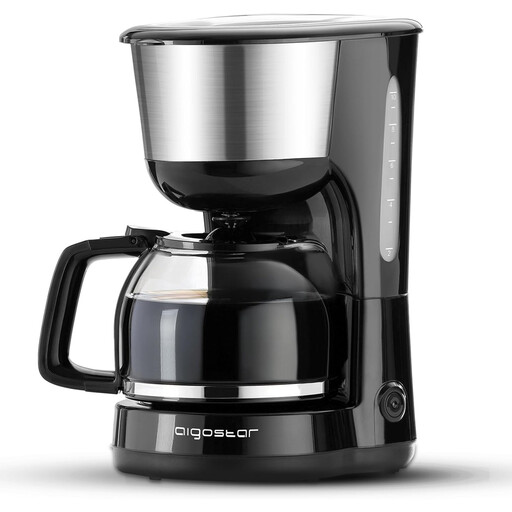
Why this product suits the profile: This machine offers a 1.25-litre capacity, a glass carafe and simple button controls for everyday use.
The product specifications mention a washable permanent filter, drip stop, 30-minute warming time and automatic switch-off after 40 minutes.
1,000 watts, a 1.25-litre capacity and a reusable filter, eliminating the need for regular paper filters.
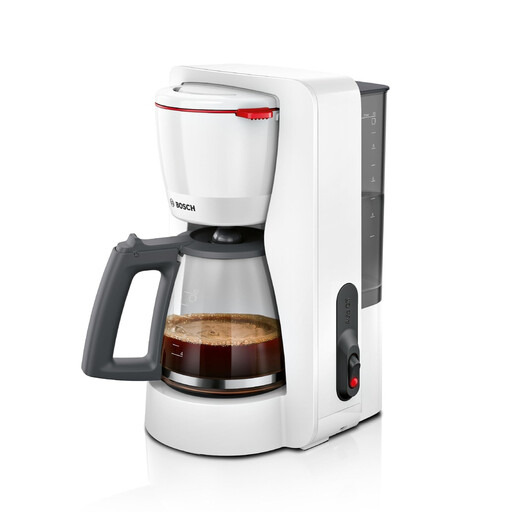
Why this product suits the profile: Ideal for households that prefer straightforward controls, a removable water unit and a classic brewing system with a glass carafe.
The specifications explicitly highlight a drip stop, swivelling filter holder, wide carafe opening and automatic switch-off.
1.25 litres or 10 to 15 cups, 40-minute warming time and a removable water tank.
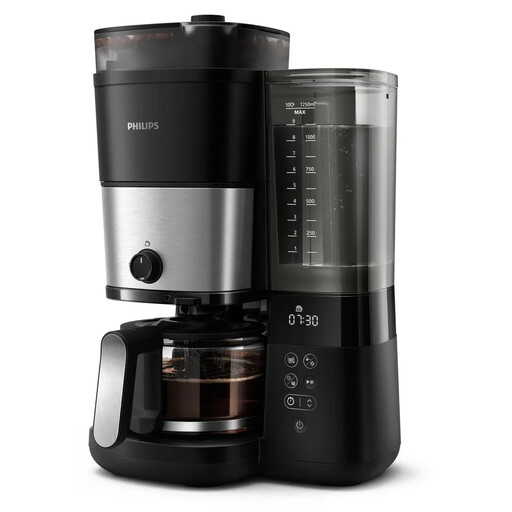
Why this product suits the profile: For users who want to grind beans immediately before brewing and also use a timer, strength selection and flexible portion sizes.
According to the product specifications, the integrated conical grinder can be switched off, making it possible to use pre-ground coffee as well.
1.25 litres for up to 10 cups, a 24-hour timer, three coffee strengths and adjustable grind settings.
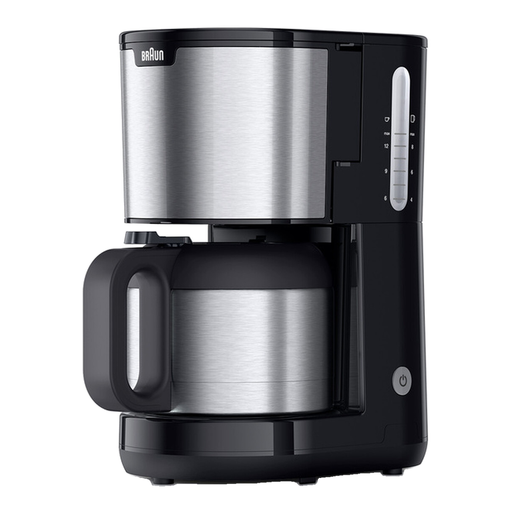
Why this product suits the profile: The thermal carafe is ideal for households or offices where coffee needs to be served over a longer period without a hotplate being kept on continuously.
The product description mentions a double-walled stainless steel thermal carafe and automatic switch-off after 40 minutes.
1.2-litre capacity, drip stop, swivelling filter basket and, according to the product specifications, a dishwasher-safe carafe, lid and filter basket.
We have put together a complete, regularly updated list of products that fully meet these strict selection criteria and the safety regulations applicable in the EU.
As a general guide, use around 60 to 80 grams of ground coffee per litre of water. The right amount depends on the roast, grind size and your personal taste. Start with the manufacturer’s recommended measure and adjust it gradually.
Its service life depends on the materials, water hardness, care and frequency of use. Regular descaling, emptying the filter after every brewing cycle and storing the machine in a dry place can help maintain its performance. If there is visible damage to the cable, carafe or housing, stop using the appliance.
Power consumption depends on the wattage and operating time. In theory, a 1,000-watt machine uses 1 kilowatt-hour during one hour; however, the heating element usually runs for considerably less time during actual brewing. An automatic switch-off function reduces unnecessary warming time. You should also factor in the ongoing cost of paper filters or cleaning a permanent filter.