
Lieferung heute & morgen

Qualitätsgarantie

Willkommens-Angebote freischalten: KOSTENLOSE Lieferung | Bis zu 80 % RABATT | Kostenlose 30-Tage-JoyPlus-Testphase
App herunterladen
A filter coffee machine is a practical solution for many homes and offices when several cups of coffee need to be prepared in one go. However, models vary considerably in capacity, carafe type, cleaning and operation. Focusing only on wattage or a modern casing can mean overlooking important details.
Three common buying misconceptions occur particularly often:
For a small household, a machine with 1 litre or up to 8 cups is often sufficient. Families, guests and offices are generally better suited to 1.25 litres and up to 10 cups. Machines for 12 to 14 cups usually hold around 1.5 litres, making them suitable for several people or longer meetings.
The cup capacity should always be considered together with the litre capacity. A 1.25-litre carafe will not necessarily provide ten large mugs. If you mainly use 250-millilitre cups, you should calculate the capacity accordingly.
A coffee machine with a glass carafe normally sits on a warming plate. This is practical when the coffee will be served soon and you want to be able to see the fill level. Models such as the Severin KA 9340 and Bosch MyMoment TKA2M111 combine a glass carafe with automatic switch-off.
A coffee machine with a thermal carafe, on the other hand, does not require a permanently heated warming plate. It is suitable for users who drink their coffee gradually over a longer period or who do not want the machine to continue heating after brewing. The carafe must be positioned correctly beneath the brewing lid so that the coffee flows through cleanly.
With a coffee machine featuring a warming plate, two specifications are important: how long the warming function operates and when the machine switches off automatically. Depending on the model, this may be 30 or 40 minutes, for example. These figures should not be taken to mean that the coffee will remain at a consistently drinkable temperature throughout.
A coffee machine with a drip stop interrupts the flow of coffee when the carafe is removed during brewing. However, this only reliably prevents drips if the carafe is inserted correctly and the valve is kept clean.
For paper filters, the suitable size should be specified, such as 1x4 or size 6. A removable swing filter makes it easier to insert and dispose of the filter. A permanent filter reduces the need for paper filters, but must be rinsed thoroughly after every use. Fine coffee residue can otherwise affect the flavour and flow rate.
Descaling is also part of regular care. How often it is required depends on water hardness, frequency of use and the instructions in the user manual. An integrated grinder adds convenience, but also increases cleaning requirements. A filter coffee machine with grinder should therefore only be chosen if you genuinely intend to use whole beans regularly.
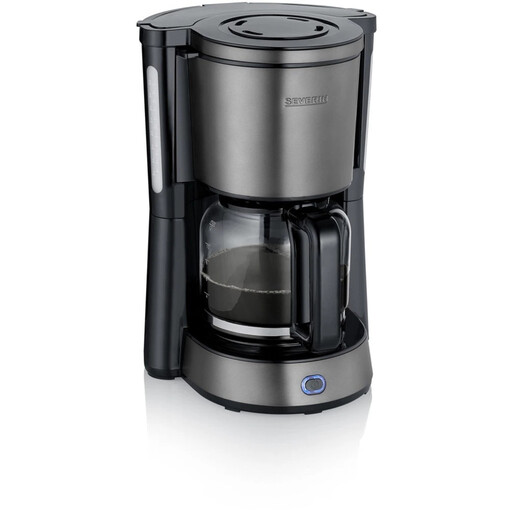
Why this product suits this profile: The 1.25-litre glass carafe is designed for up to 10 cups. The swing filter, dual-sided water-level indicator and one-handed operation support straightforward everyday use.
The drip stop and automatic switch-off are explicitly specified. The removable filter holder makes cleaning easier.
1,000 watts, 1x4 swing filter, glass carafe with brewing-through lid and cable storage.
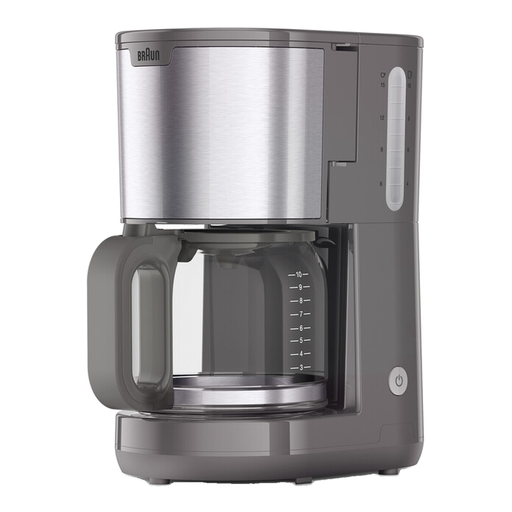
Why this product suits this profile: This model offers a glass carafe for 10 large or 15 small cups, a swivelling filter basket and several removable, dishwasher-safe parts.
Capacity is specified in both small and large cups. The drip stop, automatic switch-off and descaling indicator are clearly stated.
1,000 watts, dual water-level indicator and dishwasher-safe carafe, lid and filter basket.
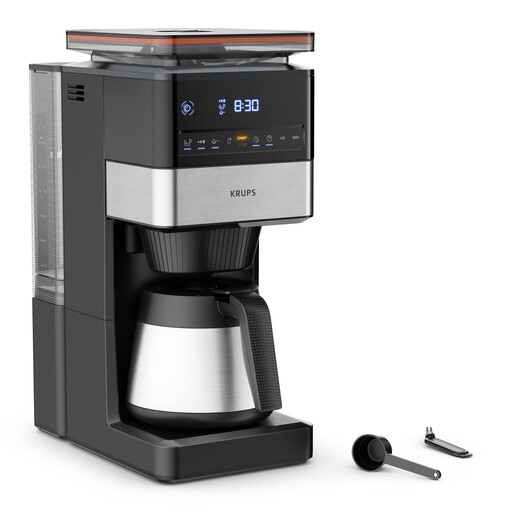
Why this product suits this profile: This filter coffee machine with grinder processes whole beans, offers three grind settings and prepares 1.25 litres or 10 to 15 cups in one go.
The grinder is removable and supplied with a cleaning brush and measuring spoon. The thermal carafe eliminates the need for a permanently heated plate.
Digital control panel, timer, removable water tank and stainless-steel thermal carafe with a capacity of 1.25 litres.
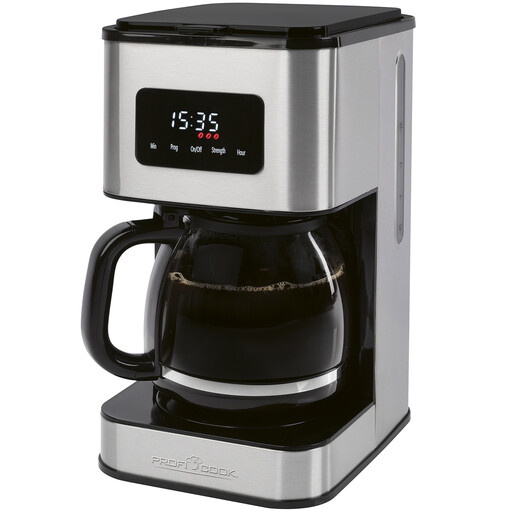
Why this product suits this profile: With around 1.5 litres, this filter coffee machine is designed for 12 to 14 cups. A 24-hour timer supports planned routines at home and in the office.
The capacity, warming plate with automatic switch-off and drip stop are clearly specified. The removable filter holder makes maintenance easier.
Stainless-steel housing, three aroma settings, sensor-touch controls and digital time display.
We have put together a complete, regularly updated list of products that fully meet these strict selection criteria and the safety regulations applicable in the EU.
A programmable coffee machine with a timer can schedule the start of the brewing process up to 24 hours in advance. This is convenient, but requires the water and ground coffee to be prepared correctly. With a filter coffee machine with grinder, you also need to clean the grinder.
For ongoing costs, the key factors are power consumption, warming time and filter usage. A higher wattage does not automatically mean lower brewing costs or better coffee. Paper filters create regular ongoing costs, whereas a permanent filter can be reused after purchase. With a thermal carafe, there is also no need for heating power after brewing.
Before buying, you should also check the space available, cable length, water-tank opening and availability of spare parts. A wide carafe opening and removable filter holder save more time in everyday use than additional display features that are rarely used.
For one or two people, 8 to 10 cups or around 1 to 1.25 litres are often sufficient. Families and offices should generally choose a coffee machine for 12 to 14 cups with a capacity of around 1.5 litres. What matters is the number of cups you actually need, not just the manufacturer’s specification.
The service life depends on usage, water hardness, cleaning and descaling. Regularly rinsing the carafe and filter, removing coffee residue and following the care instructions in the user manual can help keep the machine working reliably. A damaged glass carafe or faulty power cable should not be used further for safety reasons.
After brewing, a thermal carafe requires no further heating power. A glass carafe on a warming plate, by contrast, continues to use electricity throughout the set warming period. The actual costs depend on power consumption, duration and frequency of use.