
Lieferung heute & morgen

Qualitätsgarantie

Willkommens-Angebote freischalten: KOSTENLOSE Lieferung | Bis zu 80 % RABATT | Kostenlose 30-Tage-JoyPlus-Testphase
App herunterladen
A filter coffee machine needs to work reliably day in, day out, brewing several cups and keeping your coffee at a pleasant temperature. In practice, however, wattage or case colour alone won't lead you to a good purchase decision. What really matters is capacity, the type of carafe, ease of use and how simple it is to clean.
Power ratings like 900 or 1,000 watts mainly describe the electrical input. On their own, they tell you very little about taste or brewing profile. Far more important are even water distribution, a suitable filter holder and the ability to balance water volume and coffee grounds properly.
A coffee machine with a glass carafe usually sits on a hotplate. This keeps the coffee warm for a while, but it can continue to heat up if left standing for too long. A filter coffee machine with a thermal carafe, on the other hand, stores the heat in a double-walled carafe and doesn't need an active hotplate after brewing. For offices, families and hosts, this can be far more practical.
The claim "up to 15 cups" often refers to smaller coffee cups, not 15 large mugs. So before you buy, it's worth checking the tank volume. A capacity of 1.2 litres, for example, is said to be enough for up to 15 cups, while 1.5 litres is often listed as 12 to 14 cups.
A stainless steel thermal carafe or a double-walled insulated carafe is a sensible choice if you want to serve coffee over a longer period. With the Philips HD7548/20, the manufacturer states that a double-walled stainless steel thermal carafe is used. The product description mentions that it keeps coffee warm for over two hours, maintaining at least 65 °C after that time. This figure is a manufacturer's guideline and depends on fill level, starting temperature and ambient conditions.
A glass carafe, by contrast, has the advantage that you can see the fill level and how much coffee is left at a glance. Look for a clearly readable water level indicator and a sturdy handle. A hotplate with automatic switch-off is also a good feature to have.
Practical features of a filter coffee machine include:
A programmable coffee machine is especially useful for households and offices. With models that have a timer, however, you should only fill the water tank according to the instruction manual. Fresh water and freshly ground coffee shouldn't be left in the machine for too long.
An aroma selector can offer different brewing profiles or strength levels. The ProfiCook PC KA 1300, according to the product description, has three electronic settings: mild, medium and strong. Such settings change the brewing method, but they don't replace choosing the right coffee or using the correct dosage.
A coffee machine with a grinder grinds beans just before brewing. With the Melitta EPOS 1024-03, you can adjust the grind size, coffee strength and number of cups, according to the product details. This can appeal to home baristas, but it does increase the cleaning effort. The grinder, bean container and outlet should be cleaned of coffee residue regularly.
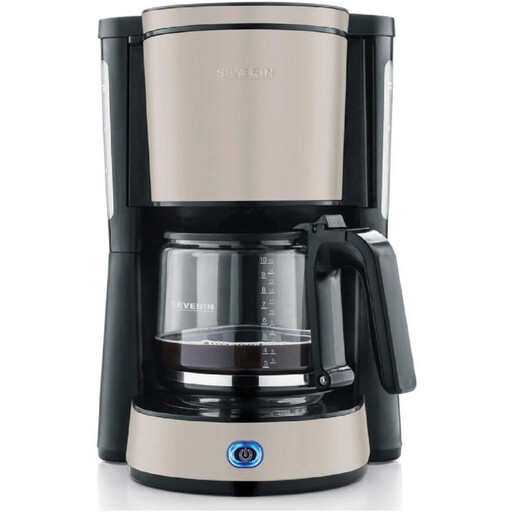
Why this product fits the profile: The 1.2-litre glass carafe, removable 1x4 filter holder and dual-sided water level indicator make it ideal for straightforward daily brewing.
Drip-stop and automatic switch-off address two common weaknesses in basic entry-level machines.
1,000 watts, 1.2-litre capacity, glass carafe and removable filter holder.
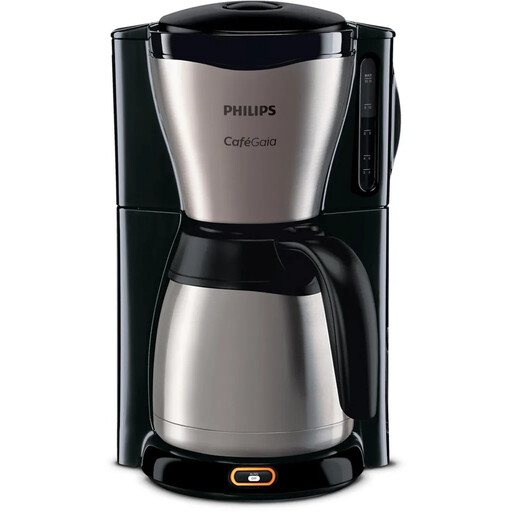
Why this product fits the profile: The 1.2-litre model with a double-walled stainless steel thermal carafe is designed for serving several cups without a permanent hotplate.
The thermal carafe reduces reliance on a hotplate; drip-stop and automatic switch-off complete the safety features.
Up to 15 cups according to the product specification, stainless steel thermal carafe, water level indicator and dishwasher-safe parts.
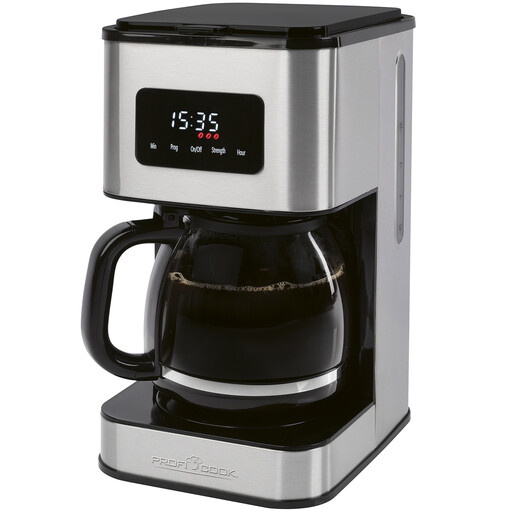
Why this product fits the profile: With roughly 1.5 litres of capacity and three aroma levels, this model is aimed at households, offices and hosts with a higher daily demand.
The programmable 24-hour timer and removable filter holder cut down on unnecessary steps during use.
12 to 14 cups according to the product specification, three aroma levels, drip-stop and hotplate with automatic switch-off.
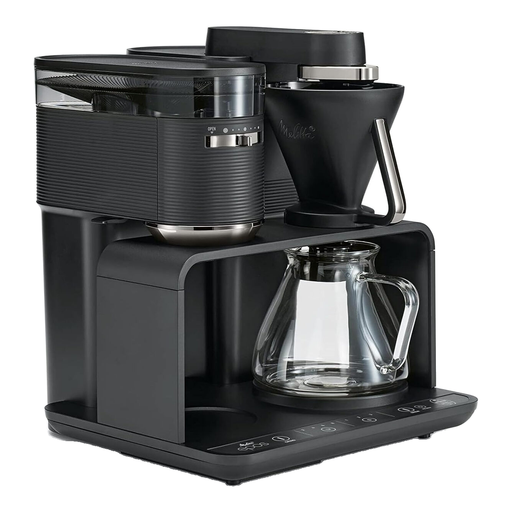
Why this product fits the profile: The integrated grinder, adjustable coffee strength and rotating water outlet give you extra control over the brewing process.
The adjustable settings make the actual features clearer than a simple marketing claim about aroma intensity.
Integrated grinder, three coffee strengths according to the product description and 360-degree water outlet.
An insulated carafe can be used independently of your coffee machine. The Emsa Soft Grip Thermos with a 1-litre capacity is made from double-walled stainless steel according to the manufacturer and features a one-hand opening mechanism. For larger groups, 1.5-litre models from Emsa or LocknLock are worth considering. With stainless steel carafes, check whether hand washing is recommended and whether the lid can be fully removed.
For milk-based drinks, a milk frothing pitcher made from stainless steel with a precise spout is ideal. The De'Longhi DLSC060 holds 350 millilitres and is described as dishwasher-safe. The MHW-3BOMBER pitcher offers 500 millilitres. If you also want to make smoothies, dips or soups, a compact blender like the Philips HR2764/00 with 800 watts and a 700-millilitre Tritan jug could be a good option. Hot liquids should not be added, in line with the safety instructions.
We've put together a full, regularly updated list of products that fully meet these strict selection criteria and the safety regulations in force in the EU.
For one or two people, roughly 0.8 to 1.0 litres is usually enough. Households, offices and hosts will benefit from 1.2 to 1.5 litres. Also check how the manufacturer defines a "cup", as the actual amount per mug can vary.
The lifespan depends on usage, water hardness, cleaning and descaling. Regular descaling according to the instruction manual prevents deposits in the water system. The carafe, filter holder and lid should be cleaned after each use and dried thoroughly.
A filter coffee machine with a thermal carafe doesn't need a hotplate after brewing. This means it can use less electricity than a model with a permanently active hotplate. The actual saving depends on brewing time, keep-warm duration and automatic switch-off.