
Lieferung heute & morgen

Qualitätsgarantie

Willkommens-Angebote freischalten: KOSTENLOSE Lieferung | Bis zu 80 % RABATT | Kostenlose 30-Tage-JoyPlus-Testphase
App herunterladen
A filter coffee machine with a thermal jug is ideal for anyone who wants to make several cups at once and serve the coffee afterwards without leaving a hotplate switched on continuously. For homes, small offices and hosts, this may sound straightforward at first. In practice, however, a few details often lead to disappointing purchases.
As a Joybuy Product Recommendation Officer, I have therefore organised the available information according to clear criteria: capacity, jug type, ease of use, cleaning and safety features. Not every thermal coffee machine is automatically suitable for every situation.
When calculating filter coffee capacities, manufacturers often use small cups. An indication such as “8 cups” may therefore mean around 1 litre, while 10 cups often equates to 1.25 litres. For a household using large breakfast mugs, this can mean considerably less coffee than expected.
So always check the water capacity in litres, not just the number of cups. For a small office or a coffee gathering with several people, a coffee machine for 8 to 15 cups may be a sensible choice. For one or two people, a 1-litre model is often sufficient.
Heat retention depends, among other things, on the wall construction, lid and fill level. A double-walled stainless steel jug is less prone to breakage than a glass jug, but not every jug is equally easy to pour from. A tightly closing brewing or aroma lid can help reduce heat loss.
Ease of use is also important. Some jugs require you to press a button on the lid, while others have a brew-through lid. Warm-keeping times should be understood as manufacturer specifications and may vary depending on room temperature, fill level and whether the jug has been preheated.
A coffee machine with drip stop usually interrupts the flow of coffee when the jug is removed during brewing. However, this does not necessarily prevent every spill when pouring. The jug must be positioned correctly and the lid should be fully closed.
Automatic switch-off is no substitute for safe use either. This feature reduces the risk of the appliance continuing to heat unnecessarily after brewing. The machine should still be unplugged after use, particularly before cleaning.
For most households, 1 to 1.25 litres is a practical range. Depending on how the capacity is calculated, this corresponds to around 8 to 10 cups. If you regularly entertain guests or provide coffee for a small office, you may prefer a capacity of 1.2 to 1.5 litres.
Also consider the footprint. A tall coffee machine may be awkward beneath wall units, while a wider model will take up more space on the worktop. Information about dimensions, cable length and cable storage can help you plan where to place it.
A thermal jug retains heat without a permanently active heating surface. This is useful when the coffee will not be served immediately. With a glass jug and hotplate, the coffee also stays warm, but its flavour may change if it is left standing for a longer period. In addition, the hotplate needs to remain switched on after brewing.
For a coffee machine for home and office use, a tightly closing lid, a secure handle and straightforward cleaning are therefore essential. Stainless steel jugs are less prone to breakage, but depending on the model, they may not be dishwasher-safe or suitable for complete immersion in water.
Most of the machines in this selection are coffee machines for ground coffee and require paper filters, often size 1x4. A removable swing-out filter makes filling and rinsing easier. Some machines also use a reusable filter insert. Before buying, make sure you know whether you want to purchase paper filters regularly.
Useful convenience features include:
Regular descaling is important in areas with hard water. The exact frequency depends on water hardness and usage. The appliance housing, cable and mains plug must not be immersed in water.
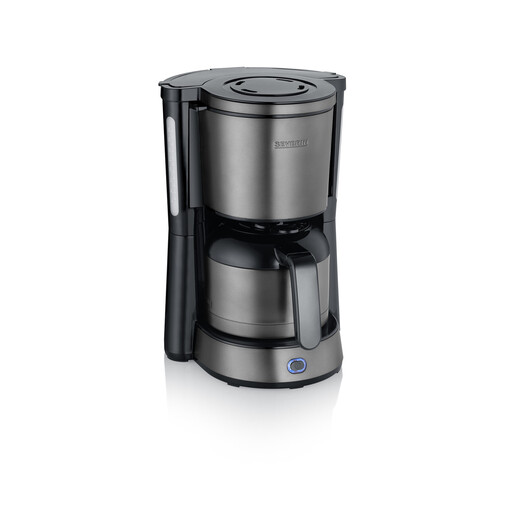
Why this product suits this profile: According to the product specifications, this model makes up to 8 cups using ground coffee, while its 1.25-litre capacity remains manageable for everyday use.
The product data specifies both the capacity and the number of cups. Drip stop and automatic switch-off are also listed.
1,000 watts, thermal jug, swing-out filter and integrated cable storage.
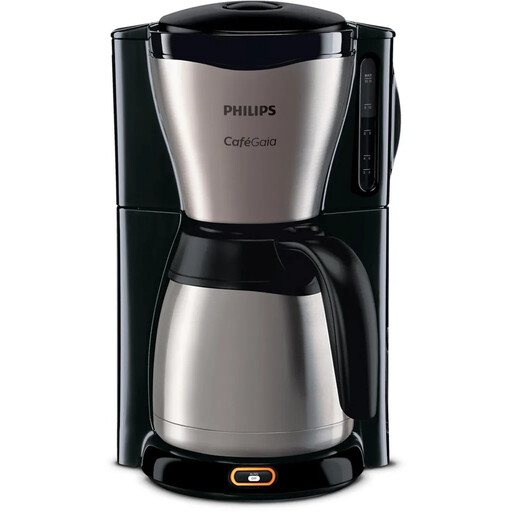
Why this product suits this profile: The double-walled stainless steel thermal jug, aroma seal and stated 1.2-litre capacity make it well suited to regular household use.
The product description specifically mentions drip stop, automatic switch-off and a double-walled stainless steel jug instead of an exposed hotplate.
Up to 15 cups according to the product specifications, cable storage and dishwasher-safe removable parts.
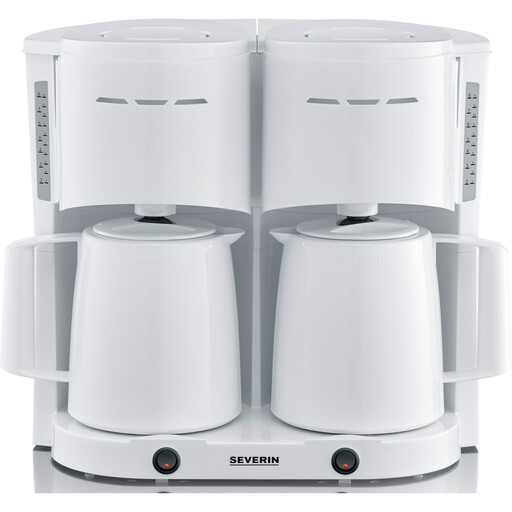
Why this product suits this profile: According to the product specifications, two jugs of approximately 1 litre each allow up to 16 cups to be prepared at the same time.
The capacity is divided between two jugs. This means users do not have to keep opening or decanting a single large jug.
Two thermal jugs, two water-level indicators and simultaneous preparation for offices or larger groups.
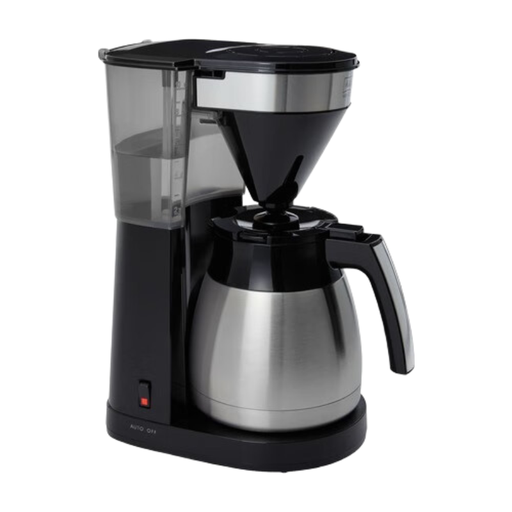
Why this product suits this profile: This 1.25-litre model is designed for up to 10 cups and combines a stainless steel insulated jug with a compact footprint.
The specifications list the number of cups and litre capacity separately. The removable, dishwasher-safe filter holder makes regular maintenance easier.
Easy-Click operation, drip stop, water-level indicator and automatic switch-off.
We have put together a complete, regularly updated list of products that fully meet these strict selection criteria and the safety regulations applicable in the EU.
For one or two people, 8 cups or around 1 litre is often sufficient. For households with several coffee drinkers, guests or office use, 10 to 15 cups or 1.2 to 1.5 litres is more practical. Always compare both figures, as the definition of a cup may vary between manufacturers.
This depends on the construction, lid, fill level and ambient temperature. According to the product specifications, Philips states that the HD7548/20 keeps coffee warm for more than two hours and at least 65 °C after this period. Such figures are manufacturer specifications, not a guarantee for every usage situation. Preheating the jug with hot water can help it retain heat.
Running costs mainly consist of electricity, water, ground coffee, filter paper and descaler. After brewing, a thermal jug does not require a hotplate to remain permanently active. A reusable filter can save on paper filters, but it requires additional cleaning. For a realistic estimate, consider how much coffee you make each day and your local electricity costs.