
Lieferung heute & morgen

Qualitätsgarantie

Willkommens-Angebote freischalten: KOSTENLOSE Lieferung | Bis zu 80 % RABATT | Kostenlose 30-Tage-JoyPlus-Testphase
App herunterladen
A filtered shower head can be a practical addition for households with hard water. However, filter technology, connections, spray modes and maintenance requirements can vary considerably. If you only look at a high number of filter stages or terms such as “high pressure”, you may overlook important details.
A shower head for hard water can reduce certain substances, such as chlorine residues or particles, depending on the filter material used. However, this does not automatically make it a water-softening system. Water hardness is mainly determined by calcium and magnesium compounds. Claims such as “20-stage filter” should therefore be checked carefully:
According to Cobbe’s manufacturer information, selected models use KDF, calcium sulphite, activated carbon, vitamin C and mineral beads, among other materials. These details describe the filter configuration, but they are not a substitute for an independent water analysis or a central water-softening system.
A high-pressure shower head does not necessarily deliver a greater volume of water. Water is often concentrated more strongly through smaller nozzle openings or a modified flow path. This can be useful when mains pressure is low, but some users may find the spray too powerful.
You should therefore look for:
A flow restrictor can reduce the water flow rate. Whether the spray still meets your personal expectations will depend on the water pressure in your home.
The purchase price only shows part of the ongoing cost. Filter cartridges need to be replaced regularly. According to the product information, various Cobbe models should be replaced after approximately three to six months, depending on water quality, usage and any reduction in water pressure.
You should also check whether:
A German standard connection for many shower systems is a G1/2 thread. Even so, you should check the existing connection before buying. A hand shower with hose is particularly practical if you want to position the shower head flexibly, clean a shower tray or wash a pet.
Useful features include:
Before first use, check the connection for leaks while the water is running.
A shower head with chlorine filter uses activated carbon, calcium sulphite or a combination of different media, depending on the design. The product description should clearly state which substances the manufacturer claims are reduced. Claims such as “removes 99 per cent of chlorine” should be understood as manufacturer information and not as a general guarantee for every water quality.
A 20-stage filter element sounds comprehensive, but it is only relevant if the media used and the replacement process are described clearly and transparently.
A shower head with 6 spray modes offers more choice than a basic hand shower. Typical settings include Rain, Massage, Power Jet, mixed spray or a concentrated cleaning spray. In water-saving models, the water jet is often concentrated through micro- or silicone nozzles.
According to Cobbe’s product description, one selected model can reduce water consumption by up to 30 per cent. This figure depends on the manufacturer’s specifications, water pressure, usage and the selected spray mode. You should therefore also check the flow rate in litres per minute, if stated.
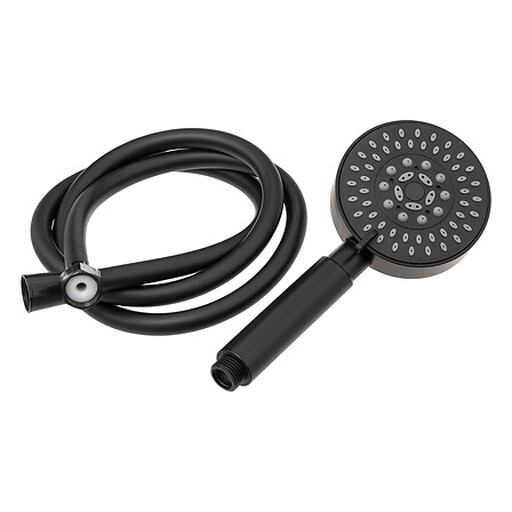
Why this product suits this profile: The black hand shower is ideal for buyers who want several spray modes and a flexible hose, but do not need an integrated filter.
The five clearly described modes avoid an overwhelming choice. The absence of a filter is also stated transparently.
Five spray modes, flexible stainless steel hose, rubber seals and tool-free installation.
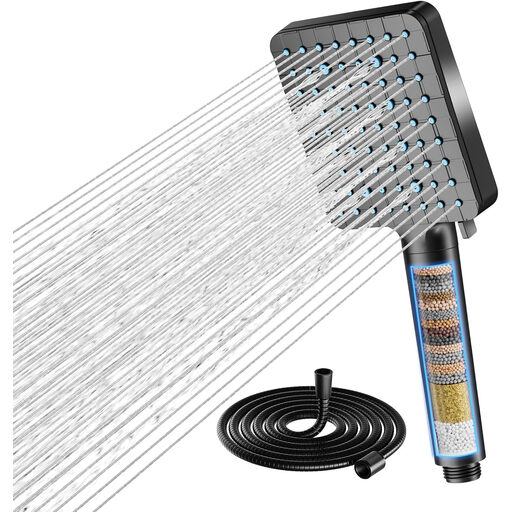
Why this product suits this profile: The combination of a black, square housing, 20-stage filter, six modes and 1.5-metre hose is a good fit for modern bathrooms with hard water.
The product information specifies the filter media, connection size, hose length and replacement interval.
20-stage filter system, six spray modes, silicone nozzles and standard G1/2 connection.
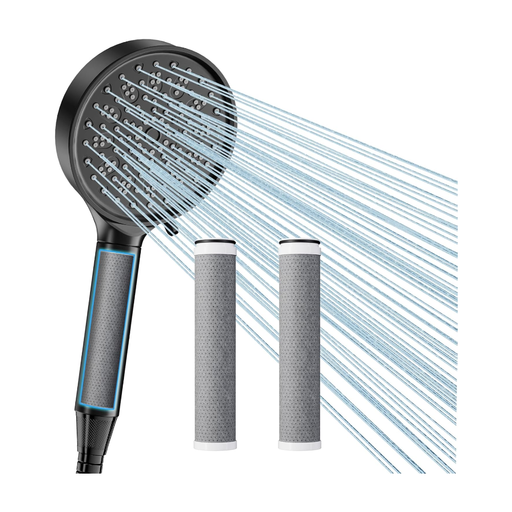
Why this product suits this profile: Three included activated carbon filters and a flexible 1.5-metre hose are practical for households with frequent use.
The supply of replacement filters makes ongoing costs and maintenance requirements easier to plan.
Three activated carbon filters, six spray functions, 124-mm panel and optional flow restrictor.
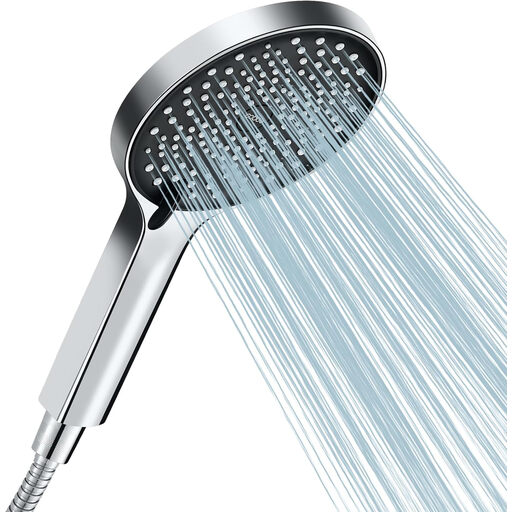
Why this product suits this profile: Three easy-to-select modes and a stated water saving of up to 30 per cent are aimed at users with straightforward requirements.
The selection focuses on three clearly defined spray modes rather than difficult-to-compare feature claims.
13.1-cm panel, 15-degree nozzle angle, micro-spray nozzles and tool-free installation.
We have put together a complete, regularly updated list of products that fully meet these strict selection criteria and the safety regulations applicable in the EU.
Most models with a standard G1/2 connection can be fitted in just a few steps:
Tools are usually not required. Pliers can damage chrome-plated or painted surfaces. Silicone nozzles can often be cleared of limescale deposits by rubbing them gently. Avoid aggressive acids, chlorine bleach and abrasive sponges. The relevant manufacturer’s instructions should always be followed for detailed cleaning guidance.
This depends on water hardness, flow rate and household size. For the models listed, the product information gives an approximate replacement interval of three to six months. A reduction in water pressure may also indicate that the filter is clogged. The manufacturer’s instructions remain the deciding factor.
Many models use a G1/2 thread, which is common on standard shower hoses. Nevertheless, you should check the connection, seal and hose length before buying. Electric instantaneous water heaters also have their own appliance instructions; according to the product information, one model is not suitable for electric showers.
A water-saving shower head can reduce the flow rate through its nozzle design or a restrictor. The actual saving depends on water pressure, spray mode and shower duration. The stated flow rate in litres per minute provides a more reliable guide than the term “water-saving” alone.