
Lieferung heute & morgen

Qualitätsgarantie

Willkommens-Angebote freischalten: KOSTENLOSE Lieferung | Bis zu 80 % RABATT | Kostenlose 30-Tage-JoyPlus-Testphase
App herunterladen
Limescale can build up on the silicone nozzles of a handheld shower head and gradually affect the water flow. If you’re looking to buy a filtered shower head, you’ll find plenty of options advertised with terms such as “high pressure”, “20-layer filtration system” or “saves up to 30% water”. These claims aren’t always directly comparable.
The key considerations are not just the design, but also the combination of filter construction, connection, spray settings and maintenance requirements. Our selection is aimed at German households looking for a handheld shower head with a filter for everyday showers, washing hair, or bathing children or pets.
A shower head designed to tackle limescale can reduce particles and certain substances in the water. However, it won’t automatically turn hard tap water into soft water in the way a central water-softening system does. Its effectiveness depends on the filter material, water quality, flow rate and replacement interval.
Claims about chlorine, heavy metals or other substances should therefore be understood as manufacturers’ claims. According to the manufacturer, some Cobbe models use KDF, calcium sulphite, activated carbon or mineral beads, among other materials. This does not provide a general guarantee for every water supply.
A high-pressure shower head can produce a more concentrated spray when mains water pressure is low. At the same time, a very powerful jet may be uncomfortable for children or people with sensitive skin. Models with several settings are more practical, such as rain, massage, mist or jet modes.
An optional flow restrictor can reduce water consumption and spray intensity. Before buying, check whether this feature is included, removable or permanently built in.
A shower head designed to reduce chlorine or limescale will generally need filter material that must be checked and replaced regularly. A low initial price may be less of a bargain if replacement cartridges are hard to find or expensive.
Some product descriptions suggest replacing the filter every three to four months. This is only a guide, not a universal rule. Hard water, several daily users or a drop in water pressure may mean you need to replace it sooner.
For bathrooms in Germany, a G1/2 connection is a useful guide. It often fits existing shower hoses, but you should check it against the connection on your shower mixer. A shower head and hose set is handy if your existing hose is cracked, leaking or incompatible.
A 1.5-metre hose suits most showers and makes it easier to rinse hair, children or pets. Also check for seals and a secure screw connection to prevent leaks at the joints.
A 20-layer filtration system may sound impressive at first. A specific list of the filter media is more informative. KDF, calcium sulphite, activated carbon and mineral beads each serve different technical functions. Also check:
Filter performance should not be equated with a medical or therapeutic effect. A shower head for dry skin and hair may simply describe a choice based on water quality; it does not treat skin problems or hair loss.
A water-saving shower head reduces the flow either through smaller nozzles, by mixing in air or with a flow restrictor. Figures such as “up to 30%” or “up to 40%” depend on the comparison model, water pressure and length of use. They should therefore be treated as manufacturers’ claims.
Several spray settings offer greater flexibility. A wide rain spray is useful for everyday washing, while a focused jet can help with rinsing or cleaning. A gentler setting may be more comfortable for children and pets.
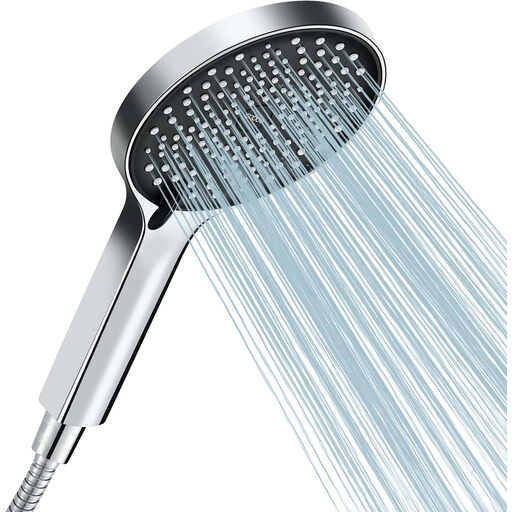
Why this product suits this profile: This set combines a shower head and hose with three spray settings and tool-free installation. It’s suitable for anyone looking for a straightforward solution without a built-in filter system.
The three clearly described modes make it easier to choose the right setting. The water-saving figure is presented as a manufacturer’s claim, rather than a universal fixed value.
Three spray settings, 13,1 cm diameter and standard hose connection.
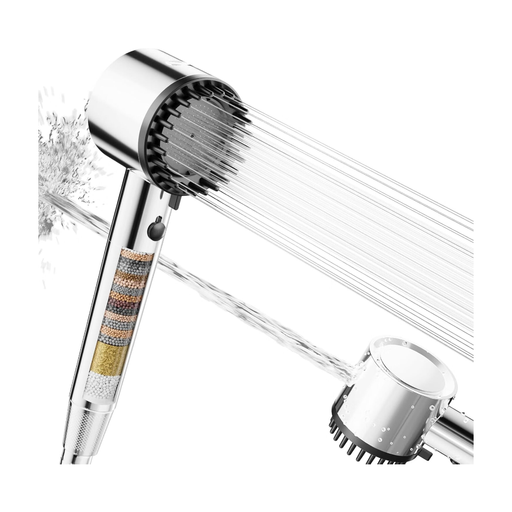
Why this product suits this profile: This model combines an integrated filter cartridge with five spray settings, removable nozzles and a 1,5-metre hose. It’s designed for regular maintenance and a range of uses.
The filter element is pre-installed, according to the product description. Treat the suggested cartridge replacement interval of three to four months as a guide, and adjust it to suit your water quality.
20-layer filter cartridge, five spray settings, G1/2 connection and cleaning tool.
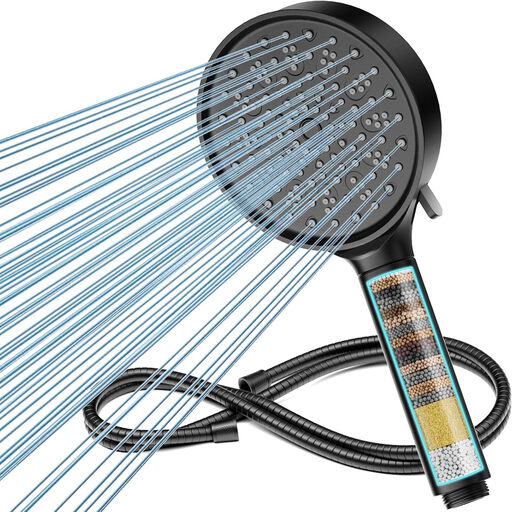
Why this product suits this profile: Its six stated spray modes and large 124-mm shower face make it suitable for families, frequent hair washing and rinsing children or pets.
As well as a filter cartridge, the product description mentions an optional flow restrictor. This lets you adjust the spray intensity to suit your water pressure.
20-layer filtration system, six modes, 1,5-metre hose and universal G1/2 connection.
We’ve put together a complete, regularly updated list of products that meet these strict selection criteria and fully comply with the safety regulations in force in the EU.
Not every model is suitable for electric showers. Also check the maximum water temperature for the product and avoid using aggressive or highly acidic cleaning products.
Depending on water hardness, flow rate and household size, you may need to replace it every few months. Many product descriptions suggest three to four months as a guide. Always follow the instructions, and look out for a drop in water pressure or signs of wear on the cartridge.
Many models use the widely available G1/2 connection. Even so, check the connection on your existing hose. If you’re unsure, a handheld shower head and hose set is the simpler option.
A water-saving shower head can reduce the flow through its design. The actual saving depends on water pressure, the setting and how long you shower for. Manufacturer figures such as “up to 30%” or “up to 40%” are therefore not guaranteed consumption figures for every household.