
Lieferung heute & morgen

Qualitätsgarantie

Willkommens-Angebote freischalten: KOSTENLOSE Lieferung | Bis zu 80 % RABATT | Kostenlose 30-Tage-JoyPlus-Testphase
App herunterladen
A filtered shower head can be an appealing option for households with limescale-heavy or chlorinated tap water. At the same time, filter technology, fittings, spray patterns and replacement costs vary considerably. Focusing solely on terms such as “high pressure” or “20-layer filtration” can easily lead you to overlook important details.
A filter element is not a permanent component. Depending on water quality, household size and shower frequency, its performance may decline over time. For one Cobbe model, replacement is recommended every three to four months or when water pressure drops. For other products, the replacement interval depends on usage and water quality, according to the product description.
Before buying, it is therefore important to check:
A filter may reduce certain residues, but it does not replace an assessment of drinking water quality and does not automatically protect against every contaminant. Claims concerning chlorine, heavy metals or other substances should be understood as manufacturer specifications.
A high-pressure shower head cannot create unlimited additional water pressure. Smaller nozzles and redesigned water channels can make the spray feel more concentrated when sufficient pressure is already available. With very low pressure, instantaneous water heaters or specialised shower systems, however, the result may differ.
You should therefore consider:
A separately supplied flow restrictor can reduce the water flow on some models. This is useful if the spray feels uncomfortably powerful.
A shower head with 6 spray settings or a shower head with 8 spray settings may sound highly versatile. What matters, however, is how easily the selector can be operated and whether the nozzles remain clean after extended use. Commonly used settings include rain, massage, a concentrated power jet or a combination mode. Those who mainly wash their hair may need fewer settings than a household that also uses the shower for children, pets or bathroom cleaning.
Depending on the model, a chlorine-filter shower head may use activated carbon, calcium sulphite, PP fibres, KDF or mineral beads. The term “multi-layer” describes only the number or combination of filtration stages; it does not automatically indicate how effectively they will perform in your own household.
According to the product description, the Cobbe model with a 20-layer filtration system uses, among other materials, KDF-55 and mineral beads. The model supplied with a hose additionally lists calcium sulphite, activated carbon and vitamin C. Such details should be identified as manufacturer specifications and must not be equated with medical or therapeutic benefits.
For a shower head for hard water, easy-to-clean silicone nozzles are also a sensible choice. Limescale can usually be removed by gently rubbing the surface. Abrasive cleaners and hard brushes may damage it.
The widely used G1/2 fitting is compatible with many conventional shower hoses. Nevertheless, you should check before buying whether your existing hose can be reused. A shower head with hose is convenient if you are planning to replace the hose anyway.
In particular, check the following:
The handheld shower heads presented here are generally installed by screwing them into place. Seals must be positioned correctly to prevent leaks.
A larger spray face distributes water over a wider area. The Cobbe filter model is described as having a spray face measuring 124 × 124 mm. Other models have a diameter of approximately 11 cm or 13.1 cm. A large rain shower head can provide a comfortable experience, but it requires an adequate water supply and is not automatically more water-efficient.
Some models claim savings of up to 30 per cent through the use of micro-nozzles. This figure is a manufacturer specification and depends on inlet pressure, flow rate and usage habits. If you want to compare water consumption objectively, look for the specified flow rate in litres per minute.
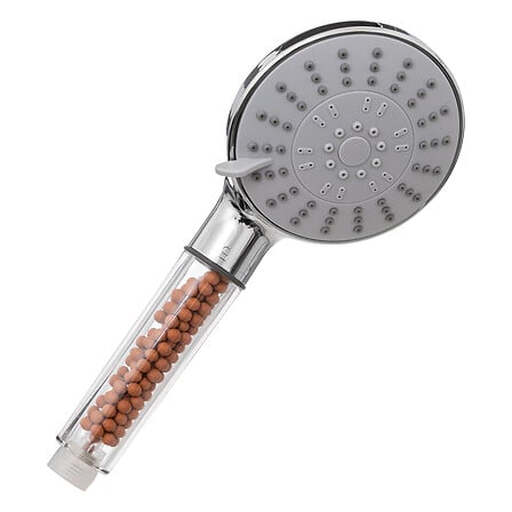
Why it’s a good fit: A compact filtered handheld shower head with five spray modes, ideal for rental properties or a straightforward replacement using an existing hose.
The product description specifies a filter, five modes and simple screw-on installation. Clean the housing regularly and plan filter replacement according to the actual water flow.
11 cm diameter, five spray settings, materials listed as ABS, chrome-plated steel and quartz.
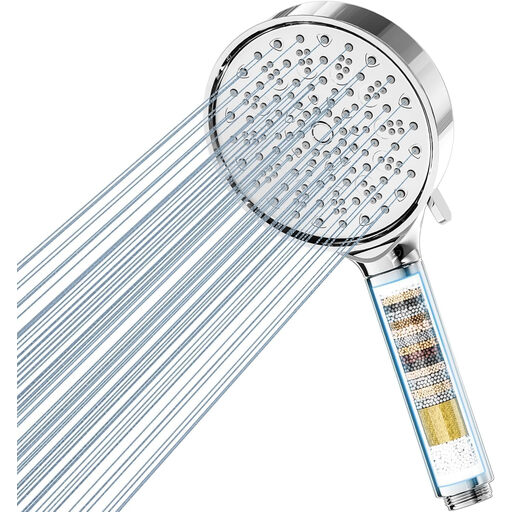
Why it’s a good fit: For users who want to switch between rain, massage and concentrated spray modes while preferring a larger handheld shower face.
The filter element is pre-installed according to the description. The specified replacement interval of three to four months, or when pressure drops, makes maintenance easier to plan.
20-layer filtration system according to the manufacturer, six spray functions and a 124 × 124 mm spray face.
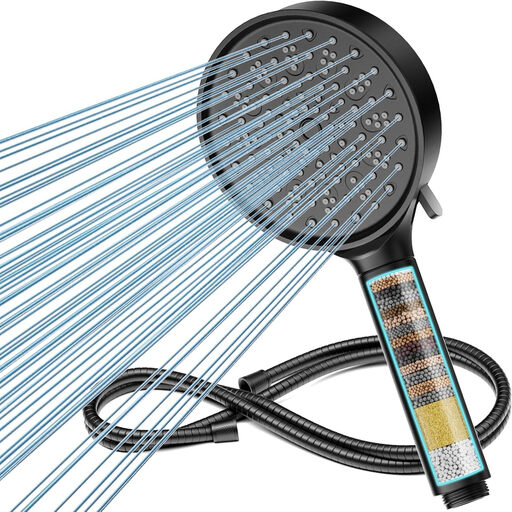
Why it’s a good fit: A practical combination for families, frequent hair washing or cleaning the shower, children and pets.
According to the product data, a hose is included. The silicone nozzles can be gently cleared of limescale; filter replacement depends on water quality and usage.
20-layer filtration system according to the manufacturer, six spray modes and a 150 cm hose.
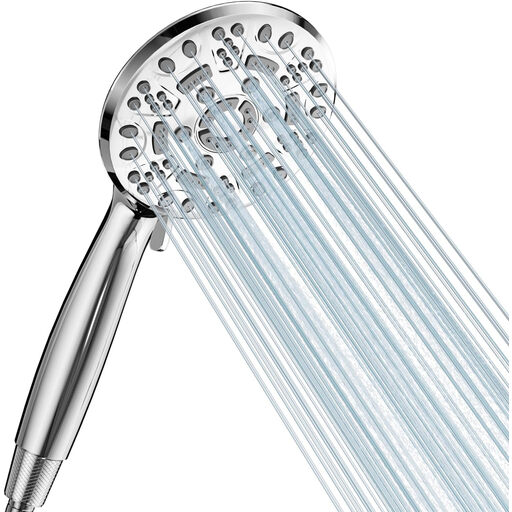
Why it’s a good fit: For households that want to choose between a wide rain spray, massage and a concentrated water jet.
The product data lists eight modes, self-cleaning nozzles and a water-stop mode. Before ordering, check whether it is suitable for your shower system.
G1/2 fitting, eight spray modes and a water-stop function according to the product description.
The complete selection of pressure-boosting shower heads makes it easy to compare filters, spray settings, hoses and fittings with confidence.
A shower head designed for limescale-prone water requires regular care. Gently wipe the silicone nozzles and avoid abrasive cleaning products. If you use filtered shower water, replace the filter according to the instructions. A drop in water pressure may indicate a clogged filter element or limescale buildup in the nozzles.
Ongoing costs include more than just the purchase price:
A water-saving shower head can reduce consumption if its actual flow rate is lower. The precise saving depends on shower duration, water temperature and how the hot water is produced.
Many models use a G1/2 thread, which is common on conventional showers. Even so, you should check the thread, seal and hose connection before buying. Electric showers may have specific restrictions depending on the appliance.
This depends on water hardness, usage and household size. The product specifications for the models presented here indicate approximately three to four months, or replacement when water pressure begins to drop. Transparent filter housings make visual inspection easier, but they do not replace maintenance according to the instructions.
A redesigned nozzle structure can make the water jet feel more concentrated. However, a shower head cannot fully compensate for insufficient supply pressure. If pressure is low, you should also check the household plumbing and shower hose.