
Lieferung heute & morgen

Qualitätsgarantie

Willkommens-Angebote freischalten: KOSTENLOSE Lieferung | Bis zu 80 % RABATT | Kostenlose 30-Tage-JoyPlus-Testphase
App herunterladen
Limescale marks on taps, dry hair after showering or an uneven water jet are common reasons to look for a filtered shower head for limescale. However, not every model with a filter cartridge addresses the same problems. Some products mainly reduce chlorine or suspended particles, while having only a limited effect on the minerals dissolved in tap water.
If you live in Germany and have hard tap water, you should therefore pay less attention to marketing terms such as “wellness water” or “high-pressure technology”. What really matters is a suitable connection, clear information about the filter and maintenance that is practical for everyday use.
Depending on the filter material, a filtered shower head can reduce chlorine, sediment, rust particles or certain metal residues. However, this does not necessarily change the overall hardness of the water permanently. Limescale deposits are mainly caused by dissolved calcium and magnesium compounds. A small filter in a shower head is therefore no substitute for a central water-softening system.
Look for specific information about the filter structure. Activated carbon, calcium sulphite, PP filters and mineral beads all serve different purposes. If there is no information about filter performance, service life or replacement, it is harder to make a transparent purchasing decision.
A high-pressure shower head can make the water jet feel stronger by using smaller nozzles or a modified flow system. However, this does not automatically mean that less water is actually being used. A manufacturer’s claim such as “up to 30 per cent water saving” should always be understood as a maximum value under specific conditions.
Actual flow rate, shower duration and the selected spray mode are the main factors affecting ongoing consumption. An optional flow restrictor can be useful if the water jet is too strong or you want to reduce consumption.
A filter cartridge has a limited capacity. How long it can be used depends on water quality, household size and how often you shower. Transparent housings or replacement filters supplied with the product make it easier to monitor its condition. With a shower head for hard water, the silicone nozzles should also be cleared of deposits regularly.
A filter that becomes blocked after just a few weeks can reduce the water flow. Before buying, check whether replacement parts are available and whether the filter can be changed without special tools.
A multi-stage filter can combine different media. Activated carbon is often used to reduce certain odours and tastes, while calcium sulphite is frequently mentioned in connection with chlorine in filter products. PP filters can trap particles. Mineral beads or KDF materials are also listed as components of the filter system, depending on the product.
These claims should not be equated with medical or therapeutic effects. If a brand quotes specific percentages, these should be regarded as a manufacturer’s claim. A statement such as “removes 99 per cent of chlorine” should therefore not be interpreted as a general value for every water quality without further testing conditions.
A shower head with hose should ideally have a standard G1/2 thread for use in German bathrooms. In many cases, this allows it to be connected to an existing shower hose. Before ordering, you should still check whether the model is suitable for your existing fitting.
Tool-free installation is convenient, but it does not replace a leak test. After screwing it on, check the connection first at low water pressure. Models with a 150-cm hose provide extra freedom of movement, for example when cleaning the shower or bathing children and pets.
A shower head with several spray modes can switch between a wide rain spray, massage function, concentrated jet or combination modes. A larger nozzle surface usually distributes the water more widely, while smaller openings can create a more focused jet.
A finer setting is often more comfortable for users with sensitive skin. However, this is a matter of personal preference and is not a guaranteed effect on skin or hair. Also look for easy-to-clean silicone nozzles and a clear way of switching between modes.
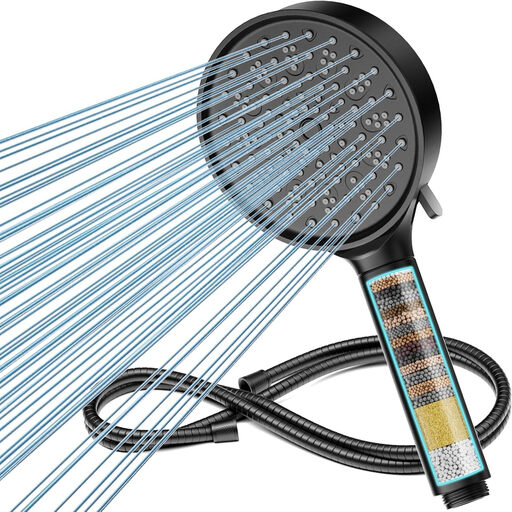
Why this product suits this profile: This model combines a pre-installed filter, a 150-cm hose and six spray modes. The G1/2 connection is suitable for many existing shower systems.
The filter is already fitted, and the care instructions specify cleaning the silicone nozzles and replacing the filter later on.
20-layer filter system according to the product description, six spray modes, 124-mm nozzle surface and optional flow restrictor.
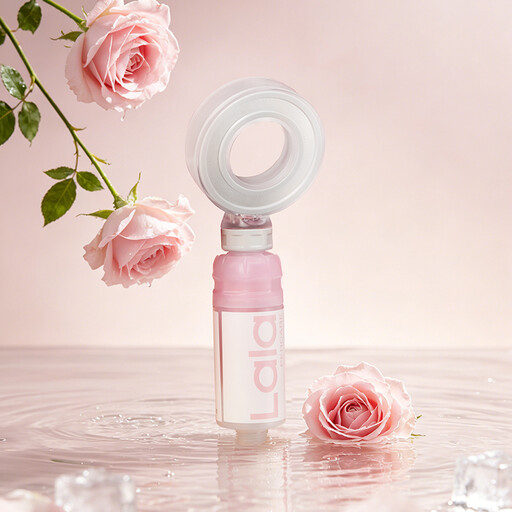
Why this product suits this profile: Suitable for households looking not only for a shower head that reduces chlorine, but also for distinctive design and fine water distribution.
The transparent housing is designed to make it possible to check the filter condition visually. The replacement intervals stated by the supplier vary depending on household size and usage.
Four-stage filter according to the supplier, tool-free installation and a fine-mesh water outlet system.
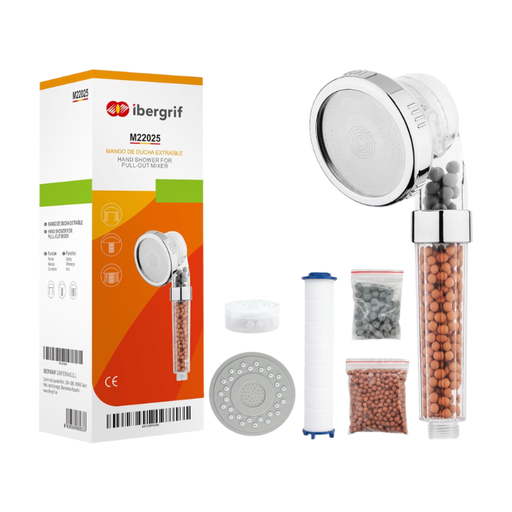
Why this product suits this profile: This model is aimed at users who want to switch between three spray modes and clean or replace the filter components themselves.
The filter can be removed; according to the product information, replacement PP filters, mineral beads and a sealing ring are included.
Three-stage filter system according to the supplier, three spray modes, tool-free installation and included accessories.
A shower filter is designed for use in the shower and should not be used with electric showers if the manufacturer rules this out. If you are unsure about the fitting or water pressure, it is advisable to have the existing installation checked.
We have put together a complete, regularly updated list of products that fully meet these strict selection criteria and the safety regulations applicable in the EU.
No, this cannot be claimed across the board. Depending on their design, filters can reduce chlorine, particles or certain residues. A shower head generally cannot eliminate water hardness completely. For serious limescale problems throughout the household, a central softening system is a different technical solution.
This depends on water hardness, household size and how often you shower. Some suppliers specify longer intervals for one-person households than for families. The decisive factors are the type of filter, the stated replacement interval and any reduction in water flow.
A water-saving shower head can reduce the flow through nozzle design or a restrictor. However, the actual saving depends on pressure, spray mode and shower duration. Check specific flow-rate details and use the mode that best suits your daily needs.