
Lieferung heute & morgen

Qualitätsgarantie

Willkommens-Angebote freischalten: KOSTENLOSE Lieferung | Bis zu 80 % RABATT | Kostenlose 30-Tage-JoyPlus-Testphase
App herunterladen
The search for an air purifier can quickly become overwhelming. Many models promise clean air, but the true costs are often hidden in the details—especially when it comes to replacement filters. A low initial price can quickly become a cost trap when an expensive filter change is due every six to twelve months. For cost- and health-conscious households, the question therefore arises: is there a long-term, economical solution?
An air purifier without filter replacements promises just that: predictable expenses and low maintenance. But before you make a decision, it's important to know the most common pitfalls that can lead to a poor investment.
To avoid these problems, it is crucial to focus on the objective performance parameters that truly matter.
Instead of being guided by advertising promises, you should check three key technical metrics. These determine whether a device is suitable for your needs and represents a good long-term investment.
The CADR value is the most important metric for an air purifier's performance. It indicates how many cubic metres of clean air the device delivers per hour (unit: m?/h). A higher CADR value means faster and more effective air purification.
To determine the appropriate value for your room, you can use a simple formula:
For allergy sufferers, an air change rate of 3 to 5 per hour is recommended. An air purifier for large rooms, such as a living room of 50 m? with a 2.5 m ceiling height, should therefore have a CADR value of at least 375 m?/h (50 × 2.5 × 3). Models for up to 130m? require correspondingly higher values to work effectively.
In practice, a low-maintenance air purifier does not mean it operates entirely without a filter. Rather, the term describes models whose main filter has an extremely long lifespan of several years.
Modern devices offer more than just air purification. A smart air purifier with an app allows for remote control, scheduling, and real-time air quality monitoring, even when you're on the go.
Based on these objective criteria, we have identified several models that represent a considered choice for different user profiles and requirements.
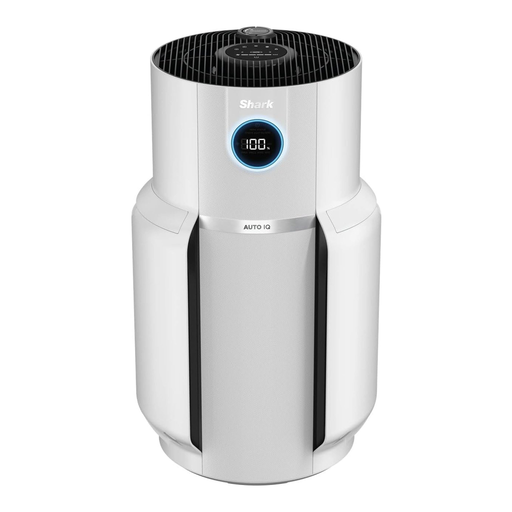
Why it's a good fit: Ideal for users who want to make a one-time investment and not worry about running costs for years. With its coverage for rooms up to 130 m?, it's a solution for large, open-plan living areas.
This model directly addresses the running costs trap. According to the manufacturer, the HEPA filter does not need to be replaced for up to 5 years, drastically reducing the total cost of ownership.
NeverChange Filter Technology: Offers maximum cost certainty and minimal maintenance. Auto-IQ System: Automatically adjusts performance based on real-time air quality.
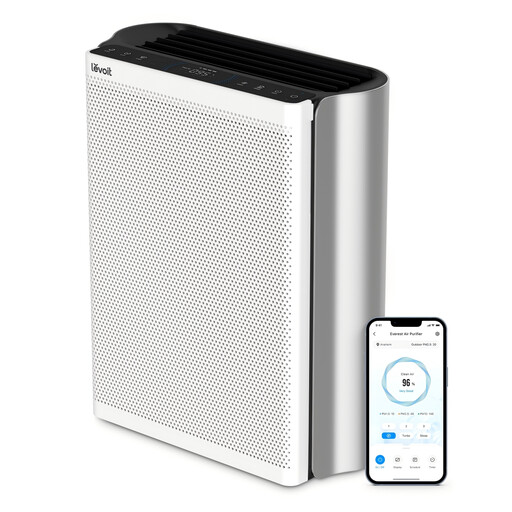
Why it's a good fit: Perfect for users who value detailed data and full control. The combination of high performance for large rooms, app control, and an advanced sensor system makes it a future-proof choice.
The device avoids the trap of vague performance claims with a 3-channel laser dust sensor that detects and displays PM1.0, PM2.5, and PM10 separately. The washable pre-filter also reduces the load on the main filter and lowers operating costs.
Detailed Air Quality Analysis: Provides transparency about the filtered particle sizes. VeSync App Control: Allows for full control and automation from anywhere.
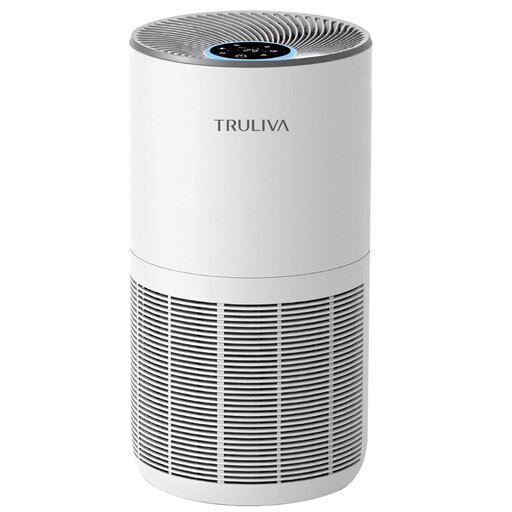
Why it's a good fit: A strong choice for anyone looking for high purification performance for medium to large rooms (up to 55 m?). The high CADR of 450 m?/h ensures rapid air exchange, ideal for allergy sufferers and pet owners.
This model avoids the inadequate performance trap with a transparently stated, high CADR value. The filter replacement indicator also ensures predictable maintenance and prevents an unnoticed drop in performance.
High CADR of 450 m?/h: Ensures very fast air purification in rooms up to 55 m?. 360° Air Intake: Guarantees efficient and even circulation of room air.
We have compiled a complete, up-to-date list of products that fully meet these strict selection criteria and German safety regulations.
The term "low-maintenance" primarily refers to the main filter (HEPA and activated carbon filter), which can have a lifespan of up to five years in models like the Shark HP300EU. However, minimal care is still required: the pre-filter, which catches coarse particles like hair and dust, should be checked and cleaned (vacuumed or washed) every 2 to 4 weeks, depending on use. This ensures the device's efficiency and extends the life of the main filter.
Yes, absolutely. What's crucial for allergy sufferers is not the filter's lifespan, but its quality. As long as the device uses a certified HEPA filter (class H13 or higher), it is very effective against common allergens like pollen, dust mites, mould spores, and pet dander. The long-life design of these filters does not compromise their filtration performance, as long as they are used within the period specified by the manufacturer.
Power consumption depends heavily on the selected fan speed. However, modern devices are designed for energy efficiency. In auto mode, the fan runs at a low speed most of the time, only increasing power when needed. In quiet sleep mode, consumption is minimal. A device with a power rating of, for example, 54 watts (like the Shark HP300EU on high) will incur manageable costs with daily operation at an average electricity price, which are often offset by the savings on filter replacements.