
Lieferung heute & morgen

Qualitätsgarantie

Willkommens-Angebote freischalten: KOSTENLOSE Lieferung | Bis zu 80 % RABATT | Kostenlose 30-Tage-JoyPlus-Testphase
App herunterladen
A vintage-style blender is more than just a kitchen appliance; it's a statement piece. But behind the charming retro facade often lie functional weaknesses that can quickly lead to buyer's remorse. Many models prioritize aesthetics over performance, resulting in subpar blending results and a short lifespan.
This guide will help you avoid the common pitfalls. We'll show you which technical specifications truly matter and how to choose a vintage blender that not only looks stylish but also performs reliably in your daily kitchen routine.
Design-focused kitchen appliances are prone to specific weaknesses. Watch out for these three points to avoid a bad purchase:
To ensure your retro blender impresses both aesthetically and functionally, you should check the following technical parameters.
A blender's power is measured in watts (W). For everyday tasks like making smoothies or soups, a power rating of 800 watts or more is recommended. If you plan to regularly process hard ingredients, an ice-crushing blender with at least 1000 watts is the right choice. Solid motor power ensures the appliance won't overheat even under heavy load.
Multiple speed settings and an additional pulse function are just as important. These allow for precise control over the blending consistency—from coarsely chopped to ultra-fine purée.
The blending jar is a central component. The most common materials are glass and plastic.
The capacity should suit your household. A volume of 1.5 liters is a good standard, sufficient for preparing smoothies or soups for several people.
The blades are the heart of any blender. Look for four or more blades made of stainless steel. Their arrangement and sharpness determine how efficiently and evenly ingredients are chopped. For a versatile vintage smoothie maker, sharp, robust blades are essential.
Another practical aspect is the ability to easily remove the blade assembly from the jar for cleaning. This makes thorough and safe cleaning much easier and prevents bacteria buildup.
Based on the criteria above, we have identified models that offer a successful fusion of retro aesthetics and functional performance.
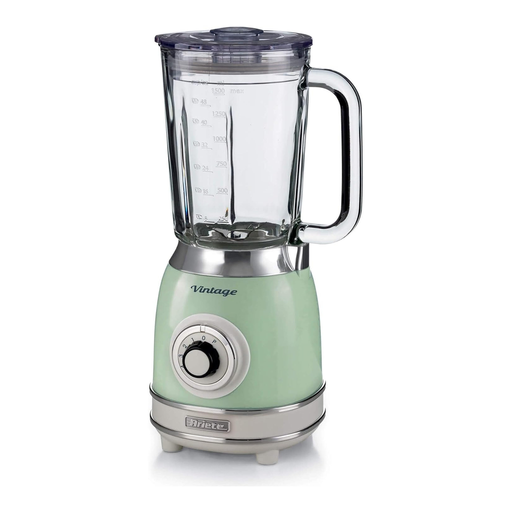
Why This Fits Their Persona: Ideal for users seeking a striking design element for their kitchen without compromising on daily functionality. The vibrant green color makes a statement, while the performance is convincing for smoothies, soups, and cocktails.
With 1000 watts of power and a dedicated ice-crushing function, this model avoids the weak motor trap. The robust glass jar and stainless steel blades are built for durability.
Powerful motor (1000 W) for versatile applications. Dishwasher-safe parts simplify cleaning.
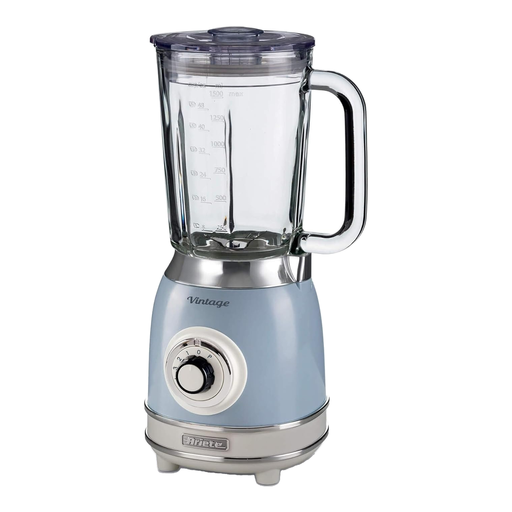
Why This Fits Their Persona: Perfect for anyone aiming for a complete 50s-style kitchen setup. The pastel blue harmonizes perfectly with other retro appliances, creating a cohesive overall look without sacrificing modern performance.
This model combines the authentic look with a solid 1.5-liter glass jar and a well-thought-out design. The dishwasher-safe parts directly address the problem of complicated cleaning.
Four speed settings plus a pulse function for precise control. The Ariete Vintage Blender offers a cohesive aesthetic for a complete kitchen design.
We have compiled a complete, up-to-date list of products that fully meet these strict selection criteria and safety standards.
Yes, as long as the model has the right features. Look for a motor with at least 1000 watts of power and an explicitly labeled "Ice Crusher" function. The blades should also be made of hardened stainless steel to withstand the stress. Models that meet these criteria can easily crush ice for cocktails or frozen drinks.
Cleaning is straightforward if the blender is designed for it. After use, fill the glass jar halfway with warm water and add a drop of dish soap. Run the blender for a few seconds on a low setting. Then, rinse it out thoroughly. For a deep clean, check if the jar, lid, and blade assembly are dishwasher-safe, which is the case with many high-quality models.
Absolutely. A 50s-style kitchen blender can serve as a deliberate counterpoint in an otherwise modern, minimalist kitchen. A colorful appliance, like a green blender or a blue one, becomes a focal point and adds personality and warmth to the space. The key is to use the retro element purposefully, either as a single highlight or in combination with a few select accessories.