
Lieferung heute & morgen

Qualitätsgarantie

Willkommens-Angebote freischalten: KOSTENLOSE Lieferung | Bis zu 80 % RABATT | Kostenlose 30-Tage-JoyPlus-Testphase
App herunterladen
Fine motor skills toys for babies and toddlers encourage them to grasp, turn, stack and sort. However, many products on the market make more of their features in their advertising than they deliver in practice. Whether you’re a parent, grandparent or buying a gift, it’s worth checking the recommended age, materials, dimensions and suitability for everyday use.
The label ‘from 1 year’ doesn’t automatically mean every child can use the toy safely and independently. Small individual parts, how the toy is used and the level of supervision required are all important considerations. A product with lots of features may be overwhelming for a younger toddler, while a simple shape sorter or twisting toy may remain suitable for longer.
Lights, music, sensors and lots of activity stations may seem versatile at first glance. In everyday use, though, it matters whether the features are easy to understand, the volume can be adjusted and the toy is easy to put away afterwards. With electronic activity toys, parents should also check the battery compartment, automatic shut-off and cleaning instructions.
Words such as ‘natural’, ‘non-toxic’ and ‘educational’ tell you little without detailed product information. With wooden fine motor skills toys, smooth finishes, sturdy joints and checks for splinters are important. For plastic toys, check the material information, cleaning instructions and whether there are any small parts. The CE mark is a legally required conformity marking, but it doesn’t replace checking the manufacturer’s specific warnings.
Compare the recommended age with the child’s actual stage of development. For example, toys for babies from 1 year should have large, easy-to-grasp pieces and simple actions. Toys for 1- to 3-year-olds can also include sorting, building and role-play. Sets with small parts or moving components need to be used under supervision.
Look out for:
A fine motor skills toy for a pushchair, travel cot or play mat needs to meet different requirements. Use fastening solutions such as hook-and-loop fasteners only where intended. Large modules or tracks need a clear, level surface. In smaller homes, compact sorting games or portable fine motor skills toys are usually easier to fit into your daily routine.
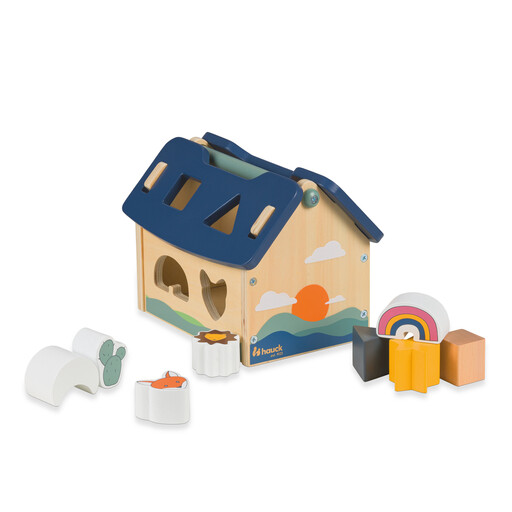
Why it suits this need: This wooden toy comes with eight building blocks and is designed for children aged 12 months and over. It combines sorting, stacking and storage in a compact house.
The manageable number of pieces keeps things simple. Before buying, though, check the warnings about small parts and the recommended level of supervision.
Made from FSC-certified wood, according to the product information, with a removable roof and carry handle. The blocks can be stored inside the house.
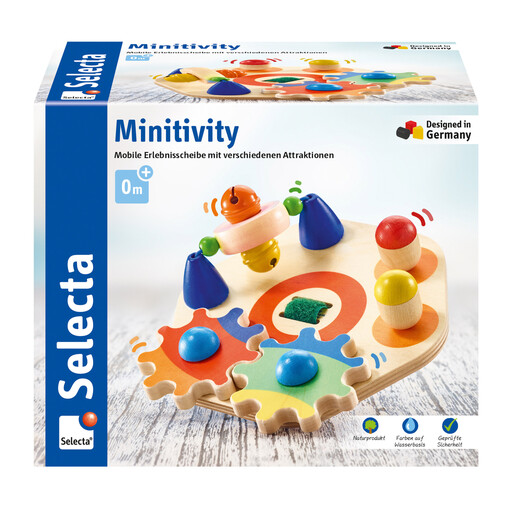
Why it suits this need: This compact fine motor skills toy, made from natural wood, features three distinct activity stations for turning and movement. It can be attached to a cot, playpen or pushchair.
Instead of lots of electronic effects, the focus is on three mechanical activity stations. Check the fastenings regularly to make sure they’re secure and show no signs of wear.
14 cm in size, made from natural wood according to the product information, with three play areas and hook-and-loop fastenings. The supplier says it’s made in Germany and independently quality-tested.
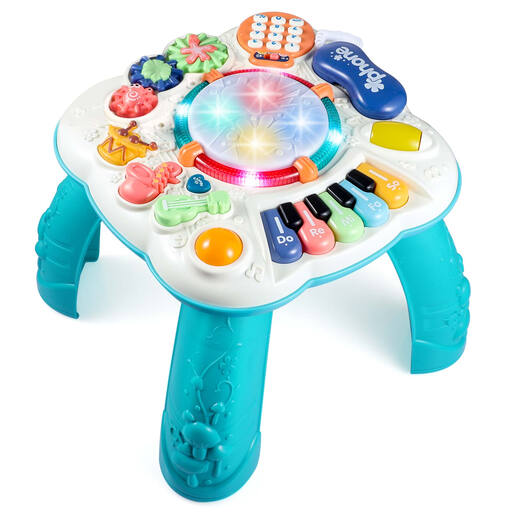
Why it suits this need: According to the product information, the table is designed for children aged 6 to 36 months. Its removable legs mean it can also be used on the floor. It’s a good fit for households looking for a toy that can accompany a child through several stages of development.
The stated volume control and quiet mode address a common drawback of electronic toys in everyday use. Batteries aren’t included, so remember to buy them separately.
Six activity areas, according to the description, a convertible 2-in-1 design and ABS plastic with rounded edges, according to the supplier. Check the safety and age information before buying.
We’ve put together a comprehensive, regularly updated list of products that meet these strict selection criteria and fully comply with the safety regulations in force in the EU.
Look for toys with large, easy-to-grasp pieces and a clear way to play, such as shape sorters, sorting games or twisting toys. Always check the specific age recommendation and any warnings about small parts. Even with age-appropriate toys, an adult should stay nearby.
How long a toy lasts depends on its construction, how it’s played with and the child’s stage of development. A simple wooden toy might first be used for grasping and later for sorting. Check electronic toys regularly for damaged casings, loose parts and a securely closed battery compartment.
Battery-powered educational toys for toddlers may come with the cost of replacement batteries. Models with volume control and automatic shut-off are more practical for everyday use. Before buying, check whether batteries are included, what size is needed and whether the toy can be used without sound if required.