
Lieferung heute & morgen

Qualitätsgarantie

Willkommens-Angebote freischalten: KOSTENLOSE Lieferung | Bis zu 80 % RABATT | Kostenlose 30-Tage-JoyPlus-Testphase
App herunterladen
The selection of motor skills toys is vast, and manufacturers' promises are often grandiose. But which toys truly support a child's development and are worth the money? As a Joybuy Product Recommendation Officer, I see daily how easy it is to fall into common purchasing traps. Many products look good at first glance but quickly prove to be impractical or short-lived.
This guide will help you separate the wheat from the chaff. We'll focus on the crucial features that define high-quality motor skills toys and show you how to avoid three common mistakes when buying.
To make an informed decision, you should be guided by objective parameters, not marketing promises. Three aspects are particularly important here.
Your child's safety is the top priority. Therefore, always look for the CE marking. This symbol confirms that the product meets the EU's essential safety and health requirements.
There are clear quality differences in materials:
Educationally valuable toys are characterized by their ability to stimulate a child's creativity and problem-solving skills rather than providing ready-made solutions. Concepts like Montessori toys rely on open-ended play materials that invite the child to discover and learn independently. Instead of a toy with just one function, such products offer a variety of uses that the child figures out on their own. A simple climbing triangle can thus become a cave, a mountain, or a tunnel, fostering imagination and gross motor skills in the process.
Motor development occurs in stages. Good toys adapt to these stages or are specifically designed for one of them.
Instead of making a blanket recommendation, we have selected products that fit specific needs and age groups.
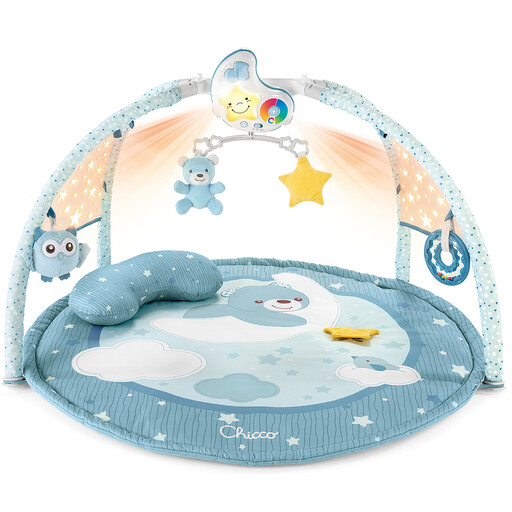
Why This Fits Their Persona: Ideal for parents looking for a versatile first toy or a thoughtful newborn gift. It combines a play gym, play mat, and night light into one product, adapting to the baby's needs.
It avoids the one-size-fits-all trap with its 3-in-1 functionality. The detachable moon projector can be used later as a night light. The different modes for play and relaxation prevent overstimulation.
The play mat and pillow are machine-washable, which simplifies hygiene. The timer function for music and lights (15/30 min.) is especially practical for parents.
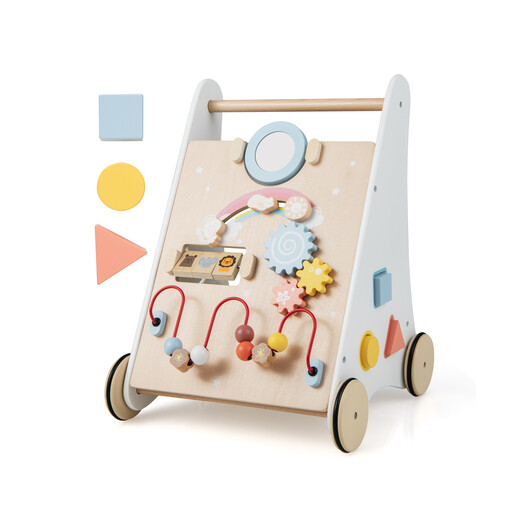
Why This Fits Their Persona: Perfect for parents whose child is starting to pull themselves up and take their first steps. This wooden baby walker not only provides secure support but also features an integrated activity centre to promote fine motor skills.
It bypasses the short-lived materials trap with its sturdy construction of linden wood and MDF. The 7-in-1 functionality ensures long-lasting play value and prevents the walker from being unused after the child learns to walk.
The rubber-coated wheels are quiet and protect sensitive floors from scratches. The basket on the back offers practical storage space for other toys.
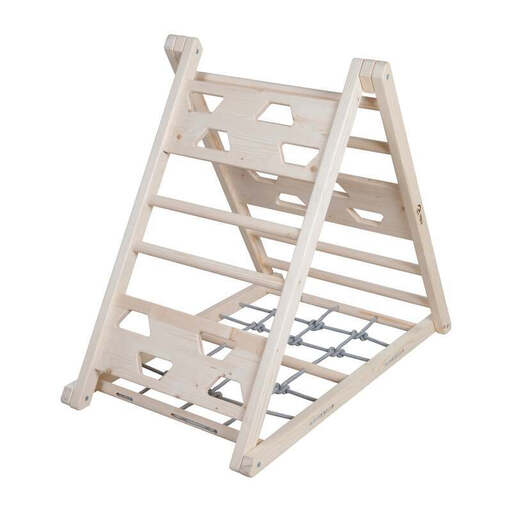
Why This Fits Their Persona: For parents of toddlers with a high need for movement who are looking for a safe way to climb and play indoors. This climbing triangle, based on Pikler pedagogy, promotes balance, coordination, and self-confidence.
It's the opposite of a single-function toy. As an open-ended play structure, it stimulates the imagination and doesn't get boring. The robust solid wood construction is designed for durability and can support up to 50 kg.
The 3-sided system with rungs, a climbing rope, and grip surfaces offers varied challenges. It can be expanded with other roba products like a slide or a gym mat.
We have compiled a complete, up-to-date list of products that fully meet these strict selection criteria and German safety regulations.
A climbing triangle can become beneficial as soon as a child starts to pull themselves up on furniture, which often happens between 8 and 10 months of age. Under supervision, they can have their first low-to-the-ground climbing experiences. The most intensive period of use, where children actively climb and test their abilities, usually begins between 1.5 and 2 years of age.
Pay attention to the craftsmanship: the wood should be solid, not just veneered, and the edges must be smoothly rounded. A crucial quality indicator is the paints and varnishes used. They should be explicitly labeled as saliva-resistant and non-toxic according to the European standard DIN EN 71-3. If sustainability is important to you, look for an FSC certification, which proves the wood comes from responsible forestry.
The proper cleaning method depends on the material. Pure wooden toys should only be wiped with a slightly damp cloth and then dried. Never submerge them completely in water, as the wood can swell and crack. Plastic toys can usually be cleaned with a mild soap solution. For products with electronic components, only the surfaces should be cleaned carefully. In all cases, always follow the manufacturer's specific care instructions.