
Lieferung heute & morgen

Qualitätsgarantie

Willkommens-Angebote freischalten: KOSTENLOSE Lieferung | Bis zu 80 % RABATT | Kostenlose 30-Tage-JoyPlus-Testphase
App herunterladen
A good fineliner can be the difference between messy notes and precise works of art. However, the market is flooded with models whose features often promise more than they deliver. Many users get frustrated with pens that dry out quickly, have tips that bend under light pressure, or use ink that bleeds through the paper. To avoid these pitfalls, it's crucial to know the key features that define a reliable fineliner.
This guide will help you understand the technical specifications and find a pen that perfectly matches your application—whether for academic work, creative projects, or professional office use.
Before investing in a new fineliner set, you should be aware of the common pitfalls that often only become apparent after purchase:
To find the right fineliner, focus on these three objective criteria.
The line width, specified in millimetres (mm), determines the fineness of your lines.
The construction of the tip is just as important. A metal-clad tip protects the delicate fibre core, prevents fraying, and ensures a consistent line.
The choice of ink depends directly on your intended use.
For users who write or draw for many hours a day, ergonomics are crucial.
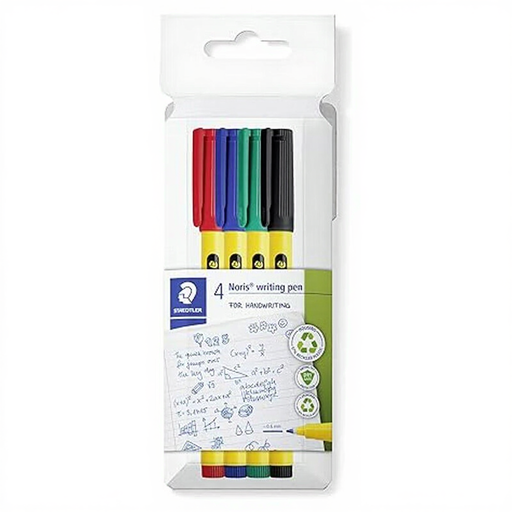
Why This Fits Their Persona: This set is designed for students and general office use, offering four essential colours for organising notes. According to the manufacturer, the barrel is made from 97% recycled plastic.
Described as "pressure-resistant," the tip is engineered to remain stable and not bend even under heavy writing pressure—a common issue with basic fibre-tip pens.
The combination of a robust 0.6 mm tip and washable, water-based ink makes it a practical and reliable everyday companion.
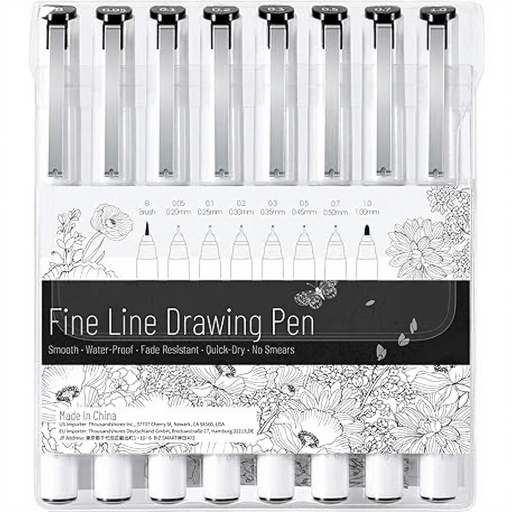
Why This Fits Their Persona: This set is aimed at creatives who need a wide range of line weights. It includes seven different fineliner tips (0.05 mm to 1.0 mm) and a brush pen, ideal for lettering, manga, and detailed illustrations.
The black ink is described as waterproof, quick-drying, and fade-resistant. This prevents outlines from smudging when the drawing is coloured with watercolours or markers.
The variety of line widths in a single set makes it a versatile tool for drawing with fineliners. The caps are marked with the tip size for easy identification.
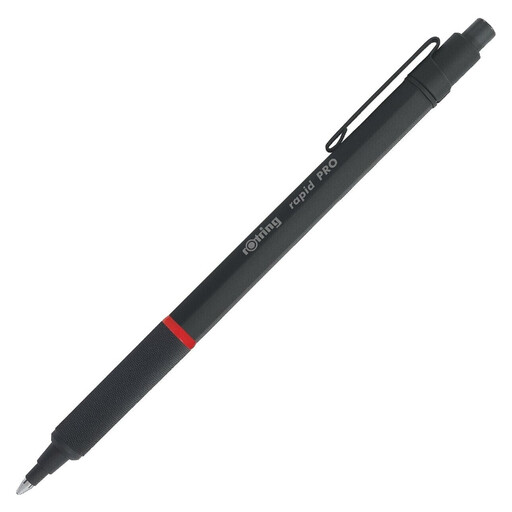
Why This Fits Their Persona: This fineliner is for architects, designers, and anyone seeking a durable and precise writing instrument. The full-metal body provides ideal weight balance and a premium writing experience.
Unlike plastic pens, the metal body offers superior durability. The rigid tube tip provides a clear view of the paper and enables precise work without bending.
The hexagonal design prevents it from rolling off a drafting table, while the metal grip area ensures a secure hold even during hours of use.
We've compiled a complete, up-to-date list of products that fully meet these strict selection criteria and current safety regulations.
Proper storage is crucial for a fineliner's lifespan. It is generally recommended to store pens horizontally. This ensures that the ink flows evenly to the tip and prevents it from drying out or leaking. Always cap the pen tightly after each use. Models with technologies like STAEDTLER's DRY SAFE can, according to the manufacturer, be left uncapped for several days without drying out.
The main difference lies in their permanence after drying.
For bullet journal pens, a line width between 0.3 mm and 0.5 mm has proven to be very practical. These fine lines are ideal for drawing grids, tables, and trackers, while the text remains legible. A 0.3 mm tip offers high precision for details, while a 0.5 mm tip can be more comfortable for writing body text. A set with various widths offers the greatest flexibility.