
Lieferung heute & morgen

Qualitätsgarantie

Willkommens-Angebote freischalten: KOSTENLOSE Lieferung | Bis zu 80 % RABATT | Kostenlose 30-Tage-JoyPlus-Testphase
App herunterladen
Buying a new fineliner set often feels like a fresh start—for your studies, a creative project, or simply to bring more order to your calendar. But the disappointment is immense when the pens fail after just a short time. Many users invest in products that make big promises through clever marketing but lack fundamental quality features. Before you make your next purchase, you should know the three most common pitfalls that lead to frustration and unnecessary expense.
An informed choice based on objective criteria is the key to avoiding these problems.
To avoid a bad purchase, don't let yourself be guided by the variety of colours or the packaging design. Instead, focus on three core technical features that determine the performance and longevity of a fineliner.
The line width, specified in millimetres (mm), defines the use case for a fineliner.
Look for terms like "pressure-resistant" or "pressure-stable" to ensure the tip maintains its shape even with firmer pressure.
The ink's composition is crucial for the final result and its compatibility with other materials.
For long periods of writing or drawing, comfort plays a significant role.
Based on these objective criteria, we have identified some products that represent a smart choice for specific user groups.
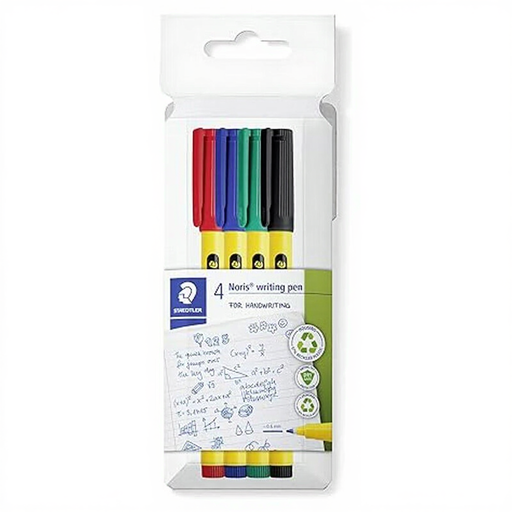
Why This Fits Their Persona: For daily school and university life, durability and reliability are crucial. This set provides the essential colours for note-taking and is designed for daily transport in a school bag thanks to its sturdy construction.
The pressure-resistant tip (according to the manufacturer) counteracts being pushed in under heavy writing pressure. The water-based ink is washable from most textiles, mitigating the risk of permanent stains.
According to STAEDTLER, the barrel is made from 97% recycled plastic (per ISO 14021). The 0.6 mm tip is robust and ideal for clear notes.
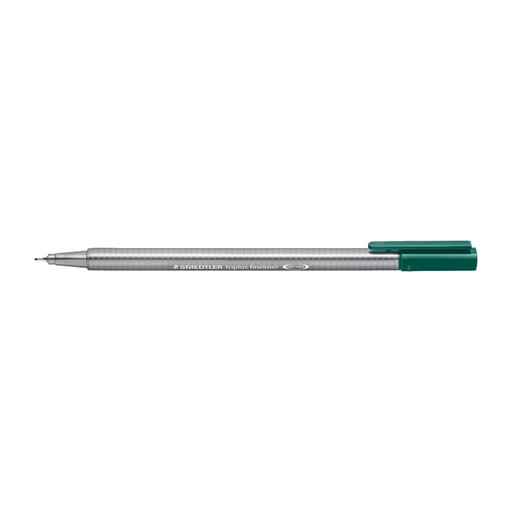
Why This Fits Their Persona: The precise 0.3mm tip is ideal for delicate entries in trackers and calendars. The ergonomic pen with its triangular barrel allows for hours of fatigue-free writing and drawing, which is essential for dedicated journal users.
The DRY SAFE technology (tested according to ISO 554, per STAEDTLER) prevents the pen from drying out even when uncapped—a crucial advantage when frequently switching between different coloured pens.
A combination of a precise, metal-encased 0.3 mm tip, ergonomic design, and Airplane-Safe technology that prevents leaking on aircraft.
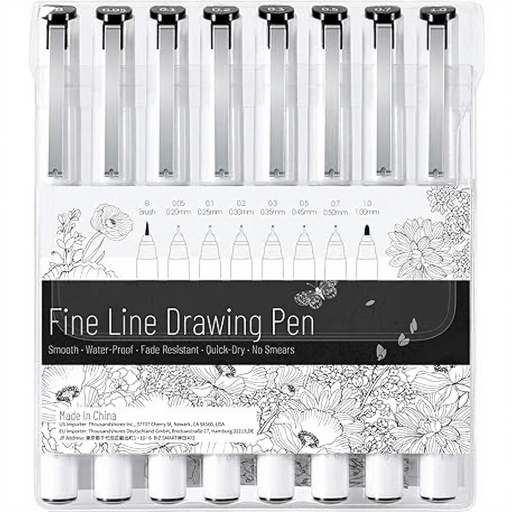
Why This Fits Their Persona: Artists need drawing pens with archival-quality ink that allows for combination with other media. This set offers a wide range of line widths for sketches, outlines, and detail work.
The waterproof and quick-drying pigment ink prevents smearing and bleeding when colouring over with watercolour or alcohol-based markers—a critical factor for professional results.
A set with 8 different tips (from 0.05 mm to a brush tip) offers maximum flexibility. The ink is light- and water-resistant, according to the manufacturer.
We have compiled a complete, up-to-date list of products that fully meet these strict selection criteria and German safety regulations.
Most manufacturers recommend storing fineliners horizontally. This ensures that the ink evenly supplies the tip and prevents air bubbles from forming or the ink from pooling at one end of the pen. Always make sure to close the cap tightly after use.
"Waterproof" means that the ink cannot be dissolved by water once it has dried. This is essential for artists and illustrators who want to colour their line drawings with water-based media like watercolour, gouache, or inks. For simple note-taking or school use, this feature is less critical; here, a washable ink can even be an advantage.
Technically yes, but the result varies greatly. On very thin or absorbent paper (e.g., under 80 g/m?), even high-quality fineliners tend to bleed through. For optimal results, especially when using coloured pens in a bullet journal or for drawings, paper with a weight of at least 100 g/m? is recommended. On smooth, coated paper, the ink dries more slowly, which increases the risk of smudging.