
Lieferung heute & morgen

Qualitätsgarantie

Willkommens-Angebote freischalten: KOSTENLOSE Lieferung | Bis zu 80 % RABATT | Kostenlose 30-Tage-JoyPlus-Testphase
App herunterladen
By Joybuy Product Recommendation Officer, 28 August 2026
A new fineliner promises precision and crisp lines, but the reality is often disappointing. Many users know the frustration: the tip dries out after just a few days, the ink smears when highlighted, or the nib collapses under slight pressure, ruining your handwriting. These problems are not just annoying; they also lead to wasted money.
The cause often lies in exaggerated marketing claims and hidden defects. So, before you invest in a new fineliner set, it's crucial to understand the common pitfalls:
To avoid these issues, you need to analyse the technical specifications, not the marketing slogans.
Choosing the right fineliner depends on three key parameters. Understanding them allows you to select a product that meets your specific needs and offers a long lifespan.
The line width, specified in millimetres (mm), largely determines the pen's application.
Look for the term "pressure-resistant tip." This means the nib is engineered to not retract into the barrel, even under heavier writing pressure.
The type of ink determines colour stability, water resistance, and performance.
For prolific writers, comfort is key. Ergonomic pens with a triangular barrel (like the STAEDTLER Triplus series) promote a relaxed grip and prevent fatigue. The barrel itself should be made of a robust material like polypropylene (PP). PP is not only durable but also prevents the ink from evaporating, contributing to the pen's long life.
Instead of making a single general recommendation, we have selected products for three typical user profiles that meet the criteria mentioned above.
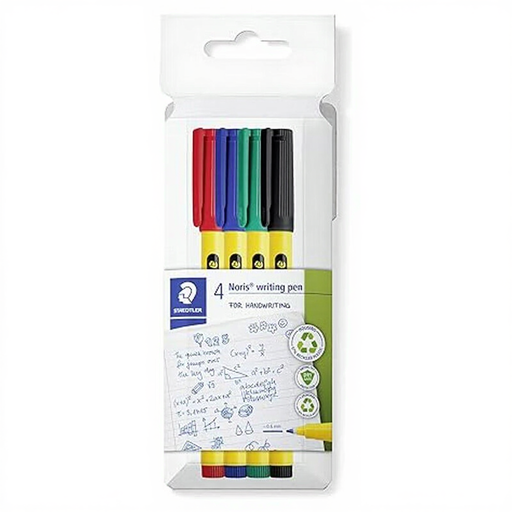
Why This Fits Their Persona: This set is designed for intensive daily use at school and university. The pens are robust, the water-based ink is washable from most textiles, and the 0.6 mm tip is a great compromise for notes and sketches.
The tip, described as "pressure-resistant," counteracts the problem of unstable nibs that collapse under heavy writing pressure.
Washable ink; barrel made from 97% recycled plastic, according to the manufacturer (per ISO 14021).
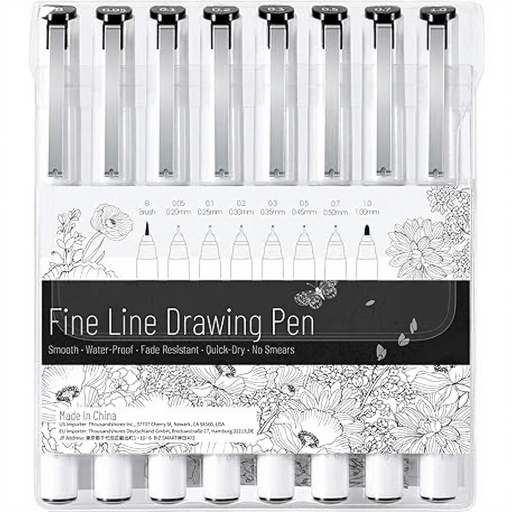
Why This Fits Their Persona: This set offers a wide range of tips (0.05 mm to 1.0 mm plus a brush tip) for various drawing techniques. The waterproof pigment ink is ideal for combining with watercolour or alcohol-based markers.
The ink, described as quick-drying and waterproof, directly addresses the problem of smearing—one of the biggest frustrations when colouring or layering media.
Set with 8 different tips for maximum flexibility; waterproof and lightfast black pigment ink.
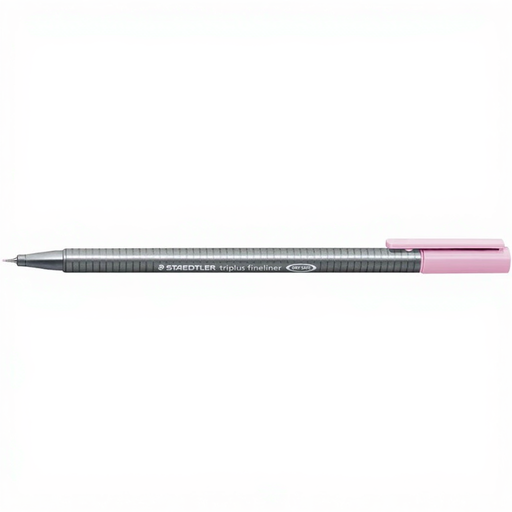
Why This Fits Their Persona: The ergonomic triangular barrel allows for hours of fatigue-free writing. The fine 0.3 mm tip is perfect for small calendar entries and detailed lists in a bullet journal. The wide range of colours supports creative organisation.
The DRY SAFE technology, tested according to ISO 554 as per the manufacturer, prevents the pen from drying out even if left uncapped for days—a direct counter to the "Cap-Off" trap.
Ergonomic triangular barrel for fatigue-free writing; DRY SAFE technology; metal-clad 0.3 mm tip.
We have compiled a complete, up-to-date list of products that fully meet these strict selection criteria and German safety regulations.
The most important step is to replace the cap firmly after each use. Models with "DRY SAFE" technology offer additional protection if you forget the cap. Storing pens horizontally is often recommended to ensure even ink flow to the tip.
A fine line width of 0.3 mm is ideal for detailed work like technical drawing, filling in small tables, or for users with small handwriting. A wider 0.7 mm line width creates a bolder, more legible line that is excellent for everyday notes and lectures.
No. Most coloured fineliners use water-based ink, which is not waterproof. These are often washable. If you require water resistance, for example for artwork that will be combined with watercolours or for archiving documents, you should specifically look for a drawing fineliner with pigment ink. This feature is usually explicitly stated on the packaging or in the product description as "waterproof" or "pigment ink."