
Lieferung heute & morgen

Qualitätsgarantie

Willkommens-Angebote freischalten: KOSTENLOSE Lieferung | Bis zu 80 % RABATT | Kostenlose 30-Tage-JoyPlus-Testphase
App herunterladen
Finding the right fineliner set can quickly become overwhelming. Whether you need them for precise drawings, vibrant hand lettering, or organising a bullet journal, the market is flooded with options. However, not every set delivers on its promise. Many artists invest in pens only to find they dry out quickly, the ink smudges with water, or the tips begin to fray.
This guide will help you avoid the typical pitfalls. We focus on the objective criteria that truly matter, so you can find a set that meets your needs and serves as a long-lasting asset for your creative projects.
Before we dive into the technical details, let's highlight the three most common issues that lead to disappointment:
To avoid buyer's remorse, you should focus on three verifiable characteristics. These determine the performance and longevity of your artist pen set.
The type of ink is the most critical factor for the permanence of your artwork.
For professional applications and long-lasting artwork, pigment ink is the more reliable choice.
A good set offers different tips for various techniques. Pay attention not only to the sizes but also to the material.
Even the highest-quality pen can fail on unsuitable paper. Ink that "bleeds" through the paper or "feathers" at the edges is a common nuisance, especially when used as a bullet journal accessory. Pay attention to the paper weight (indicated in g/m?) and surface texture. Smooth, thicker paper (100 g/m? and up) is better suited for most fineliners and markers than standard copy paper.
Based on these objective criteria, we have identified several products suitable for specific user profiles.
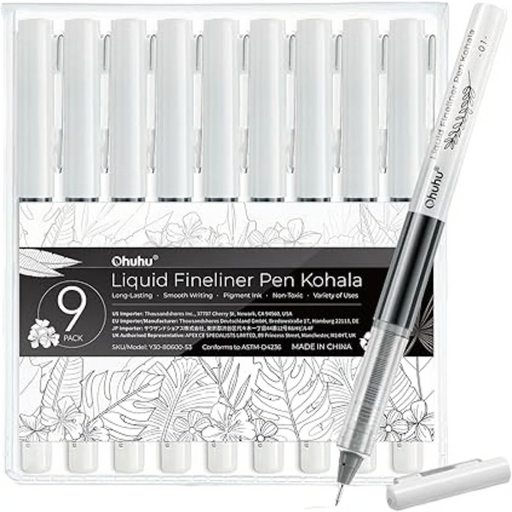
Why This Fits Their Persona: This set is ideal for technical drawings, sketches, and outlining illustrations. The wide range of precise tip sizes allows for maximum control in detailed work.
The pigment-based ink is waterproof and alcohol-proof, according to the manufacturer. This solves the problem of smudging when colouring over the lines with markers or watercolours.
Offers 9 different tip sizes, from 0.15 mm to a brush tip. The transparent barrel allows you to monitor the ink level.
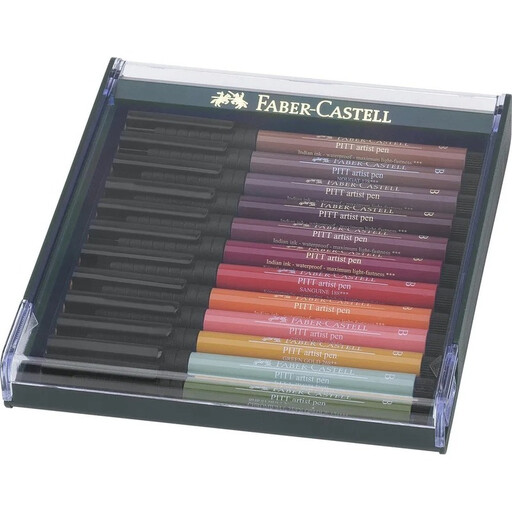
Why This Fits Their Persona: The flexible yet shape-retaining brush tip (B) enables expressive, variable line weights, which are essential for the art of beautiful writing. The earth tones provide a harmonious colour palette.
The high-quality brush tip is designed for durability and shape retention, counteracting the problem of rapid fraying. The pigmented India ink also ensures maximum lightfastness.
Highly pigmented, waterproof, and permanent India ink. The flexible brush tip allows for dynamic variations in line width. According to the manufacturer, the ink does not bleed through paper.
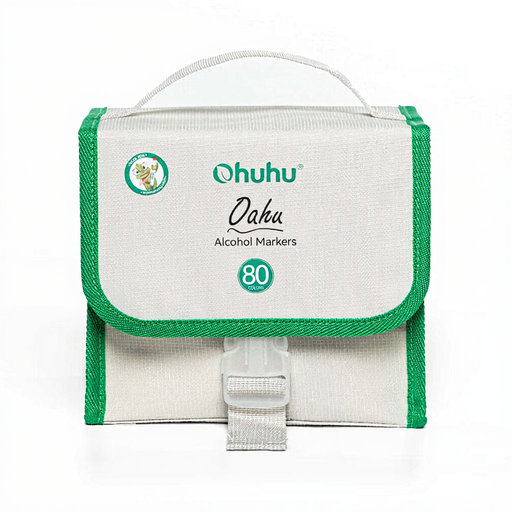
Why This Fits Their Persona: This comprehensive set offers a huge colour palette and dual tips (fine and broad), allowing for maximum versatility in colouring, illustration, and mixed-media projects.
Instead of redundant, low-quality colours, this set provides 80 clearly defined, vibrant alcohol-based tones and a colourless blender. The focus is on blendability and performance, not just sheer quantity.
80 colours plus a blender in a convenient carrying case. Each pen features a dual tip (a broad chisel tip and a fine tip) for versatile applications.
We have compiled a complete, up-to-date list of products that fully meet these strict selection criteria and all relevant safety regulations.
To prevent them from drying out and to ensure even ink flow, horizontal storage is recommended for most artist pens, especially those with dual tips or pigment ink. Always replace the cap firmly after each use.
Lightfastness describes the ink's resistance to fading when exposed to light. A high degree of lightfastness is crucial for artwork that will be displayed or sold, as it ensures the colours remain brilliant for years. Pigment inks generally offer greater permanence than dye-based inks.
Technically, yes, but the results will vary greatly. On thin or highly absorbent paper, many inks are prone to bleeding and feathering. For clean lines and to protect the pen tips, it is best to use smooth, thicker paper (e.g., marker paper, Bristol board, or paper with a weight of over 100 g/m?).