
Lieferung heute & morgen

Qualitätsgarantie

Willkommens-Angebote freischalten: KOSTENLOSE Lieferung | Bis zu 80 % RABATT | Kostenlose 30-Tage-JoyPlus-Testphase
App herunterladen
A fingerprint lock can replace keys and number codes in everyday life. Whether it’s for a garden gate, shed, locker, office or front door, biometric unlocking is only part of the picture. The design, level of protection, power supply and suitability for the intended location all determine whether the lock will remain practical over time.
Not every electronic lock is suitable for rain, dust and changes in temperature. A model designed for indoor use may quickly reach its limits on an exposed garden gate. Look for a specific IP rating and check whether the manufacturer explicitly states that the lock is suitable for indoor or outdoor use.
Damp, dirty or very cold fingers can affect recognition. With a fingerprint padlock, the sensor should therefore be easy to reach and clean. For families, offices or shared lockers, it’s also important to check how many fingerprints can be stored and whether there’s an alternative way to unlock it.
A keyless lock needs a reliable power supply. Low-battery warnings, an accessible battery compartment or a mechanical emergency override can help prevent you from being locked out at the worst possible moment. Battery life also depends on usage, temperature and how often the lock is opened.
The IP rating consists of two digits. The first describes protection against solid objects and dust; the second indicates protection against water.
An IP66-IP68 lock is therefore generally designed for more demanding environments. Even so, take the installation location, drainage and the manufacturer’s instructions into account. The IP rating also says nothing about resistance to forced entry or mechanical attack.
For an outdoor padlock, the shackle diameter and clearance must fit the eyelet, chain or gate fitting. A hardened steel shackle can improve resistance to mechanical force, but the specific manufacturer’s details remain important. For doors, you’ll need an electronic door lock with a compatible adapter or cylinder. Before buying, check:
A biometric lock should be able to store several authorised fingerprints if it’s used by more than one person. 360-degree recognition can make the lock easier to use, but it doesn’t remove the need to keep the sensor clean. With a smart fingerprint door lock, app permissions, Bluetooth connectivity, PIN entry and manual emergency access are also important considerations.
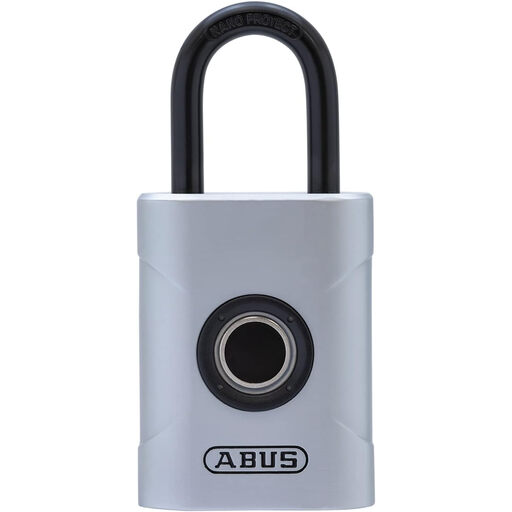
Why this product suits this profile: This compact fingerprint padlock is designed for lockers, offices, areas around the home and sheltered outdoor locations. It doesn’t need a key or number code.
The specifications list automatic unlocking, a low-battery warning, and IP66 and IP68 ratings. This addresses common problems such as forgotten codes and uncertainty about outdoor suitability.
360-degree sensor stores up to 20 fingerprints; hardened steel shackle and automatic double locking, according to the product specifications.
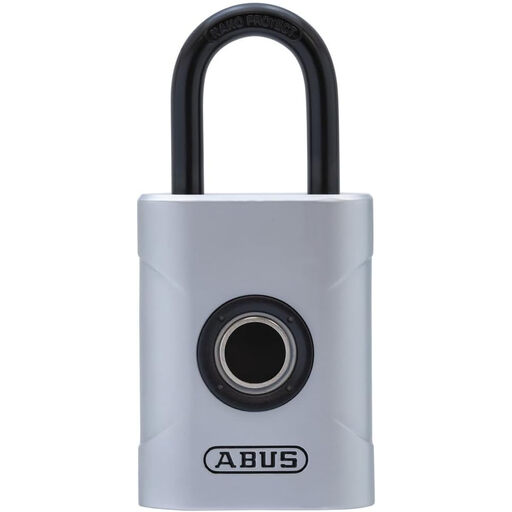
Why this product suits this profile: The 50 mm design will appeal to anyone looking for a keyless lock with documented features for use at home, in the garden, at the office or at the gym.
IP66 and IP68 ratings are clearly stated. A warning tone also signals when the battery is running low, so you can plan a replacement before it runs out completely.
Stores up to 20 fingerprints, with 360-degree recognition and automatic opening via a spring-loaded shackle, according to the product description.
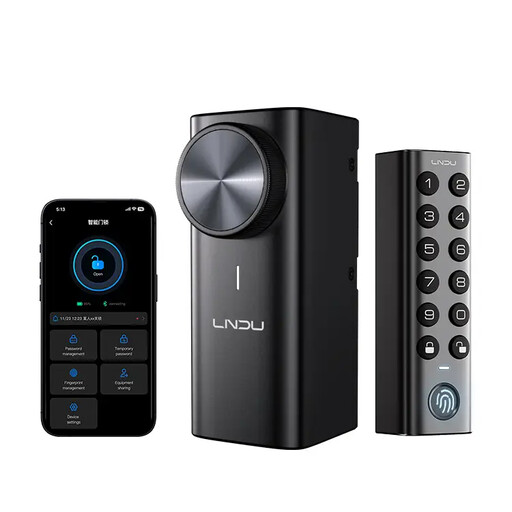
Why this product suits this profile: This electronic door lock is aimed at households and small offices that want to use app, Bluetooth and PIN access as well as fingerprint unlocking.
This model offers several ways to unlock the door, a manual emergency override and a display for door events. Before installation, however, check that it’s compatible with your existing door lock.
IP65 rating, app management via Bluetooth and, according to the product specifications, battery life of up to 240 days under the intended conditions.
We’ve put together a complete, regularly updated list of products that meet these strict selection criteria and fully comply with the safety regulations in force in the EU.
With a padlock, you first register an administrator’s fingerprint. You can then add other fingerprints by following the instructions. The sensor and your finger should be clean and dry. A door lock also involves installation, app pairing and checking the existing cylinder or door fitting.
Battery life depends on the model, number of openings, ambient temperature and battery type. Some models claim to last for several thousand openings or offer battery life of up to 240 days. These are manufacturer’s figures and actual performance may vary. A low-battery warning is therefore an important feature to look for.
That depends on the stated IP rating and how you plan to use it. For an exposed gate or shed, ratings such as IP66 and IP68 are more useful than a general description such as ‘weatherproof’. Even with a high IP rating, check the sensor, battery compartment and fitting regularly for dirt and damage.