
Lieferung heute & morgen

Qualitätsgarantie

Willkommens-Angebote freischalten: KOSTENLOSE Lieferung | Bis zu 80 % RABATT | Kostenlose 30-Tage-JoyPlus-Testphase
App herunterladen
Lost keys, forgotten combinations, or fumbling with a lock in the dark—with a fingerprint padlock, these problems are a thing of the past. The idea of opening a lock quickly and easily with your own finger is compelling. However, the market is flooded with models of widely varying quality. A bad purchase is not only annoying but can also pose a security risk.
As your Joybuy Product Recommendation Officer, I'll help you separate the quality options from the rest. We'll highlight the most common pitfalls and show you which technical features truly matter so you can make an informed decision.
Many buyers are swayed by marketing promises and overlook critical technical flaws. Pay close attention to these three points to avoid a bad investment:
To avoid the pitfalls mentioned above, you should check three core features before buying. These objective criteria are crucial for the durability, security, and user-friendliness of your lock.
The IP rating is an internationally standardised code that indicates how well a housing is protected against the ingress of foreign objects (first digit) and water (second digit).
A biometric lock is only as secure as its weakest link. The fingerprint sensor replaces the key, not the mechanical resistance.
Usability largely depends on the sensor technology and software.
Based on the criteria above, we have selected products that are suitable for specific application scenarios.
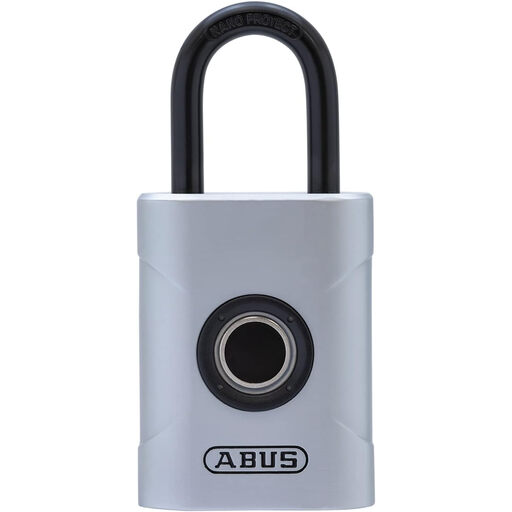
Why This Fits Their Persona: Ideal for quick and easy use indoors or in sheltered outdoor areas. Perfect as a gym locker lock, for the basement, or for a toolbox where convenience is the priority.
Thanks to its certified IP66 and IP68 ratings, there is no risk from dust or water. The fast 360° sensor prevents frustration from slow recognition.
The spring-loaded shackle automatically pops open after recognition. The ABUS security level 6 offers solid protection for items with a medium risk of theft.
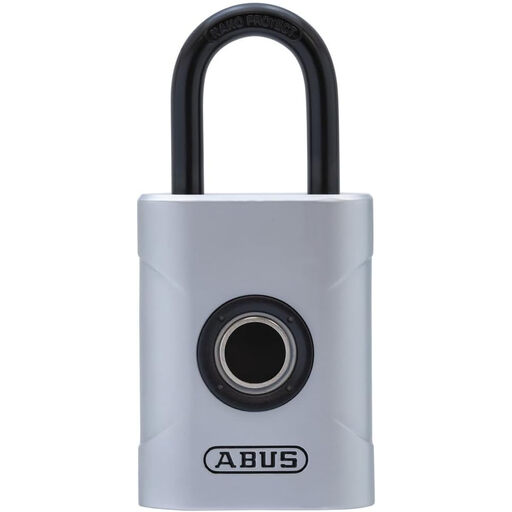
Why This Fits Their Persona: For users who require a high level of security for outdoor use. Ideal as an outdoor padlock to secure garden gates, sheds, or construction site containers with valuable contents.
With ABUS security level 8 and a shackle made of hardened steel, it bypasses the trap of inadequate mechanical security. The IP66/IP68 certification ensures reliable function in all weather.
Offers a high level of security for objects with a high risk of theft. The double ball locking mechanism effectively protects against pulling and twisting attacks.
Why This Fits Their Persona: Perfect for managing access to shared areas like laundry rooms, storage units, or holiday homes. Allows easy access for family members, service providers, or tenants without a key handover.
The clear administrator function prevents complicated and insecure user management. Enrolling and deleting up to 20 fingerprints is structured and secure.
Flexible access control for multiple people. The ability to designate two administrators provides additional security and redundancy in management.
We've compiled a complete, up-to-date list of products that fully meet these strict selection criteria and German safety regulations.
Setup is typically done using an administrator's finger. First, the primary user's (administrator's) finger is registered. This process usually involves placing the finger on the sensor multiple times until the lock confirms it has been saved. To add more users, the administrator must place their finger on the sensor for authentication and can then enroll the new fingerprint. The exact procedure is described in the respective manufacturer's instructions.
No. Quality models are designed to prevent you from being locked out. They feature a clear low-battery warning, usually in the form of an audible signal or a flashing LED. This warning occurs many opening cycles before the battery is completely drained. If the battery becomes critically low, the lock will no longer engage. This ensures you can still open it and replace the battery. The battery compartment is typically only accessible when the lock is open.
Biometric unlocking eliminates the risk of lock-picking that exists with traditional key locks. However, the overall security heavily depends on the mechanical construction. Look for a robust lock body and a shackle made of hardened steel. Objective metrics like the ABUS security level provide a reliable indication of the resistance against brute-force attacks. A high-quality biometric lock thus combines the convenience of fingerprint technology with solid mechanical security.