
Lieferung heute & morgen

Qualitätsgarantie

Willkommens-Angebote freischalten: KOSTENLOSE Lieferung | Bis zu 80 % RABATT | Kostenlose 30-Tage-JoyPlus-Testphase
App herunterladen
Lost keys, forgotten combinations, or fumbling with a key ring in the dark—many of us are familiar with these situations. A fingerprint padlock offers a modern and convenient alternative for securing your property. Instead of a key or a code, all you need is your own fingerprint to open it.
This article serves as a guide. It explains the key features to look for when making your choice and presents specific models suitable for various applications, such as lockers, cellars, garden gates, or for providing basic protection for bicycles.
Choosing the right fingerprint lock depends on several technical factors. Three criteria are particularly important.
A biometric lock combines electronic convenience with physical durability. The shackle should be made of hardened steel to provide the highest possible resistance against break-in attempts like cutting or prying. Some manufacturers, such as ABUS, provide their own security levels that help assess the mechanical robustness. A double ball locking mechanism can further increase tensile and torsional strength.
For outdoor use, such as on a garden gate or cellar entrance, weather resistance is crucial. The IP rating indicates how well a device is protected against the ingress of foreign objects (first digit) and water (second digit). A weather-resistant padlock with an IP66 rating is dust-tight and protected against powerful water jets. An IP68 rating means the lock is dust-tight and can also withstand temporary submersion in water without damage. For outdoor use, models with at least an IP66 rating are recommended.
The reliability of the sensor is the core feature of any biometric lock. Modern 360° sensors recognise a placed finger from any angle, which simplifies everyday use. Pay attention to the number of storable fingerprints—capacities of up to 20 different prints are common, allowing multiple people to use the lock.
Since these locks are battery-powered, a reliable power supply is essential. Models with a long-lasting battery and a low-battery warning (often an audible signal or an LED indicator) prevent you from being unexpectedly locked out when the battery runs out.
Based on the criteria mentioned, we have compiled a selection of products suitable for various security tasks.
These models offer keyless and convenient security for indoor and outdoor use.
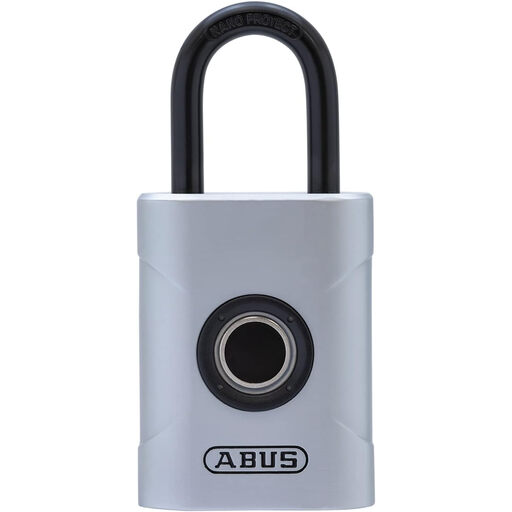
Why it stands out: The ABUS Touch 57/45 combines high weather resistance with intuitive operation. Thanks to its IP66 and IP68 ratings, it is well-equipped for outdoor use. The 360° sensor allows for quick recognition, and the spring-loaded shackle pops open automatically after unlocking.
Pros:
Who is it for? This model is an excellent choice for anyone looking for reliable, keyless security for a cellar, garden shed, tool shed, or as a locker lock at the gym.
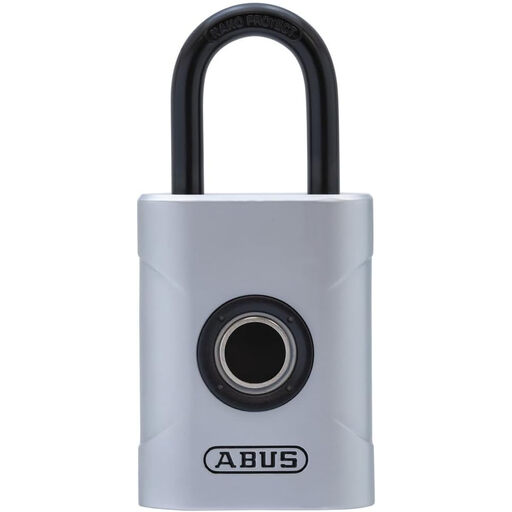
Why it stands out: Similar to the 57/45 model, the ABUS Touch 50 offers the convenience of a keyless padlock with fingerprint recognition. It also features IP66 and IP68 ratings. According to the manufacturer, its ABUS security level 8 provides high tensile and torsional strength.
Pros:
Who is it for? Users who require particularly high mechanical protection for items like toolboxes, cabinets, or gates will find this to be a suitable solution.
For mobile use on a bicycle, a classic cable lock with modern features can be a practical alternative.
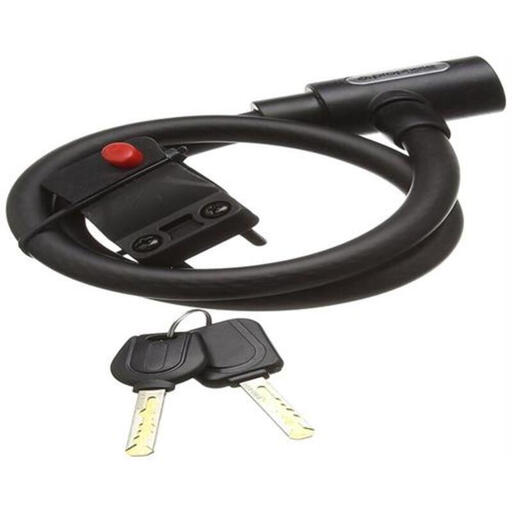
Why it stands out: This cable lock is a pragmatic solution for everyday bicycle theft protection. It relies on a precision-engineered locking cylinder with laser-cut keys. A special feature is the included spare key with an integrated LED light, which makes unlocking in the dark significantly easier.
Pros:
Who is it for? This lock is aimed at everyday cyclists who are looking for reliable basic protection against opportunistic theft and appreciate the convenience of an illuminated key and a practical transport bracket.
The requirements for security technology are diverse. If you haven't found the right solution for your specific needs in this selection, there are other alternatives to explore.
For additional modern security solutions, take a look at our Computer Lock category.
How secure is a biometric lock? The security of such a lock is composed of two elements: biometric recognition and mechanical stability. Modern sensors offer reliable recognition and are difficult to tamper with. The physical security, as with any padlock, depends on the quality of the material (e.g., hardened steel) and the design of the locking mechanism.
What happens when the battery is dead? Good models are designed to prevent failure. They issue a warning well before the battery is completely drained, usually through an audible signal or flashing LEDs. After this warning, the lock can typically no longer be locked, preventing a situation where it cannot be opened. Battery replacement is usually simple and can be done without special tools.
Are fingerprint locks suitable for outdoor use? Yes, many models are explicitly designed for outdoor use. The crucial factor here is the IP rating. A lock with an IP66 or IP68 designation is protected against dust and water and can therefore be used on garden gates, sheds, or other outdoor locations without any issues.
Your Joybuy Product Recommendation Officer