What should you look for when buying?
Wired lavalier
A good choice if: the person telling the story will stay seated and a recording device with a suitable input is within reach.
The trade-off: no wireless pairing or transmitter battery to worry about, but less freedom to move and a cable that needs to be positioned securely.
Wireless set with internal recording
A good choice if: you want to change the camera position or have an extra file as a backup for an important story. RØDE lists this feature for the Wireless PRO and DJI for the Mic Mini 2S.
The trade-off: you’ll also need to check the connection, battery level and files. The feature depends on the model.
Compact wireless set
A good choice if: discreet wear and freedom of movement matter more, and the receiver is compatible with your recording device.
The trade-off: don’t assume it includes internal backup recording; check the features of the specific model.
For a seated interview, it’s worth deciding first how the microphone will connect to your device and which recording method matters most.
| What you need |
What to check before buying |
Who is it important to? |
| Simple solo recording |
Check the cable length, fastening clip and whether the specific device recognises the microphone. Sennheiser specifies a 2 m cable for the XS Lav USB-C. |
If I’m telling a story on my own from a fixed position, I want to connect the microphone without a wireless link and secure it in place. Around 33% of consumers prioritise a simple solo setup. |
| A compatible device connection |
Check your device model, microphone input and adapter standard. The Shure MVL and RØDE Lavalier GO have different connection requirements. |
I want to be sure that the microphone will work with the smartphone or recorder I already own. Around 27% of consumers cite device compatibility as their main concern. |
| Extra recording backup |
Confirm that the exact model you’ve chosen offers internal recording, then record and play back a test file before the interview. RØDE and DJI list this feature for certain models. |
If a story is difficult to repeat, I want to be able to check an additional recording. Around 20% of consumers put recording backup first. |
| Freedom of movement or two voices |
Check the number of transmitters and the receiver option. RØDE describes the Wireless PRO as including two Lavalier II microphones, while Hollyland offers different receiver combinations for the LARK M2S. |
For changing camera positions or recording two voices, I need freedom of movement and the right number of transmitters. Around 20% of consumers prioritise this flexible recording setup. |
Joybuy products for interview recording
This selection includes lavalier microphones and wireless sets for smartphone and interview recording. Connections, transmitter numbers and configurations vary by model.
 No image available
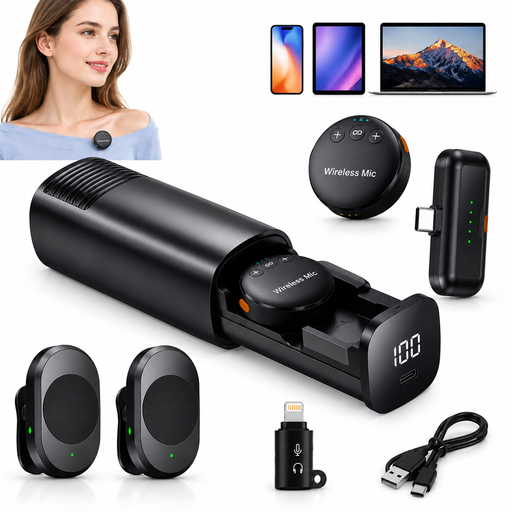
Wireless lavalier microphone set with 2 transmitters
For interviews with two voices, provided the USB-C or Lightning connection is compatible with your recording device.
Listed in the product name: 2.4 GHz, DSP noise reduction, latency under 20 ms, range up to 40 m and a 500 mAh charging case.
View at Joybuy
 No image available
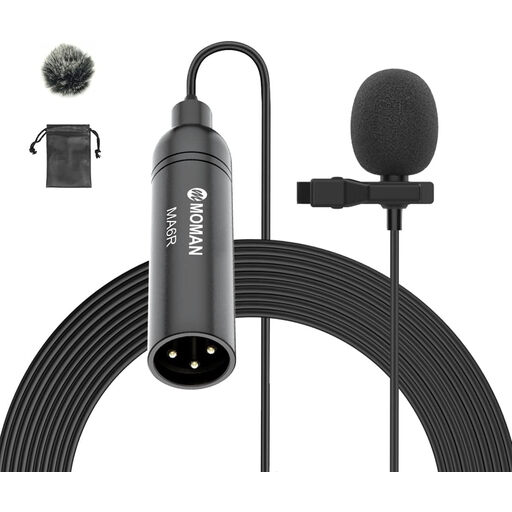
Moman MA6 lavalier microphone, 3.5 mm, 6 m
For smartphone recording, provided the specific device supports the 3.5 mm connection as a microphone input.
The product title specifies a 6 m version, automatic pairing and omnidirectional recording.
View at Joybuy
 No image available
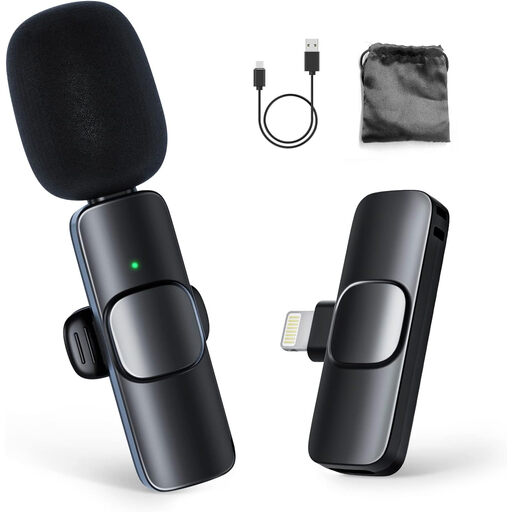
Moman CP1A wireless lavalier microphone (1TX & 1RX)
For recording one person with an iPhone, provided the connection on your specific device is compatible with the set.
The product title lists one transmitter, one receiver and use for video recording and interviews.
View at Joybuy
 No image available
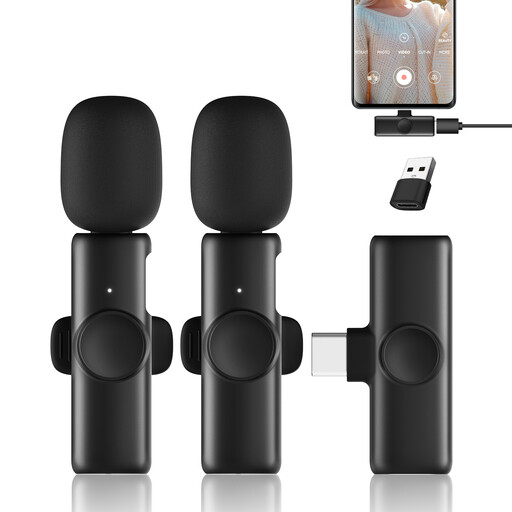
Moman MS1X(C) wireless lavalier microphone (2TX & 1RX)
For interviews with up to two people wearing microphones, using a USB-C Android phone as the recording device.
The product title lists 2.4 GHz, two transmitters and one receiver.
View at Joybuy
 No image available
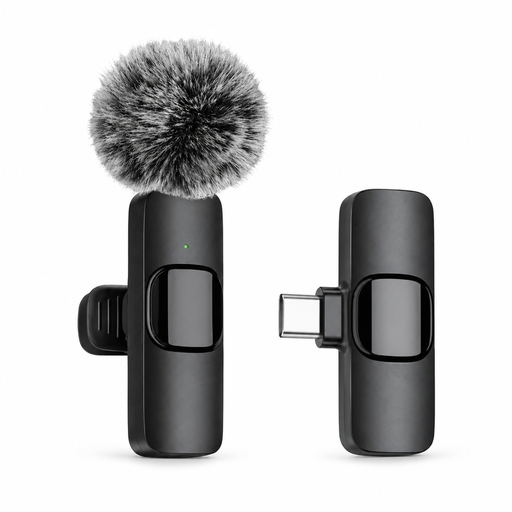
Verbex K9-Black wireless microphone with Type-C
For interviews and recording with a Type-C device, provided the specific device supports the connection.
The product title describes the set as a wireless mini lavalier microphone with a Type-C interface.
View at Joybuy
Frequently asked questions
Where should I attach the microphone on someone who’s sitting down?
As a guide, RØDE recommends positioning it at chest height, about a handspan or 20–30 cm from the mouth. Keep the capsule away from clothing that could rub against it, and listen to a short test recording.
Is a 3.5 mm connection on a smartphone or recorder enough?
No. The size of the plug alone doesn’t prove compatibility. Shure describes the MVL as suitable for compatible mobile devices or for use with CTIA-compliant adapters; according to RØDE, the Lavalier GO uses TRS and needs plug-in power. Check the microphone input on your specific device.
How can I check internal backup recording?
Confirm that the feature is available on the exact model and set configuration you’ve chosen. Before the interview, record a short test file and play it back. RØDE and DJI describe internal recording only for certain models.
Can I record a private conversation without consent?
Section 201(1) of the German Criminal Code (StGB) makes it a criminal offence to record another person’s non-public spoken words without authorisation. Make sure you have permission before recording; someone sitting down for an interview doesn’t automatically mean you have their consent.
Does consent to recording automatically include permission to publish it?
Don’t assume that consent to recording also means consent to publication. In a non-exhaustive sample podcast consent form, the Baden-Württemberg data protection authority highlights the different purposes involved. The BfDI explains voluntary and informed consent when it is used as the legal basis. For published images, the legal requirements set out in Section 22 of the German KunstUrhG (Art Copyright Act) must also be observed.


