For one person sitting down to tell a story, a USB headset is a straightforward option if you want to record directly on a computer. XLR and headworn microphones require suitable inputs and, depending on the model, additional equipment. You should also check the fit and microphone position during longer conversations. If you want to record questions and answers separately, plan for a dedicated microphone and suitable recording inputs for each voice.
Which set-up is right for you?
Recording in a noisy room
If you’re recording a single voice in a room with background conversations or other noise, check the microphone position and polar pattern at the actual recording location. Shure and DPA describe different headset designs and the conditions they’re intended for.
A simple laptop set-up
If you want to record without an existing audio interface, a USB headset designed for computer use can make connecting up easier. Audio-Technica lists a USB-A connection for the ATH-M50xSTS-USB; check that your computer has a compatible port.
Longer storytelling conversations
For longer sessions, check with the storyteller that the headset feels comfortable and that the microphone stays in the right position while they speak. Audio-Technica lists two sets of earpads for the ATH-M50xSTS; Sennheiser describes the HSP 2’s headband as adjustable.
What should you look for when buying?
First, decide how many voices you need to record and check which connections your existing equipment supports. Then you can assess the microphone position and comfort for the conversation you have in mind.
| What you need |
What to check before buying |
Who is this especially important for? |
| A clear solo voice |
Microphone polar pattern and position; make a short test recording in the room you plan to use. |
If background conversations or ventilation noise could distract from the story, I want to be able to position the microphone accurately in relation to the speaker. Around 36% of consumers prioritise capturing a clear solo voice. |
| Easy connection to a computer |
Check whether it uses USB or XLR, and make sure the entire signal path through to the saved recording is suitable. |
If I don’t already have an audio interface, I want to connect the microphone to my computer as directly as possible. Around 29% of consumers prioritise an easy connection to a computer. |
| A comfortable fit |
Try the fit and microphone position with the storyteller; distinguish between an over-ear headset and a headworn microphone. |
For a longer seated storytelling session, I want to wear the headset without its fit or microphone position becoming a distraction. Around 21% of consumers prioritise comfort during longer conversations. |
| Two separate voices |
Plan for a dedicated microphone for each person and enough recording inputs to use at the same time. |
If I want my questions to be included in the recording, I want to capture both voices separately. Around 14% of consumers prioritise recording two separate voices in a conversation. |
Common buying mistakes
-
Assuming the USB and XLR versions are interchangeable
The Audio-Technica ATH-M50xSTS-USB and ATH-M50xSTS use different connection methods. A headset with an XLR output needs a compatible recording connection.
Before choosing a model, check the inputs you have and the entire signal path from the microphone to your computer or recorder.
If you don’t have suitable XLR equipment, you may need an audio interface or mixer with the required connections.
-
Assuming a headworn microphone is a complete recording kit
HSP 2 models can have different connectors. Having the right connector doesn’t automatically mean the microphone will connect to your laptop or receive the power it needs.
Check the connector type, power requirements and accessories against your entire recording set-up. For wired use, Sennheiser specifies the MZA 900 P; this adapter requires a suitable microphone input with phantom power.
Depending on the model, you may need to allow for a compatible transmitter or adapter, as well as a suitable recording input.
-
Expecting one person’s headset to record both voices
A microphone worn by the storyteller won’t replace a dedicated microphone for the interviewer if you want to record both voices separately.
Before buying, decide whether you want the questions to be part of the finished recording. If so, plan for one microphone per voice and enough inputs to use at the same time.
You’ll need another microphone for the second voice and, where necessary, additional recording inputs.
Key brands at a glance
Audio-Technica
The ATH-M50xSTS is an over-ear headset with a boom microphone; the USB and XLR versions use different connection methods.
- Audio-Technica says the ATH-M50xSTS comes with two sets of earpads, while the ATH-M50xSTS-USB is designed to connect via USB-A.
- The connection options aren’t interchangeable. The manufacturer’s sound-quality claims aren’t an independent test for storytelling recordings.
Shure
The WH20XLR is a dynamic headset microphone for recording equipment with a compatible XLR microphone input.
- Shure says the WH20 capsule doesn’t require phantom power.
- The WH20XLR, WH20QTR and WH20TQG have different connections; headphones and recording equipment aren’t automatically included.
Sennheiser
The HSP 2 is an adjustable headworn microphone for speech. Its connector type needs to match your planned recording set-up.
- Sennheiser describes the HSP 2 as individually adjustable and lists compatible MZA 900 P accessories for wired use.
- The omnidirectional HSP 2-EW-3-M isn’t a universal substitute for a USB headset; you’ll need to consider both the connection and power requirements.
DPA
The 4066 is an omnidirectional headset microphone for set-ups with compatible professional connection equipment.
- DPA highlights the positioning of the microphone close to the voice, even when the wearer moves their head, as a feature of its headsets.
- The 4066 version considered here has a MicroLock connector. This doesn’t mean it’s universally compatible or prove an advantage for fire service interviews.
Logitech
The Zone Wired is a USB headset that Logitech describes for computer use, including calls and video meetings.
- Logitech lists two noise-cancelling microphones and a padded headband.
- Claims about calls and video meetings don’t prove that the headset is suitable for high-quality, unprocessed archive recordings.
Headsets and microphones at Joybuy
The models below are over-ear or gaming headsets with microphones. Before using one for a storytelling conversation, check that the microphone and connection work with your recording software and planned recording set-up.
 No image available
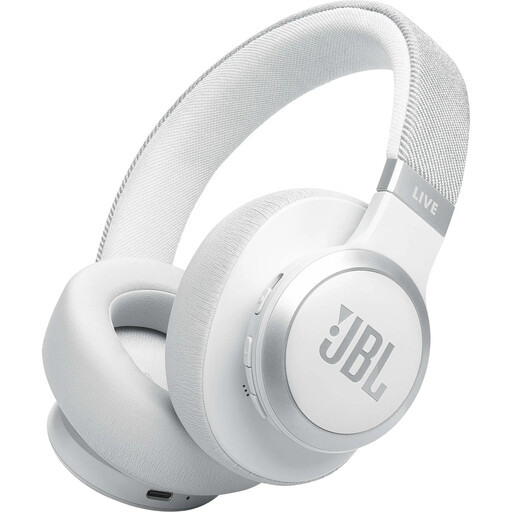
JBL LIVE 770NC, wireless over-ear headphones with microphone, white
For a seated recording, check whether the microphone can be used in your recording software via the connection you plan to use.
The product description lists Bluetooth 5.3, a detachable audio cable and two beamforming microphones. The microphones are described as being for hands-free calls; this alone doesn’t establish that they’re suitable for archive recordings.
View at Joybuy
 No image available
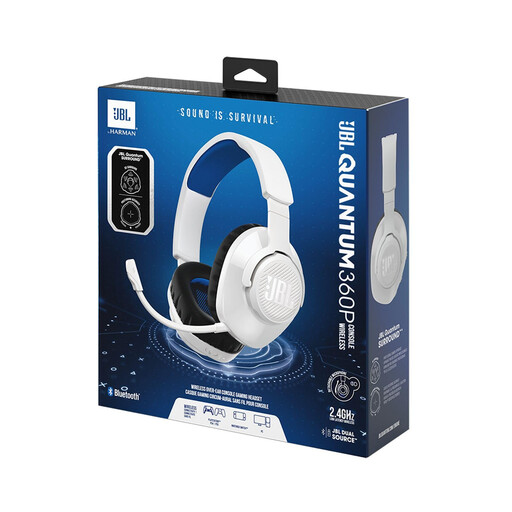
JBL Quantum 360P, wireless over-ear gaming headset, white
If you’re considering a headset for recording a single voice while seated, test the microphone connection with the recording software you actually plan to use.
The product title lists 22-hour battery life, a boom microphone, ANC and Bluetooth 5. The description also mentions a microphone with echo cancellation; these details don’t prove the quality of a storytelling recording.
View at Joybuy
 No image available
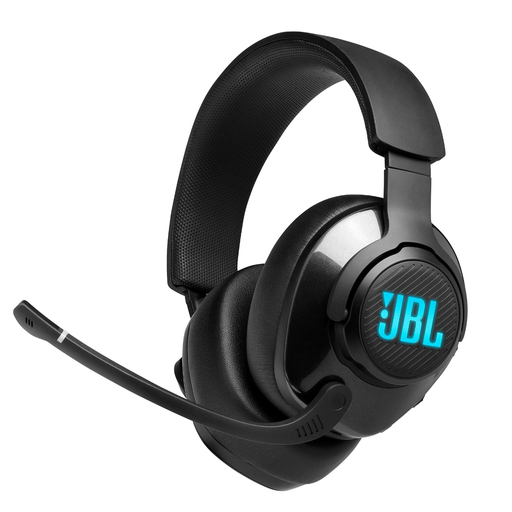
JBL Quantum 400, wired over-ear gaming headset
Before recording a story, check which connection is recognised as the microphone input and whether it works with your recording set-up.
The product title lists USB-C, a 3.5 mm connection and a flip-up boom microphone. The description calls the microphone directional and mentions a noise-cancelling feature; this doesn’t tell you how it will perform in a particular room.
View at Joybuy
 No image available
ONIKUMA GT889, wireless and wired over-ear headset
For a seated recording, check that you can use the microphone with your recording device via your chosen connection.
The product title lists 2.4 GHz wireless and a wired mode. The microphone is described as flexible and detachable; the claim of clear voice communication refers to voice chat.
View at Joybuy
 No image available
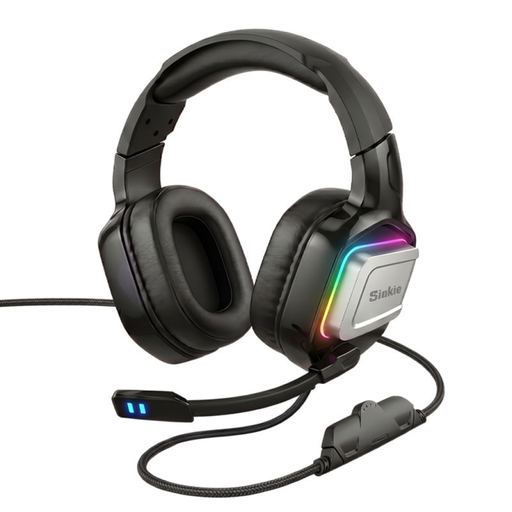
Siukie L200, wired over-ear gaming headset
If you’re considering the headset for recording a single voice, check the connection and make sure the microphone is recognised by the recording software you plan to use.
The product title lists USB, a 3.5 mm jack and a flexible boom microphone. The description also mentions a noise-cancelling feature, but this doesn’t prove a particular level of recording quality for speech.
View at Joybuy
Frequently asked questions
Should the interviewer wear a microphone too?
Yes, if you want their questions to be clearly captured as a separate voice in the finished recording. Plan for a dedicated microphone for the interviewer and enough recording inputs to use at the same time; a headset worn by the storyteller alone won’t meet this requirement.
Can I connect the Sennheiser HSP 2 directly to any laptop?
That depends on the specific connector type and your recording equipment. Sennheiser offers different HSP 2 connections and specifies the MZA 900 P for wired use. This requires a suitable microphone input with phantom power. Check the entire connection chain, not just the shape of the plug.
Can I record a private fire service story without permission?
Under Section 201(1) of the German Criminal Code (StGB), recording another person’s private speech without authorisation is prohibited; certain ways of using or sharing the recording are also covered. Check that you’re entitled to make the recording before you begin. If consent is to provide a basis for processing identifiable voices as personal data, the German Data Protection Conference requires consent to be freely given, informed and specific to the purpose.


