A built-in oven is a good fit for a whole fish pie, provided the dish and oven space are the right size; a freestanding mini oven may be enough for smaller dishes. If you often serve chilled portions later, a steam oven with an explicitly listed regeneration function is another option, but it doesn’t replace checking the food’s temperature. The German Federal Institute for Risk Assessment recommends keeping food hot at a minimum of 60 °C throughout and reheating it to at least 70 °C throughout for two minutes (Kitchen Hygiene Overview, March 2026).
Who are the different options suitable for?
Households with long gaps between meals
If you bake the fish pie in advance and other people will be eating much later, plan whether you’ll keep it hot enough or chill it and reheat it thoroughly later. A keep-warm function alone doesn’t confirm the temperature at the centre.
Families with a large pie dish
If you want to bake a whole pie and serve individual portions later, compare the dish’s dimensions with the usable oven space and the available heating modes. The capacity in litres alone doesn’t guarantee that your dish will fit.
Small households making individual portions
If you’re making a small dish or individual portions, a compact oven may be enough. With a freestanding model, you’ll also need to consider where to put it and the required ventilation clearances.
What should you look for when choosing?
Conventional built-in oven
A good fit if: You’re making a whole pie and have a suitable space for a built-in oven.
Trade-off: You can’t assume an oven has a steam regeneration function just because it offers standard heating modes.
Built-in steam oven with regeneration
A good fit if: You often reheat chilled portions and this function is listed for the specific model.
Trade-off: Steam assistance and regeneration aren’t necessarily the same thing; a regeneration function also doesn’t confirm the temperature inside the pie.
Freestanding mini oven
A good fit if: You use a small dish and don’t need a built-in appliance.
Trade-off: The oven cavity and dish size are limited; the appliance needs a suitable, well-ventilated spot.
First, compare your dish’s actual dimensions with the space available in the oven. Then decide whether you’ll keep portions hot or reheat them later. The German Federal Institute for Risk Assessment recommends keeping food hot at a minimum of 60 °C throughout and reheating it to at least 70 °C throughout for two minutes; it’s the food’s temperature that matters, not the oven setting.
| What you need |
What to check when buying |
Who should consider this? |
| Serving food safely when there’s a time gap |
Whether you can check the temperature inside the pie, and whether your plan involves keeping it hot or chilling it and reheating it thoroughly. |
If several people will be eating much later, I don’t want to judge the food’s safety based on the oven display alone; around 33% of consumers put safe timing first. |
| Space for a whole pie |
The dish’s dimensions, including handles, the usable oven space and suitable heating modes. |
If the whole pie needs to go in the oven at once, I want to make sure my dish will fit with enough clearance; around 27% of consumers prioritise dish and portion size. |
| Reheating portions later |
Whether the exact model code lists a regeneration programme; another steam function isn’t automatically equivalent. |
If I often serve individual chilled portions, I look specifically for a suitable reheating function; around 20% of consumers prioritise reheating individual portions. |
| Everyday use of a compact oven |
The space needed and ventilation clearances for mini ovens, and the stated energy consumption per standard cycle for household ovens. |
If I usually prepare small portions, I don’t want to set aside space for a large oven, and I want to compare energy figures on a like-for-like basis; around 20% of consumers prioritise a compact oven that uses energy efficiently. |
Which buying mistakes should you avoid?
-
Assuming a keep-warm programme means the food is at a safe temperature
The appliance setting doesn’t necessarily measure the temperature throughout a filled pie. Food safety depends on the temperature of the food itself.
Plan to check the food’s temperature. If you’re storing it for longer, also make sure you chill it promptly and reheat it thoroughly, following the recommendations of the German Federal Institute for Risk Assessment.
-
Focusing on the capacity in litres instead of the dish and where the oven will go
The oven cavity’s capacity alone doesn’t tell you whether your pie dish will fit. According to the manufacturer, the Rommelsbacher BG 1055/E is designed for dishes up to 25 cm in diameter and must not be installed as a built-in appliance.
Measure your dish and the space where you plan to put the oven, and check the instructions for the specific model. Rommelsbacher specifies 4 cm of clearance at the sides and 1 m above the BG 1055/E for ventilation.
If your dish doesn’t fit or the space isn’t suitable, you may need to use different cookware or choose another type of appliance.
-
Assuming every steam function is a regeneration programme
For the Bosch HRG7764B1, the manufacturer describes steam bursts for baking and roasting; steam bursts and regeneration are separate functions.
Check the full list of functions for the model code and make sure they suit the way you plan to reheat your food.
Which brands are worth considering?
Siemens
The range of examples includes everything from the conventional built-in oven HB314G0S3 to the HS736G1B1 steam oven with regeneration.
- Siemens lists a 71 l oven cavity and hot air for the HB314G0S3. The HS736G1B1 is listed with regeneration and keep warm functions.
- Siemens doesn’t list steam technology for the HB314G0S3. The HS736G1B1’s features don’t necessarily apply to other models.
Bosch
The HRG7764B1 built-in oven is an example of a model with steam assistance and additional heating modes.
- Bosch lists steam bursts for baking and roasting on the HRG7764B1.
- Steam bursts and regeneration aren’t the same thing. Check the full list of functions and how to use them for the model you’re considering.
NEFF
The B69CS3AY0 built-in oven is an example of a model with CircoTherm and a keep-warm function.
- NEFF lists several heating modes and a keep-warm function for this model.
- NEFF doesn’t list steam technology for the B69CS3AY0. The manufacturer’s claims about cooking on several levels aren’t an independent fish pie test.
AEG
AEG presents steam ovens as an option for cooking with steam; check the individual model for a suitable reheating function.
- AEG describes regeneration on suitably equipped steam ovens as a gentle way to reheat food while retaining moisture.
- This feature information doesn’t apply to every AEG oven or automatically to the BS7800T. Check the function list for the specific model.
Rommelsbacher
The freestanding BG 1055/E mini oven is an example of a compact option with a clearly stated size limit for dishes.
- Rommelsbacher lists an 18 l oven cavity and baking dishes up to 25 cm in diameter.
- The manufacturer says it must not be installed as a built-in appliance and specifies ventilation clearances. Check the model’s instructions before setting it up.
Joybuy products for a whole fish pie
The following Joybuy products are built-in ovens suitable for baking a whole pie. Compare your dish’s dimensions with the oven cavity and check that the listed functions suit the way you handle portions served later.
 No product image available
Bosch HBA571BB4 Series 2 built-in oven, 71 l
This built-in oven has a 71 l cavity and is an option if you’re making a whole pie and have a suitable space for a built-in appliance.
Features listed include 3D hot air, top/bottom heat, five heating modes, pyrolytic cleaning and AutoPilot with 10 programmes.
An oven setting doesn’t confirm the temperature inside the pie; plan to check the food’s temperature separately.
Joybuy
 No product image available
Comfee built-in oven, 60 cm, 70 l
This built-in oven has a 70 l cavity, making it worth considering for a larger pie if your dish and oven housing are the right size.
The product details list fan-assisted hot air, a grill, a pizza function, 10 functions and AquaClean cleaning.
Before buying, compare your dish’s dimensions and the heating modes you need with the appliance description.
Joybuy
 No product image available
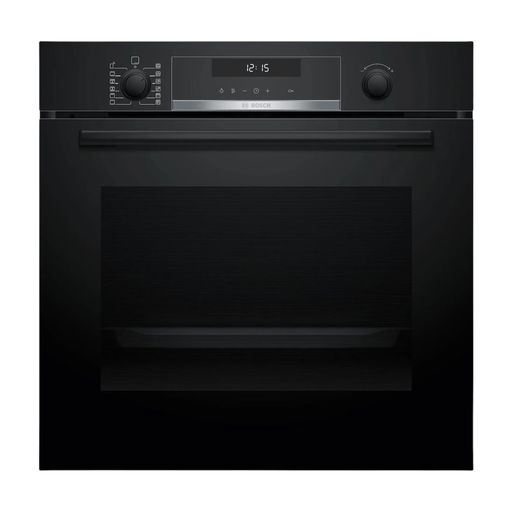
Bosch HBG578EB7 Series 6 built-in oven, 60 cm
This built-in oven is an option if you’re baking a larger pie and its installation dimensions suit your kitchen.
The product details list a 71 l cavity, 3D hot air and top/bottom heat. They also include nine heating modes and 30 AutoPilot programmes.
Check the oven space and heating mode you need for your pie; choosing a programme doesn’t replace checking the food’s temperature.
Joybuy
 No product image available
Bosch HBG578ES3 Series 6 built-in oven, 60 cm
This built-in oven is worth considering if you’re looking for a suitable 71 l cavity for a whole pie.
The product details list 3D hot air, top/bottom heat, 10 heating modes and a reheating function.
The listed reheating function isn’t automatically a regeneration programme. Check exactly what it does if you need it for chilled portions.
Joybuy
 No product image available
Haier H6 ID23T3HTB built-in oven, 78 l
This built-in oven has a 78 l cavity and is an option for a whole pie if your dish and the installation dimensions are suitable.
The product details list nine cooking functions and baking as a use.
Check the installation dimensions and whether the listed functions suit the way you bake and reheat food.
Joybuy
Frequently asked questions
Can I leave the cooked fish pie in the switched-off oven until the last meal?
A switched-off oven doesn’t confirm that the pie is at a high enough temperature. The German Federal Institute for Risk Assessment recommends keeping food hot at a minimum of 60 °C throughout; when reheating, it recommends at least 70 °C throughout for two minutes (Kitchen Hygiene Overview, March 2026). For longer storage, the institute recommends chilling food promptly to below 7 °C and then reheating it thoroughly.
Will a steam programme stop a pie drying out as much when you reheat it later?
AEG describes regeneration on suitably equipped steam ovens as a way to stop the surface drying out as much during reheating. This is a manufacturer’s claim, not a comparative fish pie test. Check that the model you choose specifically lists regeneration, and check the portion’s temperature separately.
Can a mini oven go in an existing oven housing?
Not just because the external dimensions seem to fit. Rommelsbacher says the BG 1055/E must not be installed as a built-in appliance and specifies 4 cm of clearance at the sides and 1 m above for ventilation. These figures apply to this model; check the instructions for other mini ovens.
What does an oven’s energy label show?
According to the Verbraucherzentrale, the energy label includes information such as the oven cavity’s capacity and energy consumption per standard cycle. This figure isn’t a measurement of how much electricity your particular fish pie will use.


