
Lieferung heute & morgen

Qualitätsgarantie

Willkommens-Angebote freischalten: KOSTENLOSE Lieferung | Bis zu 80 % RABATT | Kostenlose 30-Tage-JoyPlus-Testphase
App herunterladen
A Fisher-Price baby remote control learning toy looks like a real TV remote, drawing on a familiar everyday object. For babies and toddlers, illuminated buttons, music and sounds can provide an early spark for play. To make sure it’s a sensible choice for family life in the UK, parents and grandparents should look beyond bright colours and long lists of features.
“Interactive” doesn’t automatically mean a toy is right for your child. Look for clear details about the recommended age, number of buttons, sound features, power supply and dimensions. For example, the Fisher-Price Laugh & Learn remote control is described as having more than 35 songs, sounds and phrases. That’s a specific, verifiable product detail—and more helpful than a vague claim such as “particularly educational”.
A learning toy with sounds needs power. Before buying, check whether batteries are included and which type you’ll need. Details can vary by model: according to the product information, the DLD30 requires two AAA batteries, which are included. The HGY50, on the other hand, requires three batteries, which aren’t included.
Volume control is useful, too. It lets you adjust the sound to suit your surroundings, whether you’re in the living room, the child’s bedroom or out and about.
A baby remote control should only be used by children within the stated age range and with appropriate supervision. Keep the battery compartment closed. Don’t pass on the toy if its casing is damaged, parts have come loose or the batteries have leaked. Always follow the instructions and safety information on the packaging and product page.
For learning toys for babies aged 6 months and over, large, easy-to-reach buttons and a casing that’s easy to grip are useful features. According to the product description, the DLD30 is designed for babies and toddlers aged 6 months to 3 years. The HGY50 is recommended from 6 months. A baby remote control isn’t a substitute for interaction with an adult: you can describe what happens when a button is pressed and encourage your child to reach for a particular button or try a different one.
A baby remote control with lights and music shouldn’t be judged by the number of effects alone. Look for:
According to the product information, the buttons on the DLD30 trigger lights and music. Content about the alphabet, colours, opposites and greetings can also provide playful opportunities to develop language. However, this doesn’t guarantee a learning benefit.
The remote controls mentioned here are made of plastic and are compact enough for little hands. According to the product information, the DLD30 measures around 3.5 × 7 × 16 cm and weighs about 150 grams. The HGY50 measures approximately 3.05 × 6.86 × 12.95 cm and weighs about 140 grams.
For everyday use, bear in mind that these products aren’t designed to go in the dishwasher or be submerged in water. Unless the manufacturer’s instructions say otherwise, wipe the toy clean with a slightly damp cloth. Check the casing regularly for cracks and the battery compartment for corrosion.
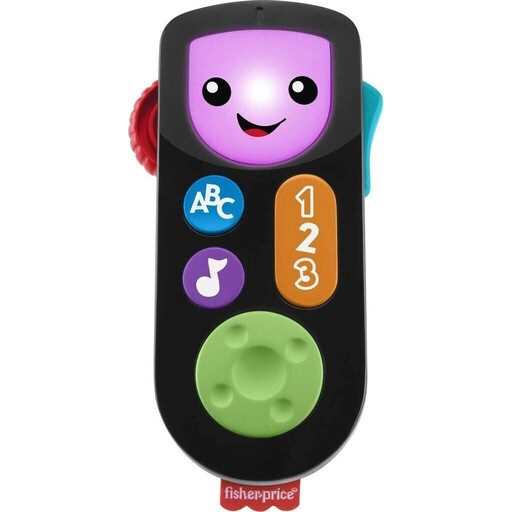
Why this product suits this profile: This model is aimed at families looking for a compact interactive toy for babies, with light and sound effects and straightforward controls.
The product information gives the recommended age, dimensions, material and battery requirements. This helps you assess how much space it will take up and any ongoing costs before you buy.
Light and sound effects, a plastic casing, a recommended age of 6 months and over, and cleaning with a damp cloth.
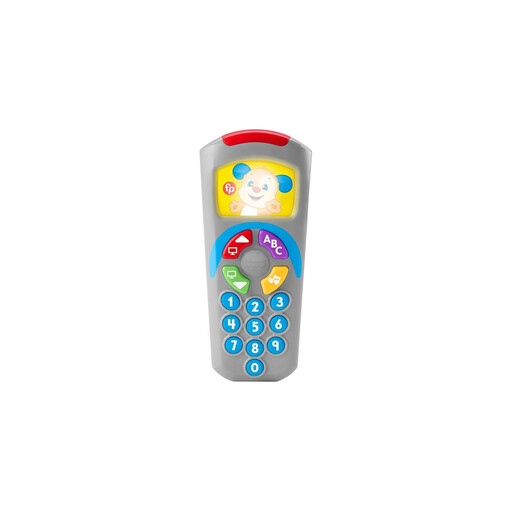
Why this product suits this profile: A good option for buyers who want to compare specific features, a wide range of audio content and an age recommendation that covers the toddler years.
Details of more than 35 songs, sounds and phrases, as well as volume control, make it easier to understand exactly what the toy offers.
Illuminated screen, music and sound effects, volume control, two AAA batteries included, and suitable for ages 6 months to 3 years according to the product information.

Why this product suits this profile: An option for families looking for a lightweight, quiet toy for grasping, rolling and watching, alongside a baby remote control sold in Germany.
It doesn’t need batteries or have electronic effects, helping to keep ongoing costs down. For water play, you should still follow the safety instructions and supervise your child.
Lightweight ball shape, a visible duck and confetti inside, and suitable for a play mat or shallow water with constant supervision.
We’ve put together a complete, regularly updated list of products that meet these strict selection criteria and the safety requirements in force across the EU.
According to the product information, the remote controls featured here are suitable from 6 months. Always check the age label for the specific model and follow the manufacturer’s safety instructions. Babies should be supervised while playing.
It depends on the model. According to the product information, two AAA batteries are included with the Fisher-Price Laugh & Learn Puppy Remote Control Toy. The FISHER PRICE Learning Fun Smart TV Remote Control requires three batteries, which the product information says aren’t included. Check the contents listed on the relevant product page before you buy.
Wipe electronic models with a slightly damp cloth. Don’t submerge them in water or put them in the dishwasher. Remove the batteries if you won’t be using the toy for a long time, and check the casing, buttons and battery compartment regularly for damage.