
Lieferung heute & morgen

Qualitätsgarantie

Willkommens-Angebote freischalten: KOSTENLOSE Lieferung | Bis zu 80 % RABATT | Kostenlose 30-Tage-JoyPlus-Testphase
App herunterladen
Abdominal training and muscle recovery don't necessarily require lots of equipment. What matters is that the accessories match your fitness level, available space, and intended use. An ab roller can challenge your core, while a foam roller is designed for stretching and massage after your workout. A waist trainer, on the other hand, serves a different purpose and doesn't replace core training or a well-balanced exercise plan.
When buying fitness accessories for abdominal training and muscle recovery, costs often arise from promises that, on closer inspection, can't be backed up by technical specifications. Three common pitfalls deserve particular attention.
Statements like "promotes fat burning" or "permanently shapes the waist" are not a sufficient basis for a purchasing decision. With an ab roller, what matters instead are wheel diameter, wheel width, grip material and stability. With a foam roller, you should look at length, diameter, material and portability.
An ab roller may look straightforward, but it requires controlled core tension. If you roll the wheel too far forward, your technique can become compromised. An ab trainer should therefore match your current strength level. A wider wheel can offer more lateral stability during your first exercises, while narrower models demand more balance and coordination.
A 61 cm foam roller needs more storage space than a 30 cm version. A compression waist belt can also become uncomfortable if the length is wrong or the fastening is too tight. Before buying, you should therefore check dimensions, fastening system, care instructions and material details. Products with Velcro fastenings should be stored so that the fastening doesn't damage fabrics.
For core training, the following features are particularly relevant:
For beginners, a limited range of motion is recommended. A training mat can relieve pressure on your knees and hands, provided it is sufficiently non-slip.
A foam roller should be chosen according to its intended use. A 30 cm roller is easier to store and transport. A 61 cm fitness roller, on the other hand, offers a longer contact surface for exercises on your back, thighs or legs.
The models listed are made from PVC and PE. However, this material information doesn't automatically tell you how firm or soft the roller will feel. If you want to perform an intensive fascia massage or so-called deep tissue massage, you should increase the pressure slowly and avoid working aggressively on painful areas. If you have existing complaints, injuries or are unsure, it's sensible to seek medical advice. A foam roller is not a substitute for treatment.
A waist trainer with an adjustable fastening can be worn during everyday activities or while training. According to the product information, the Feelingirl model is made from 35% latex and 65% polyester and features a seven-level Velcro fastening. The fit should be chosen so that your breathing and freedom of movement are not restricted.
A back support or compression waist belt should not be seen as a permanent solution for posture or back problems. With waist trainers, the care instructions are also important: for the model mentioned, hand washing is recommended; ironing, bleaching, dry cleaning and tumble drying are not intended according to the product description.
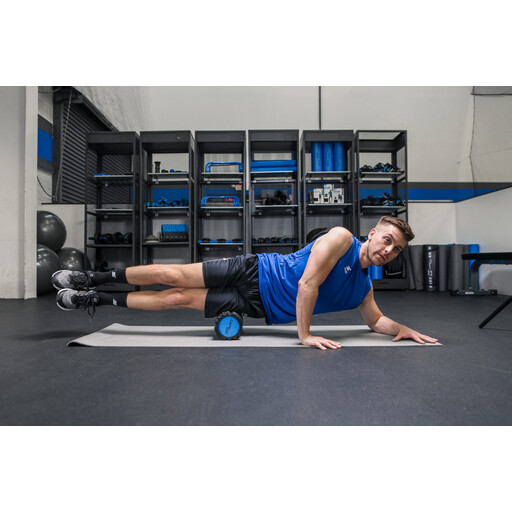
Why this product suits the profile: The compact length is ideal for flats, small training areas and taking to yoga or Pilates classes.
The product details give specific measurements of 30 cm length and 5.1 inch diameter rather than just general recovery claims.
PVC and PE construction, compact dimensions and a carry bag included according to the product description.
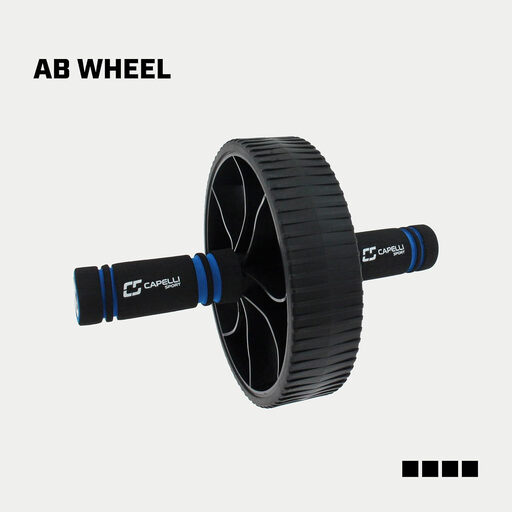
Why this product suits the profile: Suitable for users who pay attention to material details, assembly instructions and a controllable grip when choosing an ab roller.
The details mention stainless steel, PP, EVA and TPR, plus a 17 cm wheel size. Safe handle assembly is explicitly required before training.
TPR wheel cover, EVA grips, stainless steel tube and a stated wheel width of 4.2 cm.

Why this product suits the profile: The longer fitness roller is aimed at runners, strength athletes and yoga or Pilates practitioners who regularly need stretching and body massage.
The length of 61 cm and diameter of 5.1 inches are clearly stated. This means you can realistically assess the storage space needed before buying.
PVC and PE material, 61 cm length and a carry bag according to the product description.

Why this product suits the profile: This model is aimed at people looking for an adjustable back support or compression waist belt for everyday wear or training.
Adjustment is made via seven Velcro levels. Material, care instructions and one-size-fits-all are clearly listed in the product description.
35% latex, 65% polyester, seven-level adjustment and hand wash according to the product details.
We've put together a complete, regularly updated list of products that fully meet these strict selection criteria and the safety regulations in force in the EU.
That depends on your fitness level and the rest of your core training. Beginners can start with a few controlled repetitions and adequate rest. Quality of movement is more important than a high number of repetitions. If you have muscle soreness or pain, take a break.
It's not possible to give a general lifespan. It depends on the material, body weight, intensity of use, surface and storage. Cracks, deformation or reduced stability are reasons to replace the roller. The stated PVC and PE materials provide product information, but not a guaranteed service life.
For basic training, a non-slip mat and suitable clothing are often enough. Depending on the exercise, blocks, straps or a small cushion can also be useful. However, a waist trainer doesn't replace structured abdominal training, and a foam roller doesn't replace individual medical advice.