
Lieferung heute & morgen

Qualitätsgarantie

Willkommens-Angebote freischalten: KOSTENLOSE Lieferung | Bis zu 80 % RABATT | Kostenlose 30-Tage-JoyPlus-Testphase
App herunterladen
By Joybuy Product Recommendation Officer, August 28, 2026
Setting up a home gym often starts with choosing equipment, but one crucial element is frequently overlooked: protecting your floor. A suitable fitness floor mat not only saves your hardwood, laminate, or tile floors from scratches and dents caused by heavy weights and equipment, but also provides a stable and safe foundation for your workout. However, the market is flooded with products whose marketing promises often obscure more than they clarify. This guide will help you understand the essential criteria and make an informed decision.
Many buyers invest in expensive fitness equipment but skimp on the mat underneath—a mistake that can jeopardise not only the floor but also your safety. Make sure to avoid these common pitfalls.
A simple rug or a thin yoga mat is not an underlay mat for gym equipment. These mats lack the necessary density to withstand the pressure from a treadmill or a weight bench. The result: the pressure is transferred directly to the floor, and the mat itself slips during dynamic exercises like jumps or lunges. Materials like high-density EVA foam or rubber are the proper choice here, as they absorb shock and provide a non-slip surface.
A mat that is too thin offers insufficient protection. While a thickness of around 1 cm may be enough for bodyweight exercises, heavy weights or vibrating equipment like treadmills require more substantial cushioning. At the same time, a single, large mat is often impractical. It might not fit perfectly into the designated area or be expandable if needed. A modular protective mat set, often designed as an interlocking sports mat, offers a far more flexible solution.
To find the right mat for your needs, focus on these three objective parameters.
The material determines the mat's durability, cushioning, and slip resistance.
The thickness is directly linked to the level of protection. A simple rule of thumb is: the higher the load, the thicker the mat.
A textured surface is essential to prevent slipping during your workout. Look for a clear specification regarding slip resistance. A modular system, also known as an interlocking sports floor, allows you to tailor the workout area precisely to your space and expand it if necessary. This flexibility is a significant advantage over rigid, single mats.
Based on the criteria above, we have identified products for specific use cases.
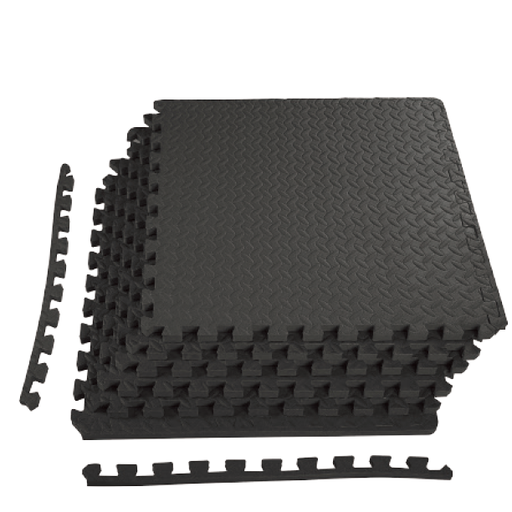
Why This Fits Their Persona: Perfect for users who need a flexible and expandable workout area. The set of 6 tiles allows for a custom-sized space for bodyweight exercises or as a base for medium-sized equipment.
This protective mat set avoids the problem of poor flexibility. Instead of a rigid mat, you can customise the surface area. The PE foam material and 1.2 cm thickness are specifically designed for fitness use, not for decorative purposes.
Modular interlocking system for custom sizes; non-slip, textured surface; water- and sweat-resistant for easy cleaning.
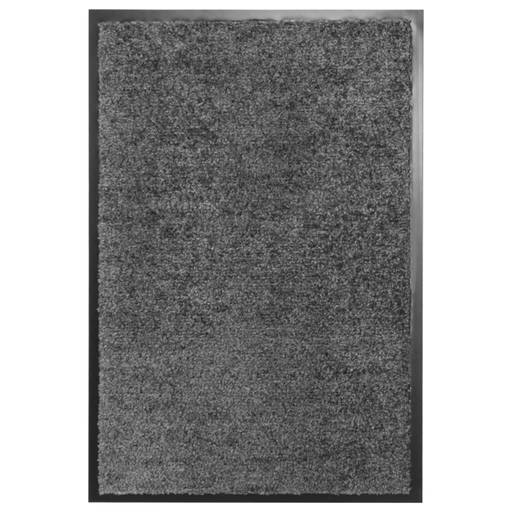
Why This Fits Their Persona: Ideal for athletes who come home after an outdoor run. This mat serves as a dirt-trap zone in the entryway to prevent street dirt and moisture from being tracked into the living or workout area.
This product is not falsely positioned as a workout mat. It solves a specific, fitness-related problem: home cleanliness. It is a supplement to, not a replacement for, a true fitness floor mat.
Machine washable for easy cleaning; non-slip PVC backing for a secure grip; high moisture absorption (approx. 2.5 L/m? according to the manufacturer).
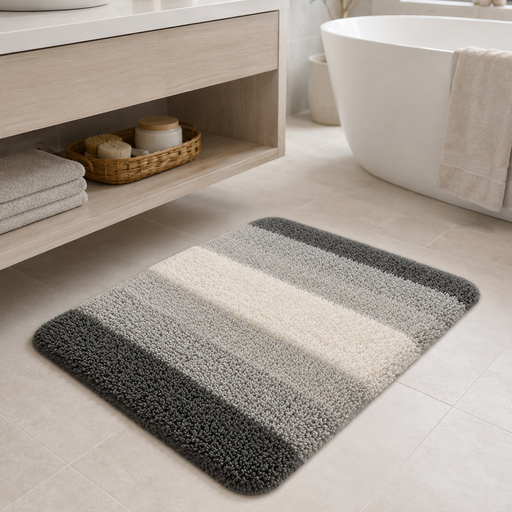
Why This Fits Their Persona: For users looking for an aesthetic solution for very light floor exercises (e.g., seated stretches) in a multi-functional living space, who also want to add a decorative accent.
The non-slip backing prevents the dangerous slipping that can occur with a purely decorative rug. However, it must be emphasised that this is not a substitute for a real fitness mat for standing exercises, jumps, or when using weights.
Non-slip backing for more safety during light activities; short-pile design is easy to maintain; modern design integrates well into living spaces.
We have compiled a complete, up-to-date list of products that meet strict selection criteria and applicable safety standards.
The required thickness depends on the weight and type of equipment. For lighter machines like a stationary bike or cross-trainer, a thickness of at least 1 cm is recommended. For heavy treadmills, weight benches, or power racks where weights may be dropped, you should choose a mat with a thickness of 1.5 cm to 2.5 cm to ensure adequate shock absorption and floor protection.
Yes, most interlocking mats made of EVA foam can be easily cut. Using a sharp utility knife and a straightedge, you can trim the mats to fit perfectly against walls, around corners, or pillars. This is one of the major advantages of a modular system, as it allows for a custom-fit and professional-looking installation.
For areas where heavy weights are used and there is a risk of them being dropped (e.g., a free-weight area), high-density rubber granules are the material of choice. It offers the highest shock absorption and durability. For a general home gym with a mix of cardio and strength training, high-density EVA foam provides an excellent compromise between protection, comfort, and cost.