
Lieferung heute & morgen

Qualitätsgarantie

Willkommens-Angebote freischalten: KOSTENLOSE Lieferung | Bis zu 80 % RABATT | Kostenlose 30-Tage-JoyPlus-Testphase
App herunterladen
A fitness roller can take on several roles in your home gym. An ab roller is ideal for core training, while a foam roller is used for stretching and massage exercises after your workout. However, the differences between products are significant. If you only focus on price or marketing claims like "suitable for all exercises", you may end up buying a piece of training equipment that doesn't match your intended use.
With an ab roller, the width of the running surface determines lateral stability. A narrow roller can be challenging, demanding more balance and controlled movement. For beginners, a wider version is often easier to manage. Regardless of width, the running surface should provide sufficient grip on your floor.
On smooth tiles or laminate, a roller without a grippy coating can slip more easily. This increases the strain on your wrists, shoulders and back. A non-slip exercise mat is therefore a sensible addition.
Fascia rollers often use terms like deep tissue massage, trigger point massage or "rapid muscle recovery". Such terms generally describe the intended area of use, but they are not proof of a specific effect. The pressure applied when rolling should always be adapted to your own mobility and tolerance.
A foam roller can be used for stretching, mobility exercises and myofascial release. If you have acute pain, injuries or health concerns, you should seek medical advice before use. A fitness roller does not replace a medical examination or treatment.
A long fascia roller offers more contact surface for your back, legs or bilateral exercises. However, it requires more space in your cupboard and for transport. A compact yoga roller or Pilates roller is easier to store and take with you, but may not cover the same exercises.
Before buying, you should therefore check length, diameter, weight and storage options. For a small home gym, a 30 cm roller may be more practical than a 61 cm version.
First, you need to be clear about what task the fitness roller should fulfil:
An ab wheel trainer is not a substitute for a long fascia roller. Conversely, a cylindrical foam roller is not suitable for classic rollouts using the handles.
With an ab roller, a grippy running surface, stable handles and a durable connection between the wheel and axle are important. According to the product description, the Capelli Sport Wheel features a stainless steel core and components made from PP and EVA foam. The wheel cover is made from TPR and is said to provide extra grip. The wheel width is 4.2 cm, and the wheel diameter is 17 cm.
With a fascia roller, diameter, firmness and surface texture influence the pressure. A high-density PVC and PE construction can feel different to a soft foam body. You should therefore compare the material specifications with your own preferences before buying.
Before each exercise, the handles and axle must be correctly secured. With the Capelli Sport Wheel mentioned, the handles are pushed onto the stainless steel tube; according to the instructions, slightly moistening the tube or using soapy water can help. The connection should be checked before each use.
The following basic rules also apply to ab rollouts:
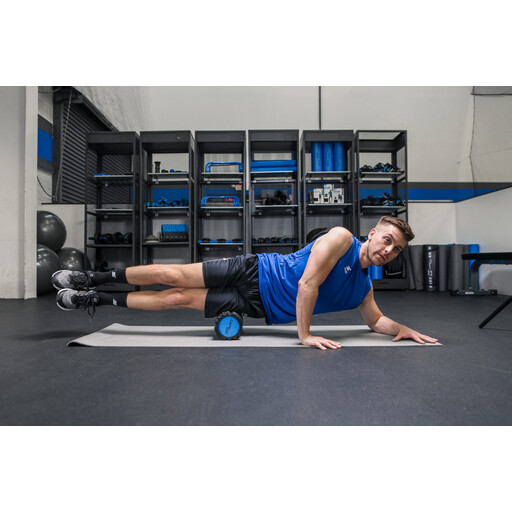
Why this product fits the profile: The 30 cm length is easy to store for beginners in a home gym and is suitable for basic stretching, mobility and rolling exercises.
The compact dimensions are clearly stated. This makes it easier to assess the space required before buying, rather than relying solely on general massage claims.
30 cm length, 5.1 inch diameter and PVC and PE material according to product specifications.
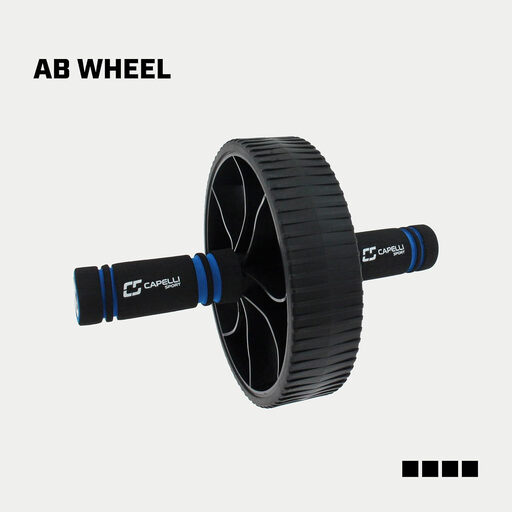
Why this product fits the profile: This model is aimed at people who want to use an ab roller specifically for core training and balance training, and who wish to check material and dimension specifications.
The product description states the wheel width, wheel diameter, materials and assembly. This allows you to objectively assess stability and space requirements before buying.
Stainless steel tube core, PP, EVA and TPR components and 17 cm wheel diameter according to product specifications.

Why this product fits the profile: Runners, swimmers and yoga and Pilates practitioners get a long roller for exercises on the back, legs and other areas of the body.
The 61 cm length is explicitly stated. This allows you to weigh up the larger training surface against the greater storage space required.
61 cm length, 5.1 inch diameter and a portable nylon mesh bag according to the product description.
We have compiled a complete, regularly updated list of products that fully meet these strict selection criteria and the safety regulations in force in the EU.
That depends on the type of roller. An ab roller is intended for rollouts and stabilising your core. A fascia roller or foam roller is often used for stretching, mobility exercises and self-applied pressure after exercise. For balance training and Pilates, rollers can also be used as a support surface or unstable training aid.
The lifespan depends on the material, load, storage and intensity of use. Handles, axle and running surface should be checked regularly for cracks, deformation or loose connections. A damaged product should not be used further. With foam rollers, permanent indentations can occur if they are stored under load for a long period.
A fitness roller does not require electricity during normal use and therefore incurs no ongoing energy costs. The only costs to consider are possible extras such as an exercise mat, a storage bag or replacement parts, if these are offered. Before buying, it is worth comparing the scope of delivery and the stated product dimensions.