
Lieferung heute & morgen

Qualitätsgarantie

Willkommens-Angebote freischalten: KOSTENLOSE Lieferung | Bis zu 80 % RABATT | Kostenlose 30-Tage-JoyPlus-Testphase
App herunterladen
Integrating an effective workout into your home routine can be a challenge. Many people lack the space for large equipment, or concerns about joint strain limit their options. A fitness trampoline, also known as a rebounder, offers a practical solution. It's compact, versatile, and provides a low-impact, full-body workout.
This guide provides a factual overview of the key features of fitness trampolines. We'll introduce different models and explain which characteristics are most relevant to your individual needs—whether for an adult's intense workout or a child's safe playtime.
Choosing the right model depends on specific, objective criteria. To make an informed decision, you should consider the following three aspects.
The heart of any trampoline is its suspension system, which significantly influences the bounce feel and noise level.
Safety is a crucial factor, especially for beginners or when the trampoline is used by children.
For use as a home trampoline, practical features are key.
Based on the criteria above, we have compiled a selection of models that meet different requirements.

Why it stands out: This model combines the stability of a handlebar with the convenience of a folding mechanism. The pre-assembly of the springs, padding, and jump mat significantly reduces setup time.
Advantages:
Who It's For: This mini trampoline is a great choice for fitness beginners and intermediate users up to a body weight of 70 kg who are looking for a stable and quick-to-set-up indoor trampoline for their home.
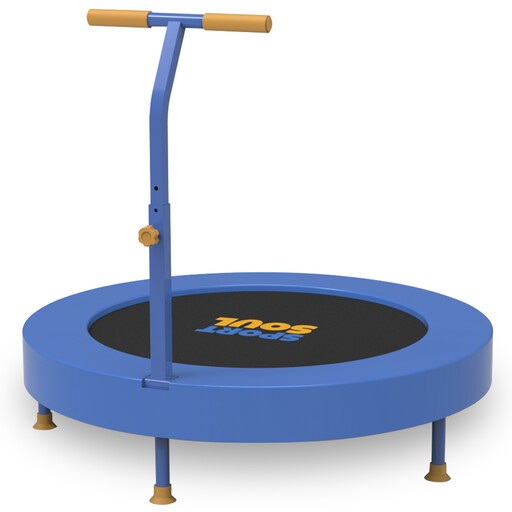
Why it stands out: The spring-free design with 24 elastic resistance bands makes this trampoline especially quiet and safe for use by children.
Advantages:
Who It's For: This kids' trampoline is specifically designed for the needs of young children with a maximum body weight of 25 kg. It's a safe option to introduce young users to exercise and fitness.
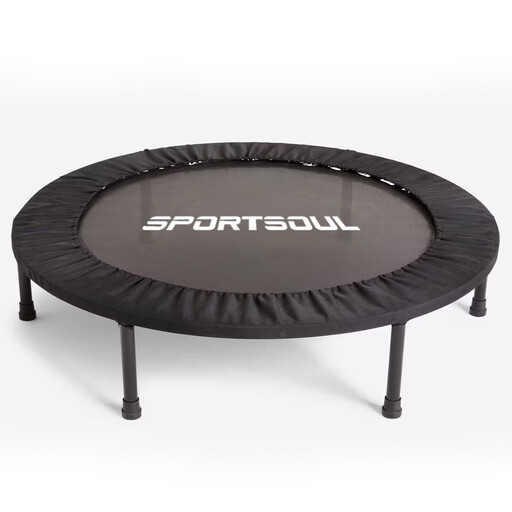
Why it stands out: This model is distinguished by its high weight capacity and its hassle-free, ready-to-use design with no assembly required.
Advantages:
Who It's For: Ideal for users looking for a robust and straightforward fitness trampoline without a handlebar for their daily cardio training, who also value a higher weight capacity.
If these recommendations don't include the perfect model for your specific training goals, there are other alternatives to explore. A wider selection can help you find the equipment that is perfectly tailored to your needs regarding size, suspension, and features.
Explore our full range of fitness equipment and find the right gear for your home workouts.
Yes, working out on a mini trampoline is considered low-impact. The elastic jump mat absorbs a large portion of the impact energy, significantly reducing the stress on your knees, hips, and spine compared to high-impact activities like running on hard surfaces.
The main difference lies in the bounce feel and the noise level. A bungee cord trampoline offers a softer, quieter, and deeper bounce that is considered especially joint-friendly. Trampolines with steel springs produce a firmer, more dynamic rebound, which can be advantageous for fast, intense exercises, but they are also louder.
Check the exact dimensions of the product (diameter and height). You should also plan for a safety clearance of at least one metre around the trampoline from walls and furniture. Additionally, ensure the ceiling height is sufficient to avoid hitting your head while jumping.