
Lieferung heute & morgen

Qualitätsgarantie

Willkommens-Angebote freischalten: KOSTENLOSE Lieferung | Bis zu 80 % RABATT | Kostenlose 30-Tage-JoyPlus-Testphase
App herunterladen
A fitted sheet with a 30 cm pocket depth is designed for mattresses where standard models ride up at the corners or come loose during the night. However, choosing the right one depends on more than the stated pocket depth. The mattress dimensions, all-round elastic, material properties and care instructions are also important.
Deep fitted sheets are particularly prone to common assumptions that can lead to unnecessary spending. Checking the key details before buying can help you avoid choosing the wrong sheet for single, double and family beds.
A specification such as 30 cm pocket depth or ‘12 Inch Deep Pocket’ usually refers to the depth of the side pocket. It does not automatically mean that every mattress measuring exactly 30 cm high will be covered perfectly. If you use an additional topper, mattress pad or particularly deep mattress, measure the total height.
Too much fabric can create creases, while a pocket that is too shallow puts tension on the corners. We therefore recommend using the following calculation before ordering:
Mattress height + topper height + desired tuck-under = pocket depth required
A 90x200 cm fitted sheet will not fit a 90x190 cm mattress, even though the width is identical. Mattresses measuring 140x200 cm, 160x200 cm, 180x200 cm or 200x200 cm likewise require the corresponding length and width.
For adjustable beds or split mattresses, you should also check whether you need one individual sheet or two separate models.
A non-slip fitted sheet often does not have a coated underside. Its stability usually comes from an all-round elastic edge, elasticated corners and a suitable pocket depth. Terms such as ‘No-Pop-Off Elastic’ should therefore be considered alongside the specific measurements. Elastic can reduce slipping, but it cannot replace choosing the correct size.
Measure the mattress at several points. If you use a mattress pad, add the heights together. For deep mattresses, a deep fitted sheet with a 30 cm pocket is a suitable starting point, provided that the product dimensions match the sleeping surface.
Common sizes include:
Models measuring 190 cm in length cannot simply be substituted for sheets designed for 200 cm-long mattresses.
A cotton fitted sheet can offer a breathable feel and a natural fibre composition. However, the specific weave, fabric density and manufacturing quality also affect how it feels and how long it lasts. For example, cotton gauze has a looser, more textured surface than smooth cotton fabric.
A microfibre fitted sheet is often made from polyester. You should therefore check the fibre content carefully in the product description. Polyester can be easy to care for and retain its shape, but it feels different from cotton. If you are looking for a machine-washable fitted sheet, also check the washing temperature, whether it is suitable for tumble drying and instructions such as ‘do not bleach’.
A fully elasticated edge makes the sheet easier to put on and can help it sit more evenly. It is still important to pull the corners neatly over the mattress. Follow the care instructions for the specific item. Cold washing, washing at 40 °C and standard tumble drying are not suitable for every product.
It is advisable to wash the sheet before first use. Wash it with similar colours and avoid bleach if this is prohibited in the care instructions.
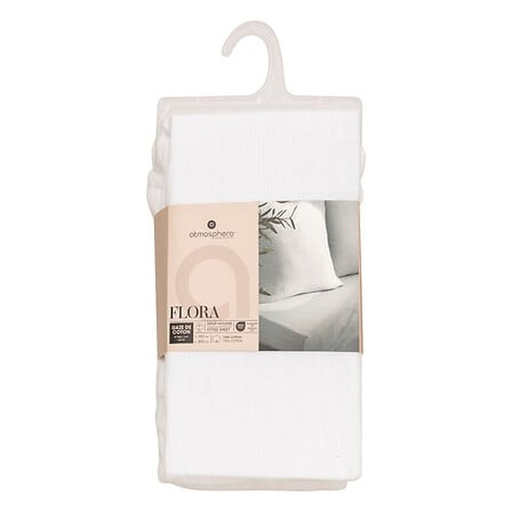
Why this product suits this profile: The cotton gauze is aimed at buyers who value a textured surface and a stated natural fibre when choosing a 160x200 cm fitted sheet.
The material, dimensions, pocket depth and washing instructions are clearly stated in the product details.
100% cotton gauze, 30 cm pocket, elasticated edges and machine washing at 40 °C according to the product description.
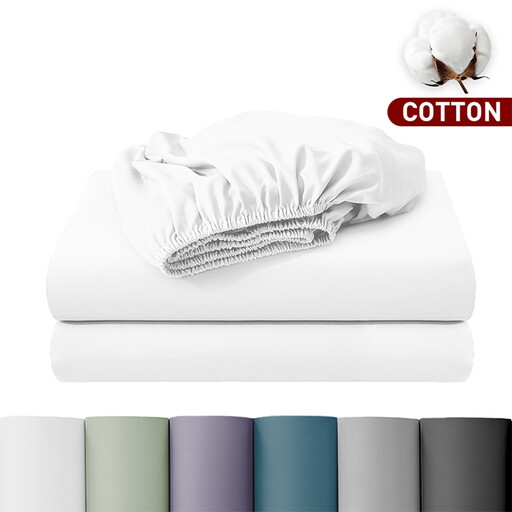
Why this product suits this profile: The 180 x 200 cm format fits a popular double-bed size. The cotton construction and deep pocket are designed for deep mattresses with matching dimensions.
The product details list the sleeping surface, pocket depth and material separately, making it easier to check the specifications before buying.
100% cotton according to the product details, 180 x 200 cm, 30 cm pocket and machine washing with standard drying.
We have put together a complete, regularly updated list of products that fully meet these strict selection criteria and the safety regulations applicable in the EU.
Start by pulling the corners of the sheet over the corresponding corners of the mattress. With a deep fitted sheet, the fabric should tuck evenly under the mattress on all sides. Creases in the centre can usually be reduced by aligning the sheet before tucking it fully underneath.
The following points are important for a longer service life:
The lifespan depends, among other things, on how often it is washed, the spin speed, drying method and fabric thickness. This does not allow for a blanket monthly or annual estimate.
It may fit, but this leaves little room for a topper or additional tuck-under. You should therefore measure the total height of the mattress and pad. The pocket depth specified by the manufacturer should not be considered in isolation.
This depends on the actual mattress dimensions. For a mattress measuring 140 x 200 cm, you need a 140x200 cm fitted sheet; for larger sleeping surfaces, choose 160x200 cm, 180x200 cm or 200x200 cm accordingly. If you have two separate mattresses, two individual sheets are usually more practical.
Both materials can be machine washable, but the specific care instructions vary. Cotton is often chosen for its natural fibres, while polyester microfibre can retain its shape and colour, depending on the construction. The details for the specific product are what matter, not just the material label.