For a gentle breeze at your desk, choose a desk fan with precise speed settings that you can position so others aren’t constantly in its direct airflow. If you want to circulate air across several desks, an oscillating model is a better choice. What matters is how noisy it is and how strong the airflow feels at the setting you’ll actually use. A fan moves air, but it doesn’t lower the room temperature or replace the need to ventilate, as the Verbraucherzentrale also explains.
Who can benefit from an air circulator?
Those who need a quiet workspace
If you sit close to other people, you’ll often want a gentle breeze with precise speed settings. IMTEST’s review of the Honeywell HT-900E shows why both noise and the airflow at the lowest setting matter when the fan is close to your desk.
People sharing a workspace
If you want to circulate air around several desks without constantly blowing directly on the same person, the oscillation direction and positioning are important. IMTEST highlights automatic oscillation as a useful way to distribute airflow.
Those who need a flexible setup
If you move between desks or have limited desk space, check the fan’s dimensions, footprint and access to a power supply. Meaco says the Sefte Table Pro version has a rechargeable battery. According to Meaco Deutschland, its battery life of up to 40 hours applies at the lowest setting.
What should you look for when buying?
Fan with adjustable direction
Best if: you mainly want a directed breeze at your own desk.
Bear in mind: without oscillation, the airflow won’t automatically reach several seating areas.
Oscillating desk air circulator
Best if: you want to circulate air across several desks or the seating arrangements change.
Bear in mind: the oscillating airflow may also reach people who don’t want a direct breeze.
When choosing a fan for a shared workspace in Germany, it helps to group the key considerations according to your main needs:
| What matters to you |
What to check before buying |
Who is this important to? |
| Low noise and a gentle breeze |
Compare noise and airflow at the setting you want to use, and check how precisely the speed can be adjusted. |
If I work close to other people, I need a gentle breeze that’s easy to adjust and won’t disturb them. Around 33% of consumers put quiet operation and precise control first. |
| Air distribution without draughts |
Check the oscillation direction, tilt and whether you can turn oscillation off. |
If I want to circulate air around several desks without the same person always sitting in the direct airflow, distribution is key. Around 27% of consumers prioritise this. |
| Space and positioning |
Check the dimensions, the space needed for a stable base and the tilt range for your intended setup. |
If desk space is limited, I want to position the fan and direct the airflow without having to move the whole unit. Around 20% of consumers focus on this. |
| Power supply and maintenance |
Check whether it’s mains-powered or rechargeable, the battery life at the stated setting and the model-specific cleaning instructions. |
If I move between desks or don’t have a plug socket nearby, flexible positioning and straightforward maintenance matter. Around 20% of consumers prioritise these factors. |
Common misconceptions
-
Comparing only the lowest dB figure
A noise rating for the lowest setting doesn’t tell you how loud the fan will be at the airflow setting you actually want to use.
Compare noise and airflow together, and check which operating setting each figure applies to.
-
Assuming a powerful fan is automatically suitable for a nearby desk
In its test of the Honeywell HT-900E, IMTEST measured 51 dB at the lowest setting and described the airflow at a nearby desk as powerful. This result applies to the model tested.
Check the lowest setting and the distance you can place the fan from yourself before setting it up right beside you.
-
Confusing air movement with cooling or fresh air
A fan moves the air around a room, but it doesn’t remove heat or stale air. The Verbraucherzentrale distinguishes the perceived cooling effect of moving air from the cooling power of an air conditioner.
Choose a fan to move air around your workspace, and consider the need to ventilate separately.
Brands and suitable fan types
Meaco
The Sefte Table range includes oscillating desk air circulators. According to Meaco Deutschland, the Pro version also has a rechargeable battery.
- Meaco Deutschland says the range has 12 speed settings, as well as horizontal and vertical oscillation.
- The manufacturer’s stated battery life of up to 40 hours for the Pro version applies at the lowest setting, not at higher speeds.
Rowenta
According to Rowenta, the Turbo Silence Extreme+ VU2750F0 is an oscillating desk fan with five speed settings.
- Rowenta specifies a 120° oscillation range.
- The manufacturer’s noise ratings of 32 dB(A) at the lowest setting and 58 dB(A) at the highest apply to different settings. The lowest figure therefore doesn’t represent the noise level at every speed.
Honeywell
The HT-900E is a fixed-direction floor or wall fan. According to the Joybuy product description, it’s also intended for small rooms and desks.
- IMTEST described the airflow from the HT-900E it tested as powerful.
- For this model, IMTEST measured 51 dB at the lowest setting and described the adjustment as coarse for use at a nearby desk. This doesn’t apply to other Honeywell fans.
Philips
According to Philips, the 2000 Series CX2050/00 desk fan has a tilting rotor.
- Philips specifies three speed settings, a timer and a noise rating of 23 dB(A).
- Only compare noise ratings after checking the measurement conditions and operating setting they apply to.
Air circulators at Joybuy
This selection includes desk fans and compact air circulators for directing or distributing airflow around your desk.
 No image available
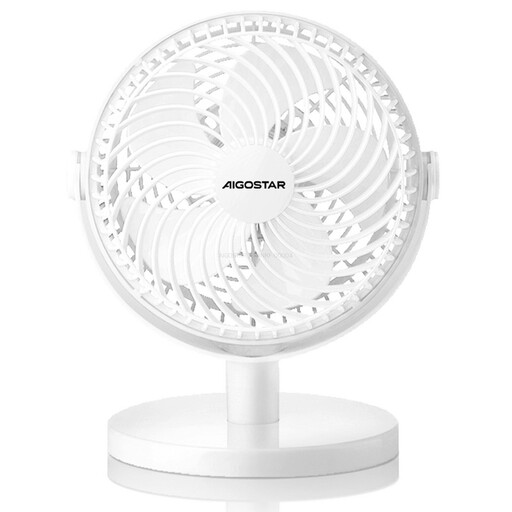
Aigostar USB desk fan
A good choice if you want to switch between two airflow settings and adjust the fan head at your desk.
Five blades, two speed settings and a head that adjusts through 360°. Requires a USB power source.
View at Joybuy
 No image available
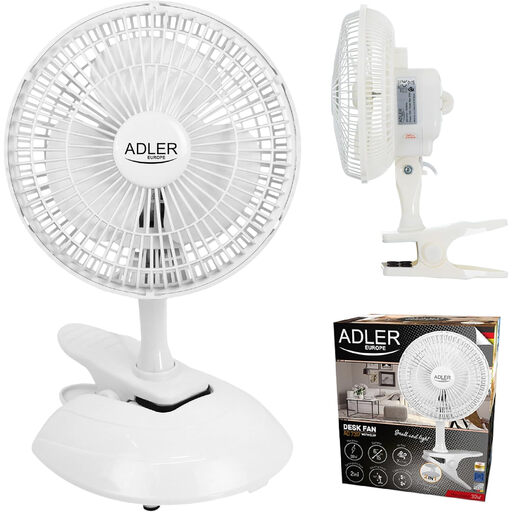
ADLER AD 7317 desk fan
A handy option if you want to choose between a stand and clip attachment, and direct the airflow upwards or downwards.
15 cm blade diameter, two speed settings and 30 W. The stated vertical tilt range is 16° (8° upwards and downwards).
View at Joybuy
 No image available
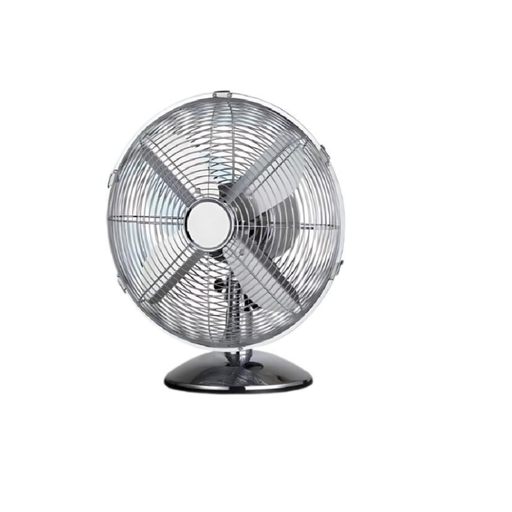
AKAI desk fan, 30 cm
An option if you want to circulate air from side to side and adjust the direction manually too.
35 W, three speed settings, four aluminium blades, automatic left-to-right oscillation and manually adjustable tilt.
View at Joybuy
 No image available
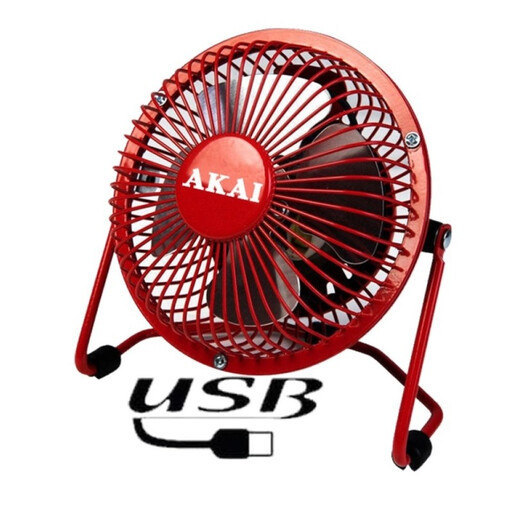
AKAI VE10-N-Grey desk fan
A good fit if you’re looking for a compact fan with automatic horizontal oscillation and manual tilt adjustment.
The fan diameter is 9 cm; the stated voltage is 220–240 V AC. According to the product name, the colour is selected at random.
View at Joybuy
 No image available
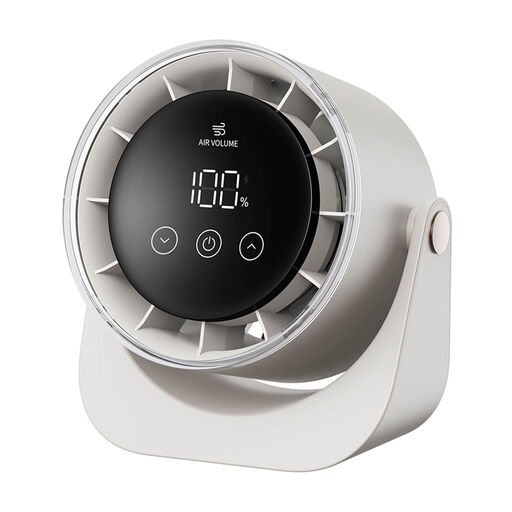
Cordless compact air circulator
A good choice if you want to fine-tune the breeze and position the fan by your seat without a mains cable.
100 wind settings and 90° tilt. The built-in battery has a capacity of 4,000 mAh; the stated battery life of up to 10 hours applies at the low setting.
View at Joybuy
Frequently asked questions
Does an air circulator lower the temperature in a shared workspace?
No. A fan can make you feel cooler by moving the air, but it doesn’t cool a room like an air conditioner. The Verbraucherzentrale points out that ventilation is a separate matter when warm or stale air needs to be removed.
How should I position the fan if other people are sitting beside me?
Start on a low setting and direct the airflow so it doesn’t constantly blow straight at the people sitting nearby. Whether oscillation helps depends on the seating arrangement and the range of motion of the particular model.
What should I consider when it comes to cleaning and power consumption?
Follow the cleaning and safety instructions for your model. You can calculate energy consumption in kilowatt-hours by multiplying the power rating in watts by the number of operating hours, then dividing by 1,000.
What labelling and rights apply when buying in Germany?
CE marking is required for products covered by the relevant EU rules. It’s the manufacturer’s declaration that the product complies with those rules, not an independent quality mark. For consumer purchases from traders, Your Europe generally states that the legal guarantee lasts for at least two years from the date you receive the goods. Your statutory rights against the seller for faulty goods are separate from any voluntary manufacturer’s guarantee.


