
Lieferung heute & morgen

Qualitätsgarantie

Willkommens-Angebote freischalten: KOSTENLOSE Lieferung | Bis zu 80 % RABATT | Kostenlose 30-Tage-JoyPlus-Testphase
App herunterladen
Caring for high-quality hard floors like parquet, laminate, or real wood requires diligence and the right tools. An unsuitable cleaning system can damage delicate surfaces with excess moisture or scratches. At the same time, the repetitive stooping motion required for mopping can lead to physical strain.
This article serves as a guide. It presents objective criteria for selecting a suitable floor mopping set and showcases various systems tailored to different requirements and floor types. The goal is to provide you with a solid basis for making an informed decision that ensures floor-friendly and ergonomic cleaning.
The right system depends on your floor type, the size of the area to be cleaned, and your personal ergonomic needs. Three criteria are particularly relevant.
Sensitive floors like parquet and laminate react poorly to standing water, which can cause swelling or discolouration. A crucial feature of a good system is, therefore, the ability to use the mop pad only damp. A mopping system with a wringing mechanism, for example, one that uses rotation or pressing, allows for precise moisture control. This ensures the floor is cleaned thoroughly without exposing it to damaging wetness.
An ergonomic mopping set is characterised by features that minimise bending and awkward movements. Telescopic handles that can be adjusted to your individual height are an important factor here. Systems that allow you to wring out the mop head while standing—without touching dirty water or exerting significant effort—greatly enhance comfort and help prevent back pain.
The mop pad is the component that comes into direct contact with your floor. Microfibre cloths are widely used due to their high cleaning performance and dirt absorption capacity. For a mop for parquet and laminate, particularly soft fibres are ideal, as they attract dust and fine dirt electrostatically while being gentle on the surface. Ensure the pads are removable and washable to maintain hygienic cleaning.
Based on the criteria mentioned, we have compiled a selection of products that cover different cleaning needs.
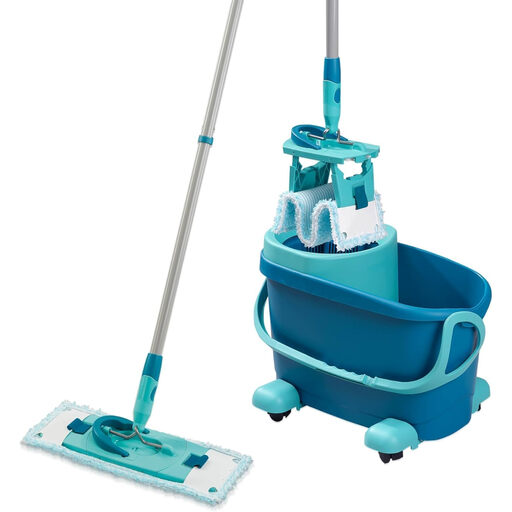
Why It Stands Out: This floor mopping set from Leifheit integrates a patented spin technology directly into the handle. A simple press rotates the mop pad in the bucket, wringing it out to the desired moisture level. The stop function allows for precise control, making it ideal for damp mopping. The telescopic handle is adjustable from 109 to 140 cm, and the 360-degree joint on the mop head provides flexibility for cleaning under furniture and in corners.
Advantages:
Who It's For: This set is aimed at users with high-quality, sensitive hard floors who are looking for a thorough, floor-friendly, and ergonomic cleaning solution. It is particularly suitable for medium to large living spaces.
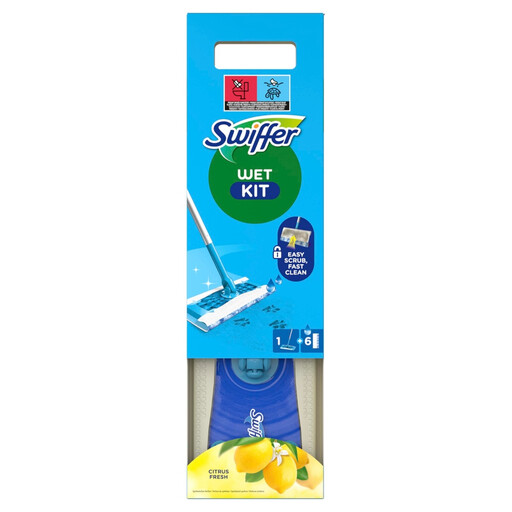
Why It Stands Out: The Swiffer Wet Mop system is designed for quick and easy floor cleaning. Instead of a bucket and water, it uses pre-moistened cleaning cloths that attach directly to the mop head. The cloths contain a cleaning solution that dissolves dirt and locks it away in the pad. An integrated scrubber strip helps remove dried-on stains.
Advantages:
Who It's For: Ideal for quickly tackling spills, cleaning smaller areas like kitchens or bathrooms, or as a supplement to your main weekly clean. It is perfect for those who prefer a convenient and time-saving solution.
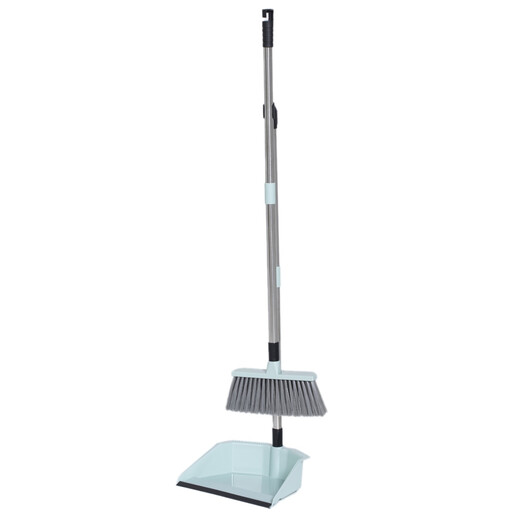
Why It Stands Out: A thorough wet clean is only effective on a floor that is free of loose debris. This dustpan and brush set addresses the ergonomic aspect right from the preparation stage. The 70 cm long handle on the dustpan eliminates the need to bend over. The wide 25.5 cm opening efficiently collects dirt, while the dense bristles of the hand brush reliably sweep up even fine dust.
Advantages:
Who It's For: This set is a smart addition to any household and a fundamental first step before wet mopping. It is especially helpful for individuals with limited mobility or back problems.
The products featured cover specific use cases. If you are looking for a different system or special accessories for your individual needs, you can find more alternatives in our wide range.
? Discover our full range of cleaning supplies here.
1. How do you clean parquet floors without streaks? To achieve a streak-free finish on parquet, the right amount of moisture is key. Use a mopping system that allows for thorough wringing of the pad to ensure you are only "damp" mopping. Additionally, always wipe in the direction of the wood grain and use a clean, lint-free microfibre pad.
2. What is the advantage of a mopping system with a wringing mechanism? An integrated wringing mechanism offers two main advantages. First, it allows for precise control over the moisture in the mop pad, which is essential for protecting sensitive floors. Second, it enhances comfort and hygiene, as the wringing is done while standing and your hands do not come into contact with the dirty water.
3. How often should you mop laminate floors? The frequency depends on the level of foot traffic. In high-traffic areas like hallways or kitchens, cleaning once or twice a week may be necessary. In less-used rooms, cleaning every one to two weeks is often sufficient. Here too, it is important to only damp mop the floor to protect the joints from swelling.